Mississippi Complaint for Malicious Prosecution
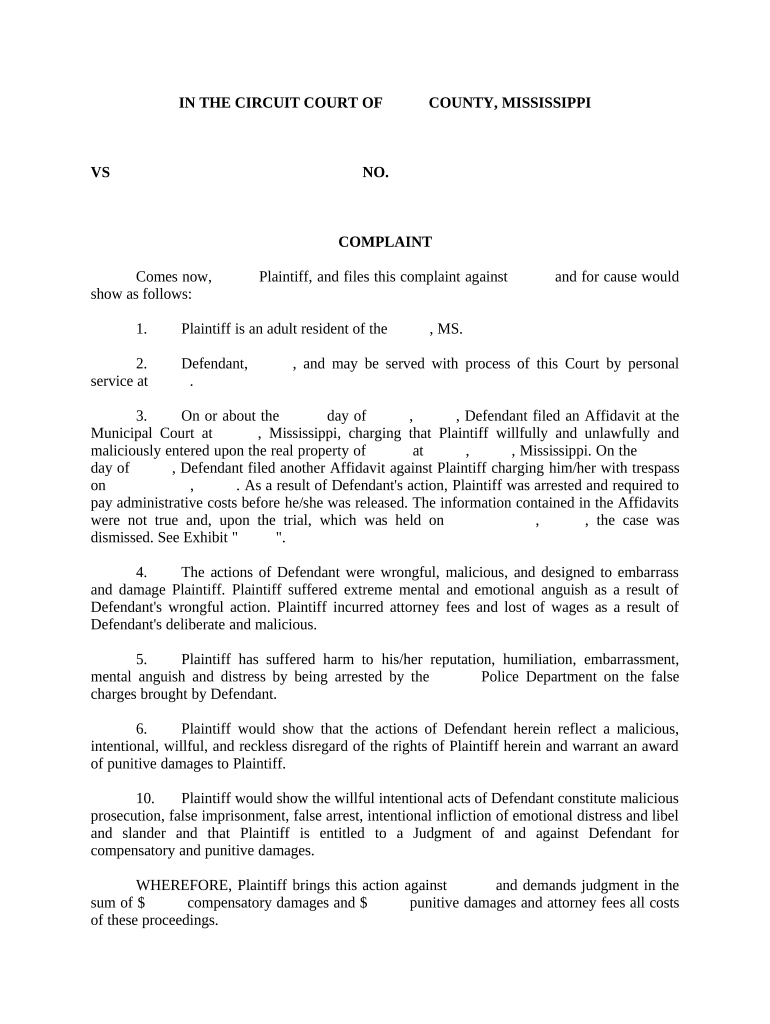
What the Mississippi Complaint for Malicious Prosecution Is
Why a Proper Complaint Matters
A clear, correctly framed Mississippi Complaint for Malicious Prosecution establishes the legal elements, preserves claims within applicable time limits, and provides courts the factual basis needed to assess damages. Accurate pleadings reduce the risk of early dismissal and support effective discovery and settlement discussions.

Who Typically Prepares This Complaint
Plaintiffs and civil litigation attorneys commonly prepare a Mississippi Complaint for Malicious Prosecution when wrongful legal actions have caused harm.
- Individual plaintiffs asserting damages for wrongful arrest, prosecution, or litigation-related harm.
- Private attorneys filing civil claims on behalf of clients after criminal charges are dismissed.
- Insurers and risk managers evaluating subrogation or defense exposures linked to malicious prosecutions.
Step-by-Step: Prepare and File the Complaint
-
01Gather Records: Collect arrest records, dismissal orders, and prosecution case files.
-
02Identify Parties: Name the plaintiff, defendant, and prosecutor or private party who initiated prosecution.
-
03Draft Factual Allegations: State dates, acts, lack of probable cause, and specific malicious intent facts.
-
04File & Serve: File with county clerk, pay fees, and serve defendants per Rule 4.
Configure an Online Workflow for Drafting and Signing
| Field | Configuration |
|---|---|
| Authentication | Email with SMS code |
| Templates | Pre-fill facts, exhibits references |
| Signer Order | Plaintiff then counsel then defendant |
| Audit Trail | Capture IP, timestamps, and actions |
Where to File and How Documents Move Through the System
-
Draft: Prepare complaint with exhibits and citations
-
Sign: All parties sign; affidavits notarized when required
-
File: Submit to county clerk per local e-filing rules
-
Serve: Serve defendants and file proof of service promptly
Technical Capabilities for Electronic Completion
Use an e-signature platform that supports ESIGN/UETA compliance, secure storage, audit logs, and optional notarization workflows.
- Formats: PDF and DOCX supported
- Integrations: Court e-filing and cloud storage
- Authentication: Email, SMS, or KBA options
Key Deadlines and Timing Considerations
Statute of Limitations:
Varies by claim type; verify with state statute.
Service Deadline:
Serve defendants per Mississippi Rules of Civil Procedure.
Filing Fees:
Amount set by county clerk; check local fee schedule.
Response Time:
Defendant typically answers within 30 days after service.
Discovery Deadlines:
Schedule follows discovery rules and case management orders.
Major Case Milestones
Filing the Complaint
Court accepts complaint and assigns a docket number.
Service of Process
Plaintiff serves defendant and files proof of service.
Discovery Phase
Parties exchange documents, take depositions, and issue subpoenas.
Pretrial & Trial
Motions, pretrial conferences, then trial or settlement.
Common Pitfalls to Avoid
- Failing to allege termination in the plaintiff’s favor often leads to dismissal; include specific disposition documents and dates to support this element.
- Omitting facts showing lack of probable cause weakens the claim; detail the investigatory steps and why they were insufficient.
- Using vague allegations of malice without concrete examples can fail pleadings; identify motive, statements, or conduct evidencing malice.
- Neglecting to attach dismissal orders, arrest records, or affidavits increases discovery burden and may hinder summary judgment preparation.
Consequences of Errors or Omissions
eSignature Vendor Comparison for Document Execution
| signNow | DocuSign | Adobe Sign | PandaDoc | HelloSign | |
|---|---|---|---|---|---|
| Starting Price | $8/user/mo | $15/user/mo | $14/user/mo | $19/user/mo | $15/user/mo |
| Free Trial | Yes, 7-day trial | Yes | Yes | Yes | Yes |
| Bulk Send | Yes | Yes | Yes | Yes | Yes |
| HIPAA Compliant | Yes | Yes | Yes | No | No |
| Envelope Cap | No envelope cap | 100 envelopes/user/year | Varies | Varies | Varies |
Frequently Asked Questions
-
Can the complaint be e-signed?
Yes; e-signatures satisfy the ESIGN Act's requirements (15 U.S.C. §7001) and UETA in most states, but check local court e-filing and signature rules. Some courts require wet-notarized affidavits or specific filing steps; follow county clerk and court guidance.
-
Is notarization required for affidavits?
Not necessarily for the complaint itself, but affidavits and some evidentiary attachments typically require notarization to be admissible. RON is accepted in many states with retention and identity-proofing rules; verify Mississippi RON and county clerk procedures before relying solely on remote notarization.
-
What elements must the complaint include?
Plead the prior proceeding, termination favorable to the plaintiff, lack of probable cause, specific allegations of malice, and damages. Attach supporting orders, arrest records, and sworn affidavits. Ensure factual specificity to survive a motion to dismiss under Mississippi pleading standards.
-
How long do I have to file?
Statute of limitations depends on the underlying claim and Mississippi law; consult state statutes and an attorney promptly. Missing the limitations period can bar recovery. Confirm applicable deadline because time limits and tolling rules vary by claim type and factual circumstances.
-
Can I recover attorney fees?
Mississippi law allows recovery of attorney fees in limited circumstances, such as contractual provisions or statutory authorization. Malicious prosecution claims may include fees as damages in some cases; consult Mississippi case law and statutes to determine whether fees are recoverable in your matter.
-
Does electronic signing affect evidentiary admissibility?
E-signatures are generally admissible under ESIGN and UETA when intent, attribution, and reliable audit trails exist. For evidentiary attachments, preserve metadata, maintain chain of custody, and follow best practices to authenticate electronic documents at trial.