Establishing secure connection…Loading editor…Preparing document…

Threatening a Juror

This template is fully customizable. Edit the text, fill out the fields, and send it for signature. Give it a try!
Threatening a Juror

What 'Threatening a Juror' Means and Why It Matters

Threatening a juror describes actions or communications intended to intimidate, influence, or retaliate against a jury member because of their service, vote, or testimony. Conduct can be verbal threats, written messages, social media posts, phone calls, in-person confrontations, or indirect harassment. Under federal and state law, juror threats can support criminal charges (for example, witness or juror tampering and obstruction of justice), prompt protective orders, and trigger separate civil remedies. This guide explains how to document threats, preserve evidence, report to the proper authorities, and understand potential legal consequences.

Why a Clear Record Matters in Juror Threat Cases

Accurate documentation helps law enforcement and prosecutors evaluate crimes such as obstruction or tampering and supports protective measures for the juror. A well-documented incident preserves evidence for criminal charging and any civil claims.

Why a Clear Record Matters in Juror Threat Cases

Who Needs This Guidance About Threatening a Juror

This information is intended for people who must respond to or document juror threats promptly and accurately.

  • Jurors and family members who need to report harassment, preserve safety, and record details for investigators.
  • Court staff, bailiffs, and administrators responsible for courtroom security and notifying law enforcement.
  • Prosecutors, defense counsel, and law enforcement officers who must investigate and decide on charging or protective steps.

Accurate documentation and timely reporting reduce investigative friction and improve the likelihood of effective protective or prosecutorial action.

Primary Roles Involved

Juror

A juror is the primary protected party. They should document threats in writing, preserve all messages and media, record dates/times, and report incidents to court security and law enforcement promptly.

Prosecutor / Investigator

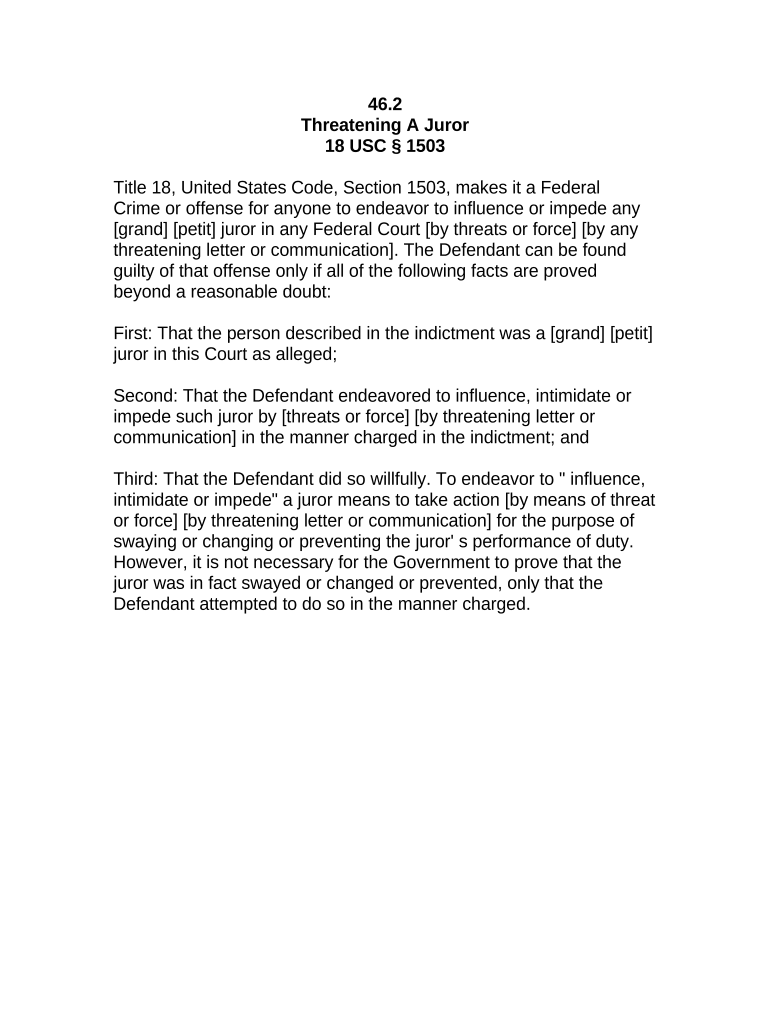
Prosecutors and investigators evaluate evidence for crimes such as witness tampering (18 U.S.C. §1512) or obstruction (18 U.S.C. §1503), coordinate protective orders, and determine whether to file criminal charges.

Essential Incident Details to Record

Incident Date/Time: Exact date and time
Location: Physical address or online platform
Involved Parties: Names and descriptions
Threat Description: Verbatim quote or paraphrase
Supporting Evidence: Screenshots, recordings, photos
Reporting Contact: Officer or court clerk details

Potential Legal Consequences for Threatening a Juror

Criminal Charges: Felony-level offenses
Fines: Monetary penalties possible
Imprisonment: State or federal prison terms
Contempt: Court-imposed sanctions
Civil Liability: Tort claims may follow
Enhanced Sentences: If linked to obstruction

Common Mistakes When Reporting or Documenting a Juror Threat

  • Failing to preserve original messages or media, deleting posts or texts before law enforcement can collect them.
  • Providing vague or incomplete timelines that make corroboration difficult for investigators.
  • Not notifying court security or local police quickly, which can delay protective measures.
  • Using informal channels only (social media posts) instead of making an official report to police or court staff.

Immediate Steps for a Juror Facing a Threat

Follow a clear sequence: ensure personal safety first, then secure and document evidence, then notify appropriate authorities.

  • 01
    Ensure Safety: Remove yourself from danger; contact emergency services if imminent.
  • 02
    Preserve Evidence: Save messages, take screenshots, record dates and witness names.
  • 03
    Notify Court: Inform the judge, court security, or clerk about the threat.
  • 04
    Contact Law Enforcement: File a police report and provide collected evidence.

How Investigation and Case Routing Typically Work

Investigations usually move from intake to evidence collection, then to charging decisions and, when needed, safety measures such as protective orders.

  • Intake: Police or court receives complaint and creates a report.
  • Evidence Review: Investigators collect digital and physical evidence.
  • Prosecutor Decision: Charging, plea, or decline to prosecute determined.
  • Protective Measures: Orders, relocation, or enhanced court security implemented.

What a Professional Juror-Threat Report Should Contain

A structured report helps investigators evaluate seriousness and link the conduct to legal offenses; include clear, verifiable items in separate sections for ease of review.

Incident Summary

Concise headline and one-paragraph overview stating who was threatened, when and where, and the nature of the threat for quick intake review.
Chronology

A detailed timeline listing each contact, message, or event with timestamps to show sequence and escalation of conduct clearly.

Parties Identified

Full names, aliases, contact details, and relationship to the case or parties, plus any known social media handles or vehicle descriptions.

Evidence Inventory

A numbered list of attachments (screenshots, recordings, physical notes), format descriptions, and the device or account where each item was found.

Witness Statements

Signed or recorded statements from witnesses with contact info and short narratives corroborating the incident details.

Verification

Signature of the reporting juror or court staff, date, and notation of whether the statement was notarized or electronically authenticated when applicable.

Configuring an Electronic Reporting Workflow

When moving reporting online, set fields and authentication to balance ease of use with forensic reliability and chain-of-custody needs.

Field Configuration
User Authentication Email plus SMS code for signer verification
Evidence Uploads Allow JPEG, PNG, MP4, PDF up to set size
Audit Trail Capture IP, timestamp, and action log
Storage Encrypted storage with access control

Technical Considerations for eSubmission and Storage

Electronic submission is practical but requires secure transport, strong authentication, and reliable audit trails to support investigations.

  • File Formats: Accept PDF, DOCX, JPEG, MP4
  • Security Standards: TLS in transit; AES-256 at rest
  • Integrations: Connect to case management systems

Ensure the platform you use supports tamper-evident audit logs and role-based access to protect sensitive juror data and to meet legal preservation needs.

eSignature Platform Pricing and Key Capabilities for Secure Reporting

This comparison highlights starting prices and key features that matter when selecting an eSignature provider for secure incident reporting and evidence preservation.

signNow DocuSign Adobe Sign PandaDoc HelloSign
Starting Price $8/user/mo $15/user/mo $14/user/mo $19/user/mo $15/user/mo
Free Trial 7-day free trial, no credit card required Varies Varies Varies Varies
Bulk Send Yes Yes Yes Yes No
Audit Trail Yes Yes Yes Yes Yes
HIPAA Compliant Yes Yes Yes No No
Envelope Cap No envelope cap 100 envelopes/user/year Varies Varies Varies

Frequently Asked Questions About Threatening a Juror

Answers to common procedural and legal questions about documenting threats, reporting channels, and the role of electronic evidence.


Need help? Contact support

be ready to get more
Join over 28 million airSlate SignNow users