Establishing secure connection…Loading editor…Preparing document…

Kansas Lien

This template is fully customizable. Edit the text, fill out the fields, and send it for signature. Give it a try!
Kansas Lien

What a Kansas Lien Is and When It Applies

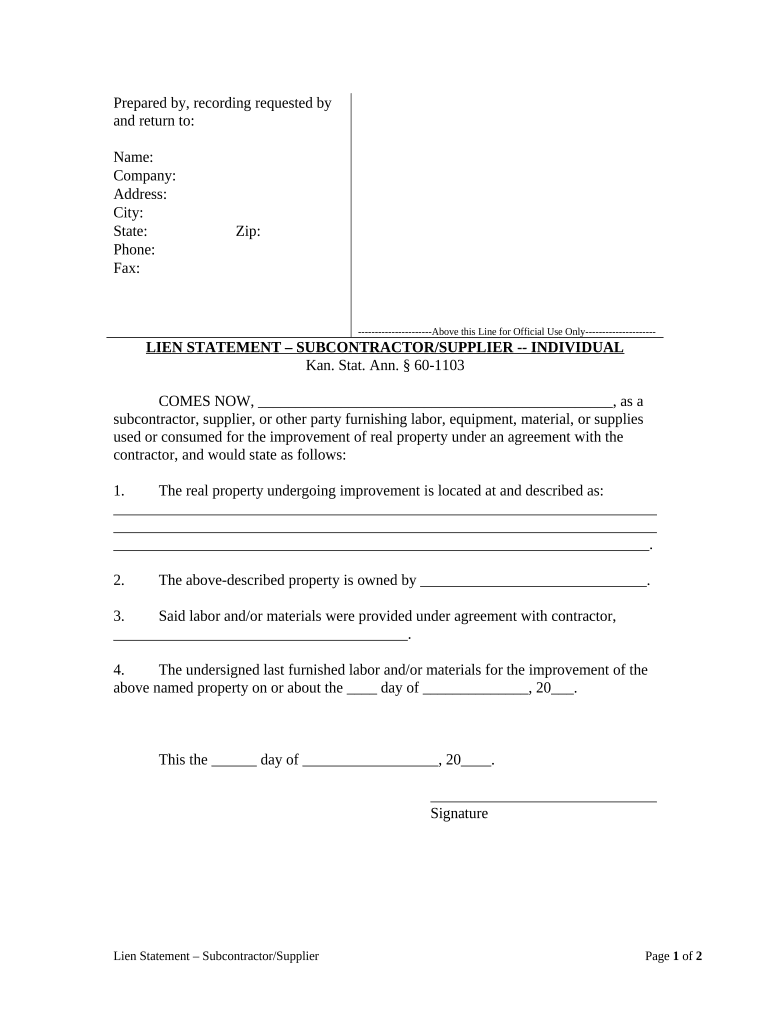
A Kansas Lien is a legal claim filed to secure payment for labor, materials, or services provided in connection with real property within Kansas. Mechanic's and construction liens protect contractors, subcontractors, suppliers, and certain design professionals by creating an encumbrance on the property until payment is made. Filing a properly completed lien preserves the claimant's right to seek foreclosure or negotiate settlement. State statute and procedural rules control eligibility, notice, filing deadlines, and required attachments; incorrect filings may be unenforceable or subject to penalty.

Why Preparing a Complete Kansas Lien Matters

A correctly prepared Kansas Lien preserves a creditor’s security interest in real property, strengthens negotiating position, and preserves the right to foreclose if unpaid. Accuracy supports enforceability and reduces risk of statutory rejection or penalties.

Why Preparing a Complete Kansas Lien Matters

Who Commonly Prepares and Files a Kansas Lien

Many users consult counsel or title professionals before filing to confirm statutory deadlines, required pre-lien notices, and correct property descriptions.

  • General contractors and subcontractors who supplied labor or services on building or renovation projects within Kansas
  • Material suppliers and equipment lessors who delivered goods used in construction or improvement of real property
  • Property owners, lenders, and legal counsel reviewing encumbrances during title searches or foreclosure actions

Core Parts of a Professional Kansas Lien

A complete Kansas Lien includes precise identification of claimant and property, a clear statement of the claim amount, dates of labor or delivery, and statutory attachments. The document should be ready for filing with county records and for service on interested parties.

Claimant

Full legal name and contact information of the person or entity asserting the lien.
Property Description

Legal description or parcel number sufficient for county recording; street address alone is often insufficient.

Claim Amount

Itemized unpaid balance, including retainage, change orders, and permissible interest.

Work Period

Dates when labor or materials were furnished that support the lien claim.

Reference Documents

Copies of contract, purchase orders, delivery receipts, or affidavits of nonpayment attached as needed.

Signature

Authorized signer, printed name, title, and date; notarization if statutory form requires it.

Step-by-Step: Preparing and Filing a Kansas Lien

Follow these sequential steps to prepare, deliver notices, and record a lien while protecting your enforcement rights.

  • 01
    Verify Eligibility: Confirm you furnished labor or materials that qualify under Kansas lien law.
  • 02
    Prepare Itemized Claim: Itemize amounts, attach invoices, and confirm dates of performance.
  • 03
    Provide Required Notices: Send any pre-lien notices if statute or contract demands them.
  • 04
    Record with County: File the lien with the county recorder where the property is located and obtain a filing stamp.

Where to File, Serve, and Record a Kansas Lien

Filing and service steps determine priority and enforceability; follow local county procedures and any pre-filing notice requirements.

  • County Recorder: Record the lien in the county where the property is located to create the public encumbrance.
  • Service on Owner: Deliver a copy of the recorded lien or required notice to the property owner per statute.
  • Serve Lienholders/Lenders: Notify known mortgagees or junior lienholders to protect priority and avoid surprises during title work.
  • File Affidavits: File any post-recording affidavits of service or supplemental liens as required by local rules.

Digital Signing and eFiling Considerations for a Kansas Lien

Confirm county recorder rules before relying on eSignatures for lien recording; maintain auditable records that satisfy ESIGN/UETA requirements.

  • eSignature Law: ESIGN and UETA allow electronic signatures if intent, consent, attribution, and retention requirements are met.
  • County Acceptance: Some counties permit electronically submitted documents while others require original paper or notarized originals.
  • Notary and RON: If notarization is required, verify whether the county accepts Remote Online Notarization and the retention requirements for audio-video records.

Essential Information to Include on the Kansas Lien

Claimant Info: Full legal name
Claimant Contact: Mailing address and phone
Property ID: Parcel number or legal description
Claim Total: Amount claimed in dollars
Date Range: Start and last furnished dates
Signature: Authorized signer and date

Typical Deadlines and Timeframes to Watch

Timely notices and filings are essential. Deadlines vary by project type and whether work was on private or public property; verify applicable Kansas statutes and county rules.

Pre-Lien Notices:

May be required depending on claimant role and contract terms

Filing Window:

File within the statutory period after last furnishing; exact days depend on the specific lien statute

Service Requirements:

Serve owner or other parties within statutory timeframes after filing

Foreclosure Deadline:

Start foreclosure within statutory enforcement period or risk forfeiture

Record Retention:

Keep originals and recordings per retention obligations

Common Mistakes to Avoid When Preparing a Kansas Lien

  • Using an informal property description instead of a recorded legal description or parcel number
  • Filing after the statutory filing window has closed, which can forfeit enforcement rights
  • Failing to serve required notices to the owner or mortgagee per statute
  • Including inaccurate or unsupported dollar amounts without invoices or proof

Consequences of an Incorrect or Untimely Kansas Lien

Loss of Lien Rights: Forfeiture of enforcement rights
Financial Penalties: Potential statutory fines or costs
Title Delays: Delays or rejection during closing
Counterclaims: Exposure to owner damages for wrongful filing
Rejection: County recorder may refuse defective filings
Increased Costs: Additional attorney and court costs to correct errors

Practical Tips for Accurate and Efficient Kansas Lien Filing

Adopt consistent workflows and document checks to reduce errors and accelerate recording while preserving enforcement rights.

Use Precise Property IDs
Always include the county parcel number or recorded legal description to avoid ambiguity.
Attach Supporting Documents
Include invoices, contracts, delivery tickets, and affidavits to substantiate the amount claimed.
Confirm Service Rules
Verify whom to serve and the acceptable methods of delivery under Kansas law and county practice.
Preserve Audit Trails
If using eSign, keep a full audit trail and copies of any RON audio-video recordings when notarization is required.

Real-World Examples of Kansas Lien Use

The following condensed examples illustrate typical scenarios where a Kansas Lien protects an unpaid claim.

Contractor Claim Example

A subcontractor finishes electrical work but is not paid by the general contractor; they prepare and record a lien using the parcel number to preserve rights.

  • The lien lists invoices and dates of service to support the amount claimed.
  • After recording, the parties negotiate a payment plan and the claimant records a release upon receipt of funds, clearing title for resale or refinance.

Supplier Claim Example

A materials supplier delivers roofing shingles and invoices the contractor but payment is delayed for months; the supplier files a lien to secure the unpaid balance.

  • The supplier attaches delivery receipts and purchase orders to substantiate the claim.
  • The recorded lien prompts settlement discussions with the owner and lender; once paid, the supplier files a satisfaction or release to remove the encumbrance.

How to Update, Amend, or Release a Kansas Lien

Follow these steps to amend a recorded lien, file a partial release, or record a full satisfaction once payment is made.

01

Identify Amendment Need:

Confirm the factual or numerical correction required
02

Prepare Amendment:

Draft an amended lien or affidavit with corrected details
03

Notarize If Required:

Have amendment signed and notarized where county rules demand it
04

Record the Amendment:

File the corrected instrument with the county recorder
05

Serve Interested Parties:

Notify owner, lender, and parties of record about the correction
06

File Release on Payment:

Record a satisfaction or release and serve proof of payment to clear title

Frequently Asked Questions About Kansas Liens

Answers to common procedural and legal questions raised when preparing, filing, or releasing a Kansas Lien.


Need help? Contact support

be ready to get more
Join over 28 million airSlate SignNow users