Establishing secure connection…Loading editor…Preparing document…

Kinship Form Application

This template is fully customizable. Edit the text, fill out the fields, and send it for signature. Give it a try!
Kinship Form Application

What the Kinship Form Application Is

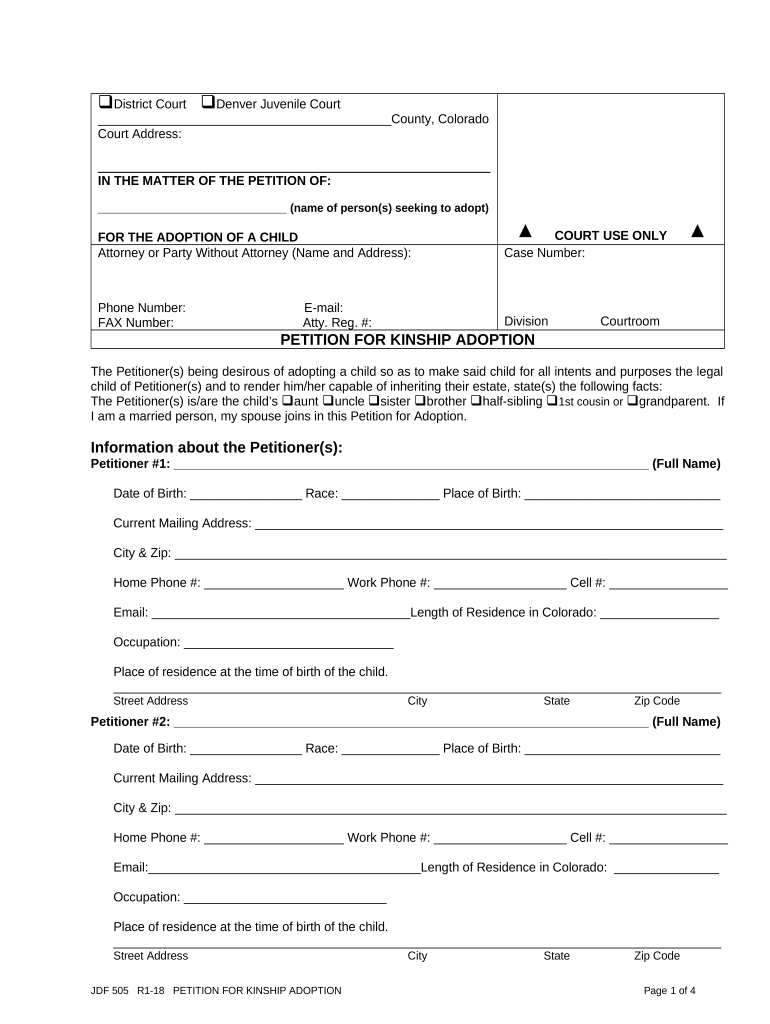
The Kinship Form Application documents a relative or close family member acting as a child's caregiver so the caregiver can access school enrollment, medical care, social services, or public benefits on the child's behalf. Typical entries record the child’s name and date of birth, the caregiver’s legal name and contact information, the nature of the relationship, dates of placement or custody, living arrangements, and any temporary permissions for medical or educational decisions. Agencies may require identity documents and proof of relationship; the form is valid on paper or when electronically signed consistent with U.S. e-signature law.

Why a Proper Kinship Application Matters

A complete, accurate application clarifies caregiver authority, speeds access to services, and reduces later disputes over custody or benefits. Properly documented kinship status helps schools, healthcare providers, and agencies confirm permissions and limits administrative delays.

Why a Proper Kinship Application Matters

Who Typically Completes and Reviews This Application

Multiple parties interact with a Kinship Form Application depending on the purpose: caregivers provide details, agencies or schools review and accept documentation, and legal counsel may assist when rights or benefits are at stake.

  • Kinship caregivers supplying personal, child, and relationship details for program access.
  • Child welfare or social services staff verifying placement, residency, and eligibility.
  • School or healthcare administrators confirming enrollment or medical consent permissions.

Common Signers and Reviewers

Kinship Caregiver

A relative or close family friend completing the application on the child’s behalf. Provide full legal name, contact, proof of relationship, and any court orders; signing affirms the facts and grants specified permissions.

Caseworker / Administrator

A social services or school official who reviews entries, confirms supporting documents, and records acceptance or required follow-up. Their verification establishes the form’s administrative effect for benefits or enrollment.

Core Sections You’ll Find on a Professional Kinship Application

A well-structured application groups information so reviewers can verify identity, relationship, and authority quickly. Expect sections for identifiers, relationship evidence, placement details, permissions, supporting documents, and signatures.

Applicant Details

Full legal name, date of birth, current address, phone, and email for the caregiver to enable contact and identity checks during processing.
Child Information

Child’s full name, date of birth, current address, school, and unique identifiers to tie the application to records and avoid misfiling.

Relationship Proof

Nature of relationship (grandparent, aunt/uncle, other), explanation of kinship, and instructions for attaching birth certificates, affidavits, or other evidence.

Placement and Care Details

Dates of placement, expected duration, living arrangements, and any shared custody or pending court matters that affect authority or benefits eligibility.

Permissions and Limitations

Scope of decision-making authority requested (medical consent, school enrollment) and any time or scope limits the caregiver or agency should note.

Signatures and Dates

Signature blocks for caregiver, reviewing caseworker, and notarization or witness lines when required by jurisdiction or program rules.

Key Data Points and Compliance Elements

Identity Data: Full legal names
Child Identifiers: DOB and school
Proof Documents: Birth certificate required
Consent Records: Signed permissions
Audit Trail: Timestamps and IP
Data Protection: AES-256 at rest

Step-by-Step: Completing a Kinship Form Application

Follow these steps in order to prepare a complete application suitable for either paper or electronic submission.

  • 01
    Gather Documents: Collect IDs, birth certificates, and supporting affidavits before beginning.
  • 02
    Complete Fields: Fill every required field using prescribed formats to avoid rejections.
  • 03
    Attach Proof: Upload or staple all requested supporting documents in the specified order.
  • 04
    Submit for Review: Send to the designated agency, school, or caseworker and retain copies for your records.

Where the Form Goes and Who Processes It

After completion, the application follows administrative routing determined by the form’s purpose—school enrollment, social services intake, or benefits application.

  • School Records Office: Used to enroll a child and record emergency contacts and medical permissions.
  • Child Welfare Agency: Processed to document placement and determine eligibility for supports.
  • Healthcare Provider: Used to establish medical consent for treatment in absence of a parent.
  • Courts or Legal Counsel: If required, forms may be filed with or reviewed by legal professionals for custody matters.

Digital Submission: Technical and Platform Considerations

If submitting electronically, ensure the platform supports secure uploads, preserves audit trails, and complies with applicable privacy laws.

  • File Formats: PDF and DOCX supported
  • Authentication: Email, SMS code, or stronger
  • Integrations: Works with common systems

Timeframes and Typical Processing Deadlines

Deadlines depend on the receiving organization and the program being accessed; plan submissions to accommodate verification steps and any required notarization.

School Enrollment:

Submit by district deadline before term start; districts publish specific dates

Benefit Application Review:

Processing often occurs within 30–60 days after receipt, subject to follow-up

Notary / RON Sessions:

Schedule in advance; remote notarization may have session fees and ID-proofing requirements

Agency Follow-Up:

Respond to requests for additional documents within stated period to avoid delays

Court Filings:

If related to guardianship, follow court filing deadlines and local rules

Key Milestones in the Application Lifecycle

Track these sequential milestones to monitor progress from submission to final acceptance or further action.

01

Prepare Application

Gather documents and complete all required fields before submission.

02

Submit to Agency

Send via the specified channel (portal, email, or in person) for intake.

03

Verification and Review

Agency reviews attachments, confirms identity, and requests missing items.

04

Final Determination

Agency issues acceptance, conditional approval, or denies with reasons.

Common Preparation Pitfalls to Avoid

  • Incomplete identity documents that prevent verification and cause rejections or delays in benefits processing.
  • Mismatched names or dates across attachments which force additional proof and slow approval.
  • Failing to notarize when required by the receiving entity, leading to denied enrollment or benefits.
  • Uploading low-resolution scans that agencies cannot read, triggering requests for resubmission.

Consequences of Incorrect or Misleading Applications

Denied Benefits: Loss of eligibility
Enrollment Delays: School or services postponed
Legal Challenge: Custody disputes possible
Fraud Exposure: Civil or criminal risk
Monetary Penalties: Fines or repayment obligations
Record Rejection: Form voided for incompleteness

Practical Tips for Accurate and Efficient Completion

Use these practices to minimize delays and to create a durable, verifiable record that stands up to administrative review.

Use Consistent Legal Names
Always enter names exactly as shown on government IDs and supporting documents to prevent mismatches that trigger manual review and delays.
Provide High-Quality Scans
Attach clear, legible PDFs or images of IDs and certificates; label files and include a contents list to help reviewers.
Follow Authentication Guidance
For electronic submissions, use platforms that provide signer authentication and audit trails to satisfy ESIGN/UETA record retention and attribution requirements.
Retain Copies
Keep signed, timestamped copies and an audit log in case agencies request proof of submission or for later legal purposes.

Real-World Examples of Digital Intake Use

Organizations processing kinship or placement forms often adopt digital workflows to improve traceability and reduce manual handoffs.

County Welfare Intake

A county child welfare unit digitized kinship intake to centralize records and reduce lost paperwork.

  • Reduced manual routing by consolidating attachments and ID scans for faster verification.
  • The agency reported fewer incomplete files and a clearer audit trail for eligibility decisions, improving transparency between caseworkers and families.

School Enrollment Office

A school district accepted electronic kinship affidavits to speed enrollment during summer registration.

  • Parents and caregivers uploaded notarized documents remotely where permitted.
  • The district shortened intake processing time and reduced in-person visits while maintaining required verification steps.

eSignature Platform Comparison for Kinship Application Workflows

Platform pricing and capabilities affect per-document cost, bulk processing, and compliance features required for secure submissions. signNow is listed first for direct comparison.

signNow DocuSign Adobe Sign PandaDoc HelloSign
Starting Price $8/user/mo $15/user/mo $14/user/mo $19/user/mo $15/user/mo
Free Trial 7-day free trial Varies by vendor Varies by vendor Varies by vendor Varies by vendor
Bulk Send Yes Yes Yes Yes No
Audit Trail Yes Yes Yes Yes Yes
HIPAA Compliant Yes Yes Yes No No

Frequently Asked Questions About the Kinship Form Application

Answers to common questions about validity, notarization, document updates, and electronic submission for U.S. jurisdictions.


Need help? Contact support

be ready to get more
Join over 28 million airSlate SignNow users