Establishing secure connection…Loading editor…Preparing document…

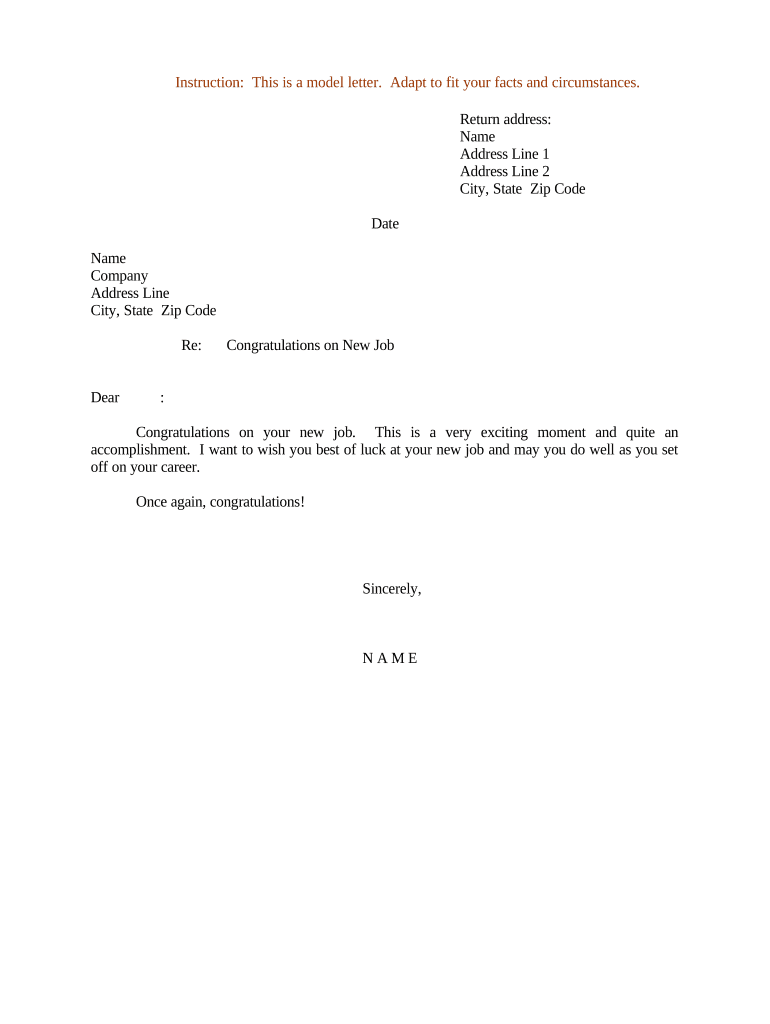
Congratulations Letter

This template is fully customizable. Edit the text, fill out the fields, and send it for signature. Give it a try!
Congratulations Letter

What a Congratulations Letter Is and When to Use It

A Congratulations Letter is a short formal notice sent to confirm and celebrate a positive decision or milestone, such as admission, job offer acceptance, grant awards, or lease approvals. It records key terms, effective dates, any conditions, and next steps for the recipient. Unlike a contract, it usually conveys information and intent rather than creating complex obligations, but it can include signature lines or attachments that establish acceptance, acknowledgments, or administrative requirements. Properly drafted letters reduce misunderstandings and create an auditable record for HR, admissions, or program files.

Why a Clear Congratulations Letter Matters

A concise Congratulations Letter confirms decisions, documents next steps, and protects both sender and recipient by creating a written record.

Why a Clear Congratulations Letter Matters

Who Typically Sends or Receives This Letter

Common senders and recipients vary by context but share the need for clear confirmation and documentation.

  • Admissions offices notifying candidates of acceptance and outlining enrollment steps
  • Human resources issuing job offer confirmations and onboarding instructions
  • Property managers confirming lease approvals and move-in conditions

Essential Parts of a Professional Congratulations Letter

A well-structured letter combines formal tone with precise details so recipients understand decisions, deadlines, and any required actions.

Opening

Start with a clear congratulatory statement naming the program, position, award, or outcome and the decision being confirmed.
Recipient Details

Include the recipient’s full legal name and contact information to avoid identity confusion and ensure accurate record matching.

Decision Summary

State the decision, associated terms (salary, program start date, award amount), and any conditions or contingencies.

Required Actions

List next steps, documents to return, deadlines, and the person or office responsible for follow-up.

Signature Block

Provide the sender’s printed name, title, organization, and a signature line with date to authenticate the communication.

Attachments

Reference attachments or exhibits (offer details, enrollment forms, schedules) and indicate if separate signatures are required.

Core Information to Include

Full Name: Recipient’s legal name
Decision: What was granted
Effective Date: Start or award date
Conditions: Any contingencies
Contact: Sender phone/email
Signature: Authorized signer

Step-by-Step: Create and Send a Congratulations Letter

Follow these sequential steps to prepare, authorize, and distribute a clear, auditable Congratulations Letter.

  • 01
    Draft content: Write decision, terms, dates, and required actions.
  • 02
    Review internally: Check legal, HR, or admissions for accuracy.
  • 03
    Authorize signature: Obtain signer approval and authority verification.
  • 04
    Send and archive: Distribute to recipient and save record.

Where to Send and How to Route the Letter

Choose routing that matches internal workflows and recordkeeping policies; different recipients may require different delivery channels and retention steps.

  • Primary Delivery: Email with signed PDF attachment to recipient.
  • CC Internal: Send copies to HR, admissions, or file owner.
  • Record Archive: Store signed copy in secure document repository.
  • Optional Paper: Provide printed original when policy or recipient requests.

Digital Signing and File Format Considerations

Use file formats and signing methods that preserve content and support audit trails for authenticity and future retrieval.

  • File Formats: PDF, DOCX, or HTML recommended
  • Authentication: Email link or SMS code options
  • Integrations: Salesforce, Google Workspace, NetSuite

Configuring an Online Template for Reuse

Standardize a template with preset fields and routing to reduce errors and speed distribution.

Field Configuration
Template Name Use a clear, versioned naming convention
Authentication Select email with optional SMS code
Auto-Fields Auto-fill organization and date fields
Routing Set recipient, CC, and archive destinations

Typical Timelines and Deadlines to Include

List specific dates and response windows so recipients understand obligations and administrative timelines.

Issue Date:

Date letter is sent to recipient

Acceptance Deadline:

Date by which recipient must respond

Start/Effective Date:

When employment or program begins

Document Return:

Due date for any signed attachments

Record Closure:

Date when file is finalized for retention

Common Mistakes to Avoid

  • Vague terminology that omits essential terms such as effective date, conditions, or who to contact for questions
  • Using informal salutations or missing the recipient’s legal name, causing identity or payroll enrollment problems
  • Failing to list attachments or separate forms required to accept the offer, which causes processing delays
  • Not capturing an auditable signature or acceptance record when acceptance creates administrative commitments

Risks from Incorrect or Missing Information

Administrative Delay: Processing slows
Miscommunication: Recipient confusion
Compliance Risk: Recordkeeping gaps
Financial Error: Incorrect pay or award
Reputational Harm: Stakeholder trust affected
Legal Exposure: If misrepresented, disputes may arise

How a Congratulations Letter Differs from Related Notices

Compare the letter to similar documents to choose the correct form and level of legal formality.

Document Comparison Congratulations Letter Offer Letter
Formality informal to formal formal contractual terms
Legal Effect informative potential contractual obligation
Recommended Signatures sender signature sender and recipient
Typical Attachments schedule or instructions full contract and exhibits

eSignature Provider Comparison for Sending and Signing Letters

Compare starting prices and core features for common eSignature vendors. signNow is listed first per the comparison format.

signNow DocuSign Adobe Sign PandaDoc HelloSign
Starting Price $8/user/mo $15/user/mo $14/user/mo $19/user/mo $15/user/mo
Free Trial 7-day free trial Varies Varies Varies Varies
Bulk Send Yes Yes Yes Yes No
Audit Trail Yes Yes Yes Yes Yes
HIPAA Compliant Yes Yes Yes No No

Real-World Examples of Similar Communications

These examples show how organizations use concise confirmation letters to accelerate operations and maintain records.

Optica Ventures (Admissions)

Optica centralized admission confirmations to reduce follow-up inquiries and speed processing.

  • Short automated letters notified candidates of next steps.
  • "The interface is simple and easy-to-use for our team; more importantly, it is just as easy for our customers."

Martin Properties (Leasing)

Martin Properties moved lease approvals online to shorten vacancy periods and track acceptance.

  • Digital letters included move-in checklists and signature fields.
  • "I can process and execute all of these documents online with 100% compliance and built-in security. Whether on mobile or working offline, I can get forms back to their necessary parties efficiently."

Download Options and Supporting Files

Deliver the signed letter and keep accessible backups in standard formats to meet downstream administrative needs.

Final Signed Copy

Produce a flattened PDF with embedded audit trail for long-term storage and reproducible evidence of signature events.

Editable Template

Keep a DOCX or template version for internal revisions and localized versions to maintain consistent language.

Attachments

Bundle related forms, checklists, and policy acknowledgments to ensure recipients receive everything needed to accept.

Export Formats

Store copies in PDF/A for archival and in native DOCX for editing when necessary.

Practical Tips for Accurate and Efficient Letters

Apply these practices to avoid errors, speed acceptance, and preserve legally useful records.

Standardize Templates
Use a version-controlled template with required fields and conditional sections for different scenarios; this reduces drafting errors and ensures consistent inclusion of mandatory terms and signature blocks across recipients and departments.
Capture Acceptance
When recipient acceptance creates obligations, collect a dated signature or electronic acknowledgment and retain the audit trail showing signer identity, timestamp, and IP address to support later verification if disputes arise.
Include Clear Deadlines
Specify response deadlines in MM/DD/YYYY format and indicate business day calculations where applicable; ambiguous deadlines frequently cause disputes and processing delays if recipients interpret timelines differently.
Archive with Metadata
Save signed letters with searchable metadata (recipient name, decision type, issue date) in a secure repository to support audits, FOIA or discovery requests, and routine administrative lookups.

Key Milestones from Decision to Archived Record

A simple milestone view clarifies responsibilities and ensures timely completion of each administrative step.

01

Decision Recorded

Committee or approver documents the decision and provides final terms.

02

Letter Issued

Authorized sender distributes the Congratulations Letter to the recipient.

03

Recipient Acknowledges

Recipient returns signed acceptance or acknowledgment by stated deadline.

04

Archive Complete

Signed document and attachments are stored in the official records system.

Frequently Asked Questions About Congratulations Letters

Answers to common practical questions about drafting, signing, and storing Congratulations Letters in U.S. administrative settings.


Need help? Contact support

be ready to get more
Join over 28 million airSlate SignNow users