Establishing secure connection…Loading editor…Preparing document…

Letter Inviting Chair for Committee

This template is fully customizable. Edit the text, fill out the fields, and send it for signature. Give it a try!
Letter Inviting Chair for Committee

What the Letter Inviting Chair for Committee Is

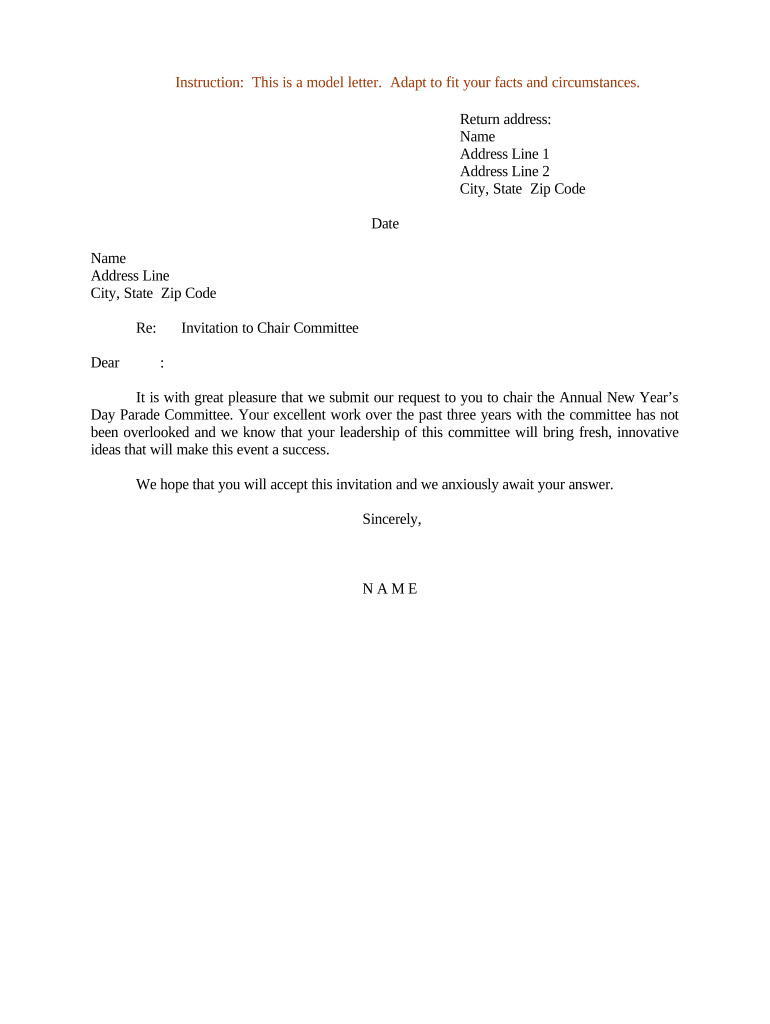
A Letter Inviting Chair for Committee is a formal written notice from an organization appointing an individual to lead a specified committee. The letter typically identifies the committee purpose, the chair’s responsibilities, term length, expected meeting cadence, reporting relationships, and any decision-making authority. It also records acceptance of the role and any conditions such as confidentiality, conflict-of-interest disclosures, or compliance obligations. While usually a simple written appointment, this letter can be retained as an official record and executed electronically under the ESIGN Act (15 U.S.C. ch. 96) and UETA where applicable.

Why a Clear Invitation Letter Matters

A concise invitation letter clarifies duties, prevents misunderstandings about authority or duration, and creates a traceable record for governance and audit purposes. It supports accountability and preserves institutional memory while easing onboarding for the appointee.

Why a Clear Invitation Letter Matters

Who Typically Issues and Receives This Letter

Typical issuers and recipients have distinct administrative or governance roles within organizations.

  • Board Chairs and Officers — Issuing officers use the letter to formalize committee leadership and document delegation of responsibilities.
  • Human Resources or Corporate Secretary — Administrative staff manage distribution, recordkeeping, and incorporation into personnel or governance files.
  • Prospective Chair or External Appointee — The recipient reviews duties, confirms availability, and signs to indicate acceptance.

Core Elements to Include in the Invitation Letter

Include explicit, concise provisions that define scope, expectations, and administrative details so the appointee and organization share the same understanding.

Chair Role

Describe the chair’s primary purpose, scope of authority, and relationship to the board or executive leadership, including any oversight or approval limits.
Term Dates

State the effective date, expected end date or conditions for termination, and any renewal process to avoid ambiguity about service length.

Duties & Authority

List specific duties (agenda setting, meeting facilitation, reporting) and decision-making authority, including whether votes or expenditures require higher approval.

Meeting Schedule

Specify regular meeting cadence, expected meeting preparation, quorum expectations, and reporting deadlines for minutes or deliverables.

Confidentiality & Conflicts

Outline confidentiality obligations, required disclosures, conflict-of-interest procedures, and any required recusal standards.

Acceptance & Signature

Provide a signature block for the chair’s acceptance, date, and any second signature required from an officer or corporate secretary.

Step-by-Step: Drafting and Issuing the Letter

Follow these sequential steps to prepare, approve, and deliver a compliant invitation letter that documents chair appointment.

  • 01
    Draft Letter: Populate title, committee, duties, term, and signature block.
  • 02
    Internal Approval: Obtain required board or officer sign-off per bylaws.
  • 03
    Send to Appointee: Deliver via secure email or eSignature platform and request acceptance.
  • 04
    Record Keeping: Store the signed letter in governance and personnel records.

Configuring an Online Workflow for the Invitation

Use consistent workflow settings so every appointment follows the same verification and archival procedures.

Field Configuration
Sender Email Use official organizational address for traceability.
Signer Role Set as 'Appointee — Chair' with required signature field.
Authentication Level Email link plus optional SMS code for added assurance.
Reminder Schedule Automatic reminders at 3 and 7 days before expiration.

How Electronic Completion and Acceptance Works

A standard e-sign workflow reduces friction while preserving legal validity and an audit trail.

  • Upload Draft: Add the invitation letter file to your e-sign platform.
  • Place Fields: Insert signature, date, and optional initial fields for the appointee.
  • Send Securely: Deliver via verified email link or authenticated channel.
  • Capture Acceptance: Signed document and audit trail are stored automatically.

Technical Formats and Integration Considerations

Choose a platform and file format that preserve the signed document and its audit trail for long-term records.

  • File Formats: PDF and DOCX supported
  • Integrations: Salesforce, Microsoft 365, NetSuite, Google Workspace
  • Storage: Secure cloud or on-premise archive

Common Timelines and When to Send the Letter

Timely issuance aligns appointment with governance cycles, fiscal years, and project schedules—set clear dates for acceptance and onboarding.

Issue After Nomination:

Send promptly after formal nomination or board resolution to secure acceptance.

Acceptance Deadline:

Request signed acceptance within 7–14 days to avoid delays.

Effective Date:

Match with committee charter or next scheduled meeting.

Onboarding Window:

Schedule orientation within 30 days of acceptance.

Record Filing:

File the signed letter with governance records immediately.

Key Milestones from Draft to Active Chair

Track these sequential milestones so appointment proceeds without governance or administrative gaps.

01

Draft Prepared

Board secretary drafts letter and confirms duties.

02

Formal Approval

Board or authorized officer signs the appointment.

03

Appointee Acceptance

Chair signs and returns acceptance.

04

Onboarding Complete

Orientation and document filing finished.

Common Mistakes to Avoid When Preparing the Letter

  • Vague duties or authority — failing to specify limits often causes role confusion and operational delays.
  • Incorrect names or dates — typos can complicate records, verification, and any required background checks.
  • Skipping internal approvals — not following bylaws or approval procedures can invalidate the appointment.
  • Poor storage practices — unsigned drafts or scattered copies make audits and future reference difficult.

Risks and Consequences of an Improper Letter

Authority Dispute: Risk of contested decisions
Governance Noncompliance: Failure to follow bylaws
Recordkeeping Gaps: Loss of audit trail
Operational Delay: Committee work postponed
Reputational Harm: Public confusion or criticism
Legal Exposure: Contract or fiduciary disputes

Typical eSignature Pricing and Feature Snapshot

Compare vendor starting prices and key capabilities relevant to issuing and storing signed invitation letters; signNow is listed first per platform comparisons.

signNow DocuSign Adobe Sign PandaDoc HelloSign
Starting Price $8/user/mo $15/user/mo $14/user/mo $19/user/mo $15/user/mo
Free Plan Yes, 7-day trial No No Yes, limited Yes, limited
Bulk Send Yes Yes Yes Yes No
Audit Trail Yes Yes Yes Yes Yes
HIPAA Compliant Yes Yes Yes No No

Frequently Asked Questions About the Letter Inviting Chair for Committee

Answers to common questions about authority, signature methods, storage, and legal validity for appointment letters.


Need help? Contact support

be ready to get more
Join over 28 million airSlate SignNow users