Establishing secure connection…Loading editor…Preparing document…

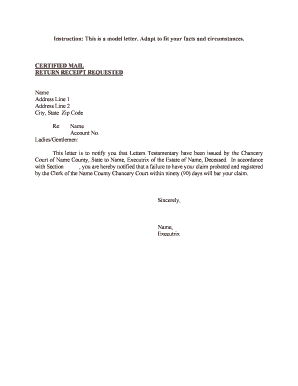
Letter of Testamentary

This template is fully customizable. Edit the text, fill out the fields, and send it for signature. Give it a try!
Letter of Testamentary

What a Letter of Testamentary Is and Why It Matters

A Letter of Testamentary is an official court-issued certificate that confirms an individual has been appointed as the executor or personal representative for a decedent’s estate after a will is admitted to probate. The document authorizes the executor to collect assets, pay debts, close accounts, transfer or sell property, and distribute estate property according to the will and applicable probate orders. Financial institutions, title companies, and government agencies commonly require a certified copy of this letter before releasing assets or changing account ownership. State probate procedure controls issuance and formality.

Why the Letter of Testamentary Is Essential in Estate Administration

The Letter of Testamentary provides legal proof of authority, reduces institutional friction when transferring assets, and centralizes executor responsibilities under court supervision.

Why the Letter of Testamentary Is Essential in Estate Administration

Who Needs a Letter of Testamentary and Who Handles It

Executors, probate attorneys, and courts are the primary parties that obtain and use Letters of Testamentary when administering estates.

  • Executors and personal representatives — present certified letters to banks, brokers, and title companies to access estate assets and manage distributions.
  • Probate attorneys and court clerks — prepare petitions, secure clerk signatures, and maintain certified copies for the estate file and third parties.
  • Financial institutions and government agencies — request certified letters to verify authority before releasing funds, transferring titles, or completing benefit claims.

Institutions rely on the court-issued letter to accept instructions from the estate representative and avoid liability for wrongful distributions.

Step-by-Step: Obtaining and Using the Letter of Testamentary

Follow these core steps to secure and apply the court’s Letter of Testamentary during probate administration.

  • 01
    File Petition: Petition the probate court to open the estate and admit the will.
  • 02
    Serve Notice: Provide required notices to heirs and creditors per local rules.
  • 03
    Probate Hearing: Attend the hearing where the court appoints the executor.
  • 04
    Receive Letter: Clerk issues the Letter of Testamentary; obtain certified copies for institutions.

From Petition to Certified Letter: The Typical Flow

This condensed flow shows the operational sequence probate courts follow to issue a Letter of Testamentary.

  • File Petition: Submit petition, will, and death certificate to the probate clerk.
  • Notice & Proof: Complete required service and file proofs of notice.
  • Court Order: Judge signs order appointing the executor after any hearing.
  • Clerk Certification: Clerk prepares and certifies the Letter of Testamentary with the court seal.

How to Prepare an Electronic Copy and Court Submission

When preparing digital documents for the court and third parties, ensure file formats, authentication, and routing meet court and institutional requirements.

Field Configuration
Upload Will PDF | Use PDF/A where the court accepts electronic filings
Signer Authentication ID Verification | Use government ID + clerk verification
Signature Fields Executor Signature | Place name and date fields for executor
Document Storage Archive | Encrypted storage with audit trail

Digital Signing and Delivery: Platform Requirements

Courts and institutions vary on acceptable electronic processes; confirm the accepted formats before eSubmission.

  • File Types: PDF, PDF/A, or court-specified formats
  • Authentication: ID verification, audio-video record for RON where allowed
  • Integrations: Works with common systems like Salesforce and Microsoft 365

Use an e-signature provider that supports secure storage, audit trails, and named integrations to streamline communication with banks, title agents, and attorneys.

Key Risks and Consequences of an Incorrect or Incomplete Letter

Asset Access Delay: Banks may refuse transactions without certified copy
Executor Liability: Improper distributions can create personal surcharge exposure
Title Transfer Problems: Real estate closings stall without proper documentation
Tax Penalties: Late estate tax filings may incur penalties under IRS rules
Rejected Copies: Unsigned or unsealed copies can be returned and reissued
Court Sanctions: Noncompliance with court orders can invite sanctions

Common Preparation Mistakes to Avoid

  • Submitting uncertified photocopies of the letter leads to repeated requests and processing delays from banks and title companies.
  • Entering mismatched executor names or case numbers causes institutions to flag the document and refuse transactions.
  • Assuming a scanned or electronically signed will substitutes for court certification; probate courts require formal admission and clerk certification.
  • Failing to obtain sufficient certified copies causes repeated trips to the clerk and extra fees for additional certifications.

What a Professional Letter of Testamentary Should Include

A complete, court-certified Letter of Testamentary contains specific elements that institutions expect to validate executor authority.

Court Seal

Official court seal or stamp certifying issuance; required by most banks and title companies to accept the document as authentic.
Clerk Signature

Signature or certification line from the probate clerk showing the document is an official court record.

Case Number

The probate case number and docket entry reference to connect the letter to the estate file.

Executor Identity

Full legal name of the appointed executor and any aliases used in estate records to avoid confusion.

Scope of Authority

A brief statement of the powers granted—collect assets, sell property, pay creditors—consistent with the court order.

Date Issued

Issuance date determining when third parties can rely on the representative’s authority.

Real-World Uses: How Letters of Testamentary Are Applied

These examples illustrate common scenarios where a certified Letter of Testamentary is required to move estate matters forward.

Bank Account Closure

Executor presents certified letter to the bank to access decedent’s accounts.

  • Bank verifies clerk seal and case number.
  • With a certified copy the bank closes or transfers accounts, preventing lengthy holds and enabling payment of estate obligations and beneficiary distributions.

Real Estate Transfer

Title company requests the letter before recording transfer of estate property.

  • Title agent confirms executor authority and court order.
  • Certified Letters allow the executor to sell or transfer property, satisfy liens, and deliver clear title to purchasers or heirs.

Practical Tips for Smooth Processing and Acceptance

Follow these recommended practices to reduce friction with courts and institutions when using Letters of Testamentary.

Obtain Certified Copies
Order multiple certified copies from the clerk to provide original-certified documents to banks, title companies, and agencies without repeated trips.
Verify Names Exactly
Confirm the executor’s name matches government ID and account records to avoid rejections by financial institutions.
Keep Digital Backups
Scan certified copies into encrypted storage with an audit trail for secure distribution and future reference.
Coordinate with Institutions
Ask the receiving bank or title company about their acceptance policy and any additional forms before submitting documents.

Timeframes and Deadlines to Keep in Mind

Key timing considerations affect when you can act and how long records must be kept during and after probate.

File Petition:

File promptly after death per local probate rules to start estate administration.

Probate Hearing Timing:

Hearing dates vary; many courts schedule within 30–90 days after filing.

Issuance of Letter:

Courts typically issue letters after appointment—often same day or within a few days.

Certified Copies:

Request certified copies immediately after issuance to avoid processing delays.

Tax Records:

Keep tax and financial records at least 3 years (IRC §6501(a)).

eSignature Platform Comparison for Supporting Probate Documents

When using an eSignature provider for ancillary estate forms, compare pricing, bulk capabilities, audit trails, and HIPAA support; signNow appears first by design.

signNow DocuSign Adobe Sign PandaDoc HelloSign
Starting Price $8/user/mo $15/user/mo $14/user/mo $19/user/mo $15/user/mo
Free Trial 7-day free trial Yes Yes Yes Yes
Bulk Send Yes Yes Yes Yes No
Audit Trail Yes Yes Yes Yes Yes
HIPAA Compliant Yes Yes Yes No No

Frequently Asked Questions About Letters of Testamentary

Answers to common questions about validity, e-signing, certification, and institution acceptance for Letters of Testamentary.


Need help? Contact support

be ready to get more
Join over 28 million airSlate SignNow users