Establishing secure connection…Loading editor…Preparing document…

Life Estate Deed

This template is fully customizable. Edit the text, fill out the fields, and send it for signature. Give it a try!
Life Estate Deed

What a Life Estate Deed Is and how it functions

A Life Estate Deed is a conveyance that gives one person (the life tenant) the right to use and occupy real property for the duration of their life while naming one or more remainder beneficiaries who receive full ownership when the life tenant dies. It separates present possessory rights from future ownership interests, and it is commonly used to avoid probate, preserve use during a lifetime, or transfer property to heirs with limited immediate tax consequences. Recording and notarization requirements vary by jurisdiction and affect enforceability and title clearance.

Why people use a Life Estate Deed

A Life Estate Deed protects a surviving person’s right to live in the property while ensuring a predefined transfer to named remainder beneficiaries without full probate administration; it clarifies succession and can simplify title transfer on death.

Why people use a Life Estate Deed

Who typically prepares or signs a Life Estate Deed

Common participants include the current owner who grants the life estate, the life tenant (if different), remaindermen named to receive title later, and an attorney or title agent for recording.

  • Seniors and homeowners planning for estate succession and wishing to avoid probate while retaining occupancy.
  • Adult children or beneficiaries designated as remaindermen who will inherit fee simple title at the life tenant’s death.
  • Attorneys and title companies preparing deed language, ensuring recording compliance, and clearing title for future transfer.

Parties should confirm state recording rules and tax or benefit impacts before completing the document to avoid unintended consequences.

Roles and typical representatives

Grantor / Owner

The person who signs and conveys the life estate. The grantor must have capacity and must sign the deed in the presence of the required notary and any witnesses under state law; incorrect execution can void the conveyance.

Remainderman

The person or entity named to receive fee simple title after the life tenant’s death. Their future interest should be described precisely; ambiguous remainder language can create title disputes or delay probate.

Essential data fields found on a Life Estate Deed

Grantor Name: Full legal name
Life Tenant: Named life tenant
Remaindermen: Named future owners
Legal Description: Parcel description
Consideration: Purchase amount or nominal
Signing Date: MM/DD/YYYY

Legal risks and consequences of flawed execution

Unrecorded deed: May not protect remainderman
Improper notarization: Title rejection at recording
Ambiguous language: Creates probate or litigation
Medicaid exposure: Possible eligibility impact
Creditor claims: Subject to grantor debts
Tax consequences: Capital gains/tax basis issues

Common mistakes to avoid when preparing a Life Estate Deed

  • Using informal or unclear remainder language that fails to describe who inherits and under what conditions, which can lead to contested title and court involvement.
  • Failing to verify whether recording is required immediately after signing; delays can create risk from intervening liens or competing claims.
  • Overlooking the effect on means-tested benefits such as Medicaid; transfers that appear to reduce assets can trigger lookback reviews and penalties.
  • Neglecting to obtain title insurance or a title search to detect existing encumbrances, liens, or unresolved ownership claims before changing title.

Step-by-step completion process for a Life Estate Deed

Follow a clear sequence to prepare, sign, notarize, and record the Life Estate Deed to ensure it creates the intended present and future interests.

  • 01
    Prepare deed: Draft with precise grant and remainder language.
  • 02
    Verify title: Order title search or confirm clear title.
  • 03
    Sign & notarize: Execute in presence of required notary and witnesses.
  • 04
    Record deed: Submit to county recorder for public record.

How the Life Estate Deed workflow typically proceeds

The transaction flows from drafting to recording; each step establishes the legal status and public notice necessary for enforceability and future transfer.

  • Drafting: Attorney or title agent writes deed clauses and legal description.
  • Execution: Grantor signs; required witnesses and notary attest.
  • Recording: County recorder accepts, indexes, and posts the deed.
  • Post-record: Title updates and notice to remaindermen if applicable.

Key components to include in a professional Life Estate Deed

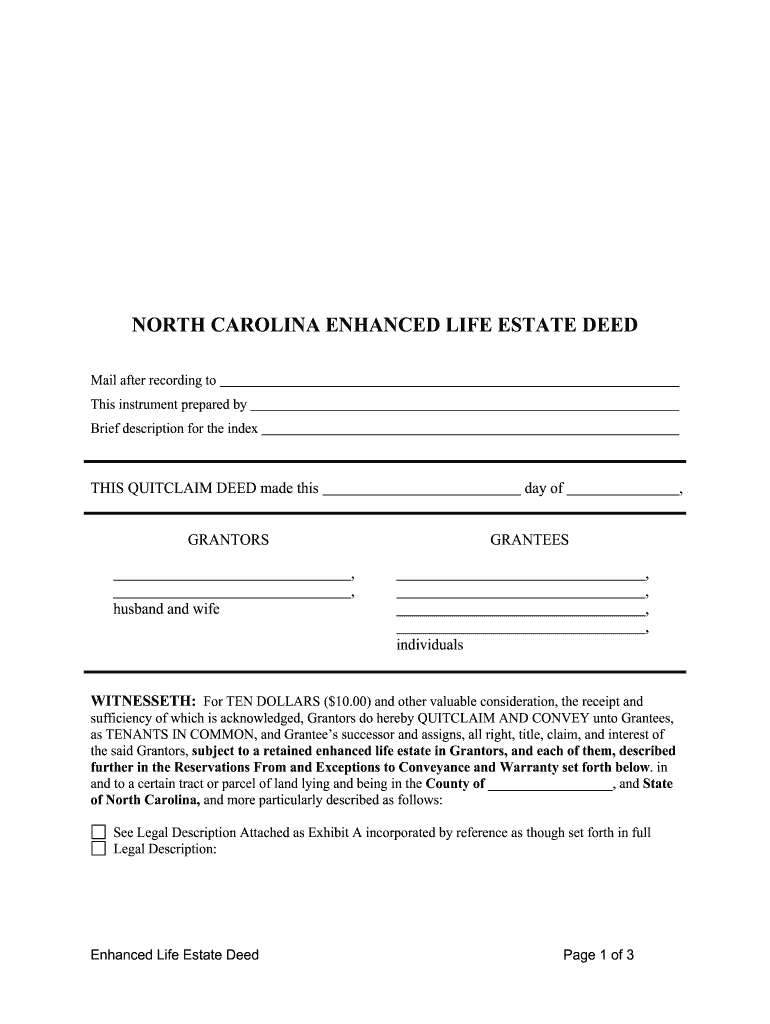
A well-drafted Life Estate Deed must clearly identify parties, describe the property, state the life estate grant, name remaindermen, specify any conditions, and include proper execution and recording provisions.

Parties

Full legal names of grantor, life tenant, and all remaindermen, with entity type if not individuals, to avoid identity disputes at recording.
Property description

Complete metes-and-bounds or recorded lot/parcel description to match county records and prevent ambiguity during title search.

Grant language

Plain but legally precise wording that transfers a life estate to the named life tenant while reserving remainder to specified beneficiaries.

Remainder terms

Specify whether remainder is vested, contingent, or subject to life tenant obligations; identify successors if initial remainderman predeceases life tenant.

Consideration

State nominal consideration or actual dollar amount; some recording jurisdictions require a consideration statement for indexing.

Execution clause

Include signature blocks, notarization wording, witness lines (if required), and space for recording information and county clerk stamps.

Digital completion workflow settings for a Life Estate Deed

Configure an online workflow that enforces signing order, notarization fields, and conditional recipient routing to reduce execution errors.

Field Configuration
Signer Order Set grantor first, notary second if remote notarization follows.
Notary Block Include dedicated notary acknowledgement field and signed block.
Witness Fields Show witness signature lines only if state requires them.
Recording Note Add upload field for recorded document image post-recording.

Technical considerations for eSigning and eNotarization

Ensure the chosen platform supports notarization, audit trails, and the export formats required by county recorders.

  • Document formats: PDF/A or PDF recommended for recording and long-term storage.
  • Authentication: Use multi-factor or identity-proofing when permitted for stronger attribution.
  • Audit trail: Capture timestamps, IPs, and signer actions for evidentiary record.

Confirm county recorder acceptance of electronically notarized affidavits and the file formats before completing an RON workflow to avoid rejected recordings.

Timing and filing expectations for a Life Estate Deed

Timely recording and follow-up steps protect the parties and preserve the grantor’s intent; local practices determine exact turnaround and indexing time.

Signing to recording:

Record promptly; many practitioners record within days to protect priority.

County processing:

Recorder indexing may take days to weeks depending on county workload.

Title updates:

Allow 1–4 weeks for title companies to reflect new interests.

Notary retention:

Notary journals and recordings must be retained per state RON rules.

Beneficiary notice:

Notify remaindermen of recordation and provide recorded copy.

Key milestones from draft to recorded deed

Track milestones to ensure completion, prevent gaps, and confirm transfer of interests after the life tenant’s death.

01

Draft Approval

Finalize deed text and legal description with counsel.

02

Execution Event

Grantor signs before required notary and witnesses.

03

Recording Submission

Submit to county recorder and obtain recording number.

04

Document Retention

Store recorded copy with estate records and title file.

eSignature vendor pricing and feature snapshot for deed workflows

Comparison shows starting prices and selected features; eSignature choices affect notarization support, audit trails, and cost per user or per signature.

signNow DocuSign Adobe Sign PandaDoc HelloSign
Starting Price $8/user/mo $15/user/mo $14/user/mo $19/user/mo $15/user/mo
Free Trial Yes, 7-day trial Varies by plan Varies by plan Varies by plan Varies by plan
Bulk Send Yes (plan dependent) Yes (plan dependent) Yes (plan dependent) Yes (plan dependent) Varies
Audit Trail Yes Yes Yes Yes Yes
Envelope Cap No cap 100 envelopes/user/year Varies by plan Varies by plan Varies by plan

Practical tips for accurate and efficient Life Estate Deed completion

Follow these best practices to reduce errors, recording delays, and downstream disputes.

Use precise legal descriptions
Copy the recorded parcel description exactly from a prior recorded deed or the county assessor; an incorrect description is a common cause of recorder rejection and title issues.
Confirm identity details
Verify signers’ legal names, suffixes, and current addresses; mismatched names can stall recording and title insurance issuance.
Coordinate notarization and witnesses
Schedule execution so the required notary and any witnesses are present, and follow state RON rules where remote notarization will be used.
Record promptly
Submit the deed for recording as soon as possible after execution to protect priority and reduce the risk of intervening liens.

Practical examples of Life Estate Deed use

Real examples illustrate common goals: preserving lifetime use for an owner while naming heirs to receive title automatically later.

Senior Succession

An elderly homeowner grants a life estate to remain living in the property

  • Life tenant keeps occupancy and maintenance duties
  • On death the named child receives title without probate; family consulted an attorney to confirm Medicaid timing and lien status.

Family Transfer

A couple conveys a life estate to the surviving spouse with remainder to their children

  • The deed preserves spouse occupancy and sets remainder shares
  • They recorded the deed and provided copies to their title company for future closing ease.

Frequently asked questions and troubleshooting for Life Estate Deeds

Answers to common questions about execution, recording, tax impact, and revocation can help avoid costly errors.


Need help? Contact support

be ready to get more
Join over 28 million airSlate SignNow users