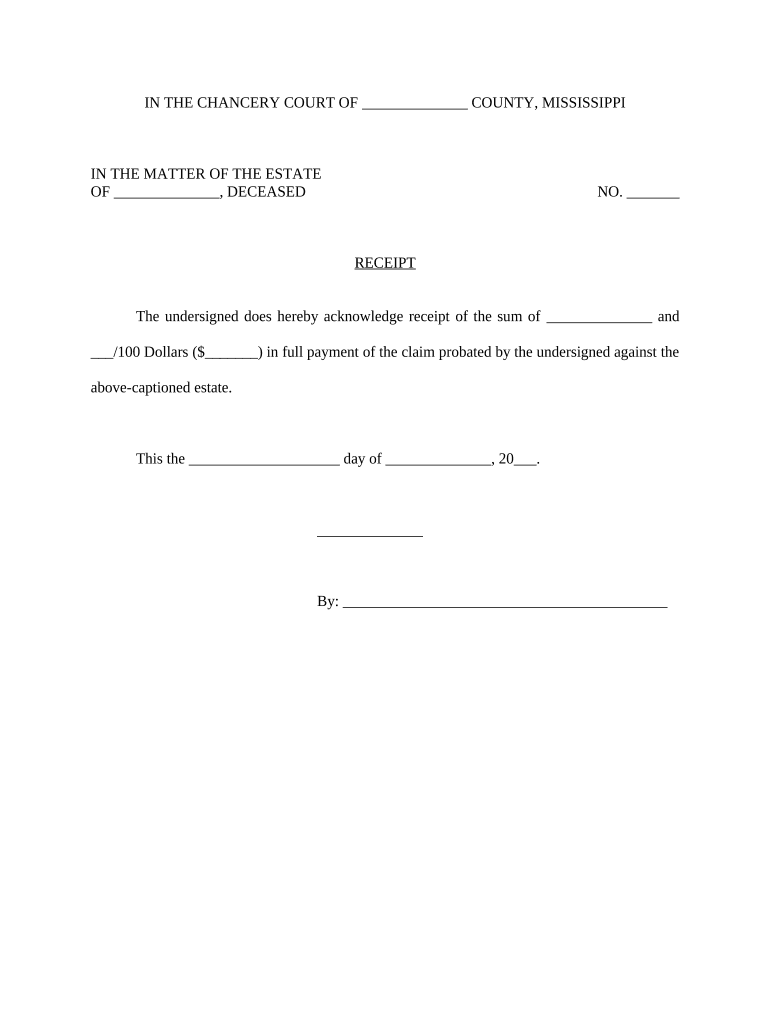
Mississippi Claim Form
What the Mississippi Claim Form Is and when it’s used
Why a correctly completed Mississippi Claim Form matters
A complete, accurate form preserves legal rights, speeds processing, and reduces requests for additional information. It creates a clear written record that supports timely investigation, payment determinations, or administrative appeals.
Who typically completes or receives this form
The Mississippi Claim Form is completed by individuals, businesses, and representatives to document claims for insurance, government benefits, or contractual remedies.
- Individuals filing homeowner, auto, or personal injury claims with insurers or state benefit programs.
- Business owners or property managers submitting damage, repair, or contractual claims on behalf of an entity.
- Attorneys, adjusters, or authorized representatives completing forms for clients or insured parties.
When a representative files the form, include a signed authorization and current contact details so agencies and carriers can verify authority quickly.
Step-by-step: filling out the Mississippi Claim Form
-
01Gather documents: Assemble IDs, policies, invoices, and photos before you start.
-
02Enter details: Complete claimant, incident, and coverage fields accurately.
-
03Attach support: Upload scans or photos of receipts, estimates, and IDs.
-
04Sign and submit: Apply an authorized signature, then send to the designated recipient.
Configuring an online submission workflow
| Field | Configuration |
|---|---|
| Required Fields | Make claimant, date, and signature mandatory. |
| Conditional Logic | Show additional fields when 'Yes' responses require more detail. |
| Attachments | Accept PDFs, DOCX, JPG with size limits and type checks. |
| Notification | Email confirmations to claimant and internal case owner. |
Where a completed Mississippi Claim Form is sent
-
Insurer Claims Desk: Submit to the carrier’s claims email, portal, or physical address per policy.
-
State Agency: File with the named department or division listed on the form.
-
Third-Party Administrator: Send to the TPA if the policy uses outsourced claims handling.
-
Legal Representative: Provide signed authorization and deliver to attorney or authorized agent.
Digital delivery and format considerations
Choose a submission method that preserves file integrity and an auditable trail.
- File Formats: PDF, DOCX, JPG supported for most portals.
- Authentication: Email link, SMS code, or stronger ID verification options.
- Integrations: Supports common systems for storage and case management.
Verify recipient requirements for attachments, e-signature acceptance, and any required notarization before submitting.
Consequences of incomplete or late claim submissions
Common mistakes that delay claim processing
- Submitting a partially completed form without signature or required attachments forces manual follow-up and adds processing days.
- Using informal or inconsistent names (nicknames) causes identity verification failures and slows adjudication.
- Uploading illegible photos or scans prevents evidence review and triggers repeat requests for better documentation.
- Failing to follow the recipient’s file naming or size rules can cause portal rejections or lost submissions.
Typical timing and response expectations for claim submissions
Initial Filing:
File promptly; many insurers request within 30–60 days
Acknowledgement:
Carrier or agency usually acknowledges within 7–14 days
Investigation Period:
Resolution often occurs within 30–90 days
Request for More Info:
Respond promptly, typically within 14–30 days
Appeal Window:
Varies by policy or statute; check provider rules
Comparing eSignature vendor pricing and capabilities relevant to claim form workflows
| signNow | DocuSign | Adobe Sign | PandaDoc | HelloSign | |
|---|---|---|---|---|---|
| Starting Price | $8/user/mo | $15/user/mo | $14/user/mo | $19/user/mo | $15/user/mo |
| Free Trial | 7-day trial | Varies | Varies | Varies | Varies |
| Bulk Send | Yes | Yes | Yes | Yes | No |
| Audit Trail | Yes | Yes | Yes | Yes | Yes |
| HIPAA Compliant | Yes | Yes | Yes | No | No |
Frequently asked questions about the Mississippi Claim Form
-
What if I miss the filing window?
Consequences depend on the recipient. Insurance policies and agencies often set specific notice periods; late filings can be denied. Contact the claims desk immediately and document reasons for delay to support a potential late-file appeal.
-
Can I sign the form electronically?
Yes, electronic signatures are legally enforceable under the ESIGN Act (15 U.S.C. ch. 96) and UETA where adopted. Confirm the recipient accepts e-signatures and any required authentication level or consumer disclosure.
-
Is notarization required?
Notarization depends on form type and recipient rules. Some claims or affidavits require a notary or RON; verify with the agency or insurer before submitting to avoid rejection.
-
What supporting documents are needed?
Common attachments include IDs, police or incident reports, repair estimates, photos, invoices, and policy declarations. Follow the recipient’s checklist to avoid follow-up requests.
-
How should I correct a mistake on a submitted form?
Do not alter the original submission. Submit a corrected form with an explanation and date, or follow the recipient’s official amendment process to preserve auditability.
-
Who can sign on behalf of a business or claimant?
An authorized officer, manager, or a person with a written power of attorney may sign. Attach authorization documentation and verify the recipient accepts representative signers.