Establishing secure connection…Loading editor…Preparing document…

Motion for Reconsideration

This template is fully customizable. Edit the text, fill out the fields, and send it for signature. Give it a try!
Motion for Reconsideration

What a Motion for Reconsideration Is and When It’s Used

A Motion for Reconsideration asks a court to review and change an earlier order or judgment in the same case. It is typically filed after a judge issues a ruling when a party believes the court overlooked controlling law, misapplied facts, or when new evidence or intervening authority has appeared. Motions for reconsideration are governed by court rules (local, federal, or state), and they are distinct from appeals because they are decided by the same tribunal that issued the original order. Filing deadlines and standards vary by jurisdiction and court level.

Why a Motion for Reconsideration Matters

A well-crafted motion can correct clear errors, present new controlling authority, or preserve issues for appeal while avoiding the time and cost of a new proceeding.

Why a Motion for Reconsideration Matters

Who Typically Prepares and Files This Motion

Choose the preparer based on legal complexity, procedural deadlines, and whether immediate court-level correction is practical.

  • Plaintiffs and defendants engaged in civil litigation seeking to overturn a dispositive or interlocutory order.
  • Appellate counsel or trial attorneys preserving issues for appeal or clarifying record for subsequent review.
  • In-house legal teams handling regulatory, administrative, or contract disputes where rapid clarification is required.

Step-by-Step: Preparing and Filing the Motion

Follow these sequential steps to prepare a compliant Motion for Reconsideration and improve the chance of judicial review.

  • 01
    Confirm Timeliness: Check local and federal rules for the filing window before drafting.
  • 02
    Identify Grounds: Select legally recognized bases such as clear error or new law.
  • 03
    Draft Concisely: Focus on facts, legal authority, and precise requested relief.
  • 04
    File and Serve: Submit via court e-filing and serve all parties per rules.

Essential Parts of a Professional Motion for Reconsideration

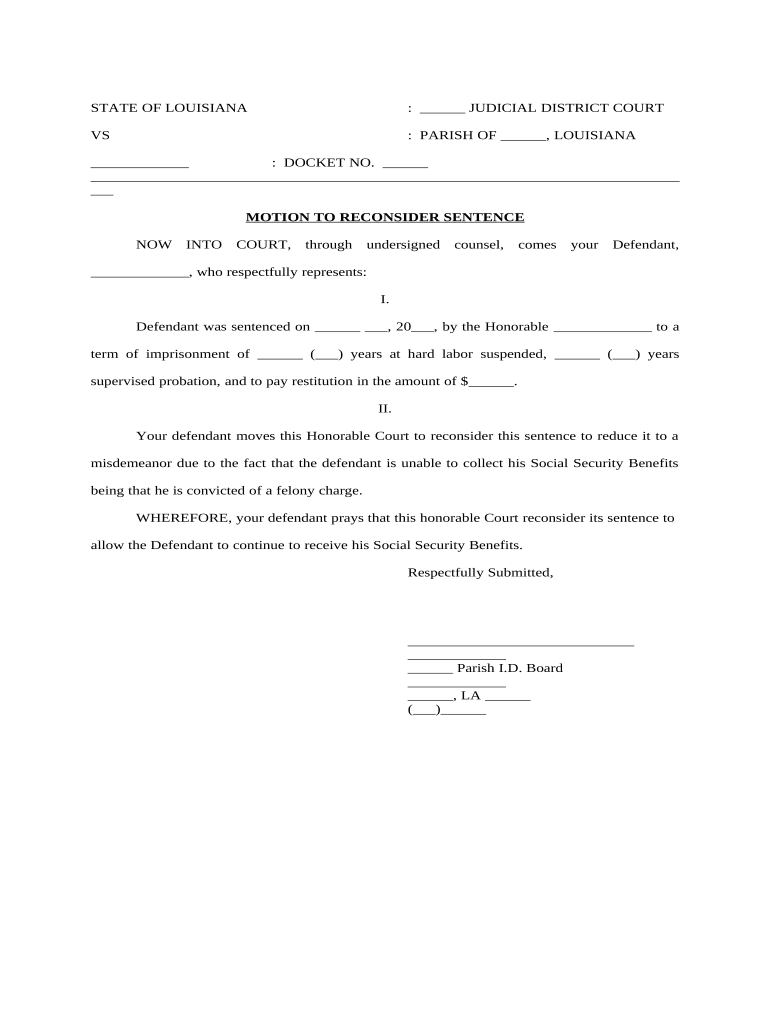
A complete motion contains a precise caption, an explanation of timing and jurisdiction, succinct grounds, supporting evidence, a statement of requested relief, and a proper signature and certificate of service.

Caption

Mirrors the original case caption, showing court, case number, and parties for correct identification and docket placement.
Introduction

One-paragraph summary stating what order is challenged and what the movant requests from the judge in clear terms.

Statement of Facts

Concise factual background limited to information necessary to explain the claimed error or new evidence.

Legal Argument

Focused authorities and application showing why the court should alter its earlier ruling under applicable standards.

Supporting Evidence

Attach exhibits (new affidavits, documents, or opinions) clearly labeled and referenced in the motion.

Certificate of Service

Statement confirming how and when opposing parties were served, including method and addresses used.

Required Information and Filing Elements at a Glance

Case Number: Essential identifier for docketing.
Judge/Department: Directs the motion to the correct bench.
Movant Name: Party seeking reconsideration.
Relief Sought: Specify exact corrective action requested.
Supporting Exhibits: Attach new evidence or relevant orders.
Service Proof: Method and date of service on all parties.

How to Set Up an Electronic Reconsideration Workflow

When using an e-filing or eSignature-enabled workflow, configure these settings to ensure complete records and service compliance.

Field Configuration
Document Format PDF/A preferred for court filings
Signature Type Typed or drawn e-signature with audit trail
Proof of Service Automatic generation of certificate of service
Retention Store signed PDF and audit log for required period

Where to File and How the Submission Flows

A Motion for Reconsideration is filed with the same court that issued the order; processes vary by jurisdiction but follow a common path.

  • Prepare Motion: Draft, attach exhibits, and finalize signature blocks.
  • E-File: Submit through the court's electronic filing system where available.
  • Serve Parties: Serve opposing counsel via electronic service or as required.
  • Clerk Docketing: Clerk assigns motion number and calendar status.

Digital Filing and eSignature Considerations

Confirm the court's e-filing standards and keep a secure copy of the signed motion plus the audit log for the retention period.

  • File Format: PDF/A and searchable text
  • Audit Trail: IP, timestamp, and signer attribution
  • Integrations: E-filing system compatibility

Common Deadlines and Timing Rules to Check

Timeliness standards differ by court: federal, state, and local rules set the window for filing a motion for reconsideration or its equivalent.

Federal Rule Timing:

Check local federal rules; many require prompt action within 14 days for certain motions

State Court Windows:

Varies by state—many set 10–30 day periods

New Evidence Deadline:

File promptly after discovery of material new facts

Intervening Law:

File quickly when new controlling precedent appears

Preserve Appeal Rights:

Timely motions can preserve issues for appellate review

Consequences of Procedural Errors or Late Filings

Denial for Timeliness: Court may refuse to consider the motion
Sanctions Risk: Improper or frivolous filings can trigger sanctions
Waived Arguments: Late or untimely grounds may be deemed waived
Lost Appeal Rights: Missed deadlines can forfeit appellate review options
Clerk Rejection: Nonconforming filings may be rejected without review
Evidence Exclusion: Late evidence may be excluded at the court’s discretion

Common Mistakes to Avoid

  • Missing the jurisdictional or local rule deadline, which can be fatal.
  • Failing to include a clear, narrow legal ground for reconsideration.
  • Submitting exhibits that were available earlier and not explaining why they are newly discovered.
  • Improperly formatted caption, signature, or certificate of service causing clerical rejection.

Real-World Examples of When Motions for Reconsideration Succeed

These short examples show typical factual or legal situations that may justify reconsideration.

New Evidence Example

A party discovers a previously unavailable contract page

  • Evidence proves a factual error in the order
  • The court granted reconsideration where the evidence could not have been produced earlier with reasonable diligence and materially affected the outcome.

Change in Law Example

An intervening appellate decision clarifies controlling law

  • The decision directly conflicts with the court’s ruling
  • The trial court vacated its prior order to conform to the new controlling precedent.

Practical Tips to Improve Acceptance and Clarity

Adopt these drafting and filing habits to reduce procedural objections and increase the chance of substantive review.

Be Concise and Focused
Limit the motion to the narrow issue—courts are less receptive to rehearing on previously argued points.
Cite Controlling Authority
Directly tie the requested relief to statute or binding precedent to show legal error or change in law.
Demonstrate Timeliness
Explain why the motion is timely and include dates of discovery for new evidence or intervening cases.
Include a Service Certificate
Provide a clear certificate of service indicating method, recipients, and date to avoid clerical rejection.

Comparing eSignature Providers for Filing and Serving Motions

Electronic signature and e-filing platforms differ on price, bulk send, and compliance features; signNow appears first for direct feature comparison.

signNow DocuSign Adobe Sign PandaDoc HelloSign
Starting Price $8/user/mo $15/user/mo $14/user/mo $19/user/mo $15/user/mo
Free Trial 7-day free trial, no credit card required Varies Varies Varies Varies
Bulk Send Yes Yes Yes Yes No
Audit Trail Yes Yes Yes Yes Yes
HIPAA Compliant Yes Yes Yes No No

Frequently Asked Questions About Motions for Reconsideration

Answers to common procedural and drafting questions to help avoid filing pitfalls and to clarify next steps.


Need help? Contact support

be ready to get more
Join over 28 million airSlate SignNow users