Establishing secure connection…Loading editor…Preparing document…

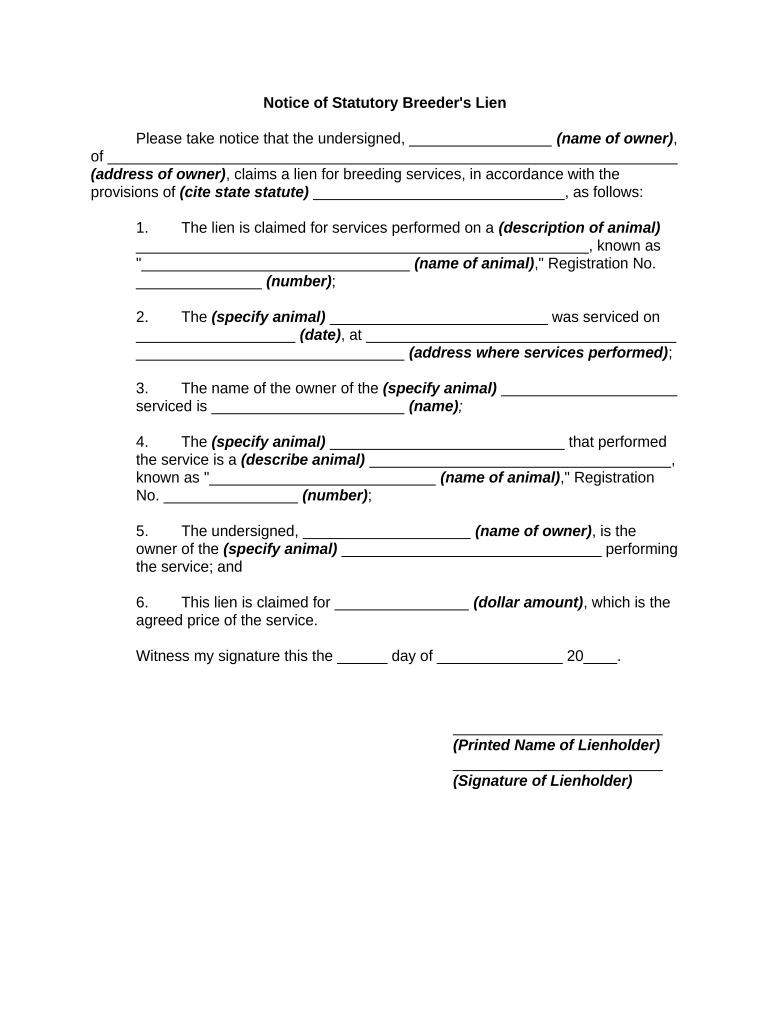
Notice Statutory Form

This template is fully customizable. Edit the text, fill out the fields, and send it for signature. Give it a try!
Notice Statutory Form

What the Notice Statutory Form Is and when it applies

A Notice Statutory Form is a formal written notice prescribed or recognized by statute that informs a recipient of rights, obligations, claims, or impending legal action. Typical examples include statutory notices of default, consumer privacy notices, eviction or foreclosure notices, and other legally required disclosures. The form’s structure, required wording, and delivery method are often dictated by state or federal law; correct completion and proof of delivery determine enforceability and trigger statutory timelines for response or cure.

Why using a compliant Notice Statutory Form matters

Using a correct statutory notice protects legal rights, creates a clear record of communication, and preserves statutory deadlines for enforcement. Precise wording and reliable delivery reduce litigation risk and administrative delays while ensuring the recipient has notice required by law.

Why using a compliant Notice Statutory Form matters

Step-by-step completion checklist

Follow these sequential steps to prepare, verify, and deliver a Notice Statutory Form with an auditable record.

  • 01
    Prepare: Select correct statutory template and populate fields fully.
  • 02
    Verify: Confirm recipient identity and address against official records.
  • 03
    Sign: Have authorized party sign and date the notice.
  • 04
    Deliver: Send using the required method and retain proof of delivery.

Where to send the completed Notice Statutory Form

Destination depends on the statute and intended effect: service on a person, filing with an agency, or sending to a regulated counterparty. Choose the method the law requires and preserve proof of delivery.

  • Certified Mail: Use USPS certified mail with return receipt when statute requires mailed service.
  • Personal Service: Deliver in person to the named recipient where the statute mandates hand delivery.
  • Agency Filing: File with the relevant state or federal agency when required by statute.
  • Electronic Delivery: Use approved eDelivery or eSignature channels only where statutes permit electronic service.

Digital workflow settings to track completion and service

Configure the digital workflow to capture identity, signatures, and delivery evidence required to prove service and meet retention rules.

Field Configuration
Authentication Email + SMS code or higher for signer identity verification
Template Locked statutory text; editable fields limited to factual entries
Routing Sequential routing for multi-party execution and approvals
Retention Automatic archival with audit trail and export options

Technical requirements for eSubmission and auditability

Use a platform that captures secure signatures, an immutable audit trail, and exportable records in standard formats.

  • File Formats: PDF and DOCX input with signed PDF output
  • Integrations: Connectors for common systems like Salesforce and NetSuite
  • Authentication: Email, SMS, or advanced signer verification

Common deadlines and response windows to track

Statutory notices often start a running clock; missing the window may forfeit remedies or extend exposure to liability.

Effective Date:

The date stated on the notice; it usually triggers cure periods or response deadlines.

Recipient Response Period:

Many statutes allow 10–30 days to respond or cure; check the controlling code.

Filing Deadline:

When filing to an agency is required, statutes commonly set 10–30 day windows.

Service Proof Retention:

Keep delivery receipts and audit logs for the full retention period required.

Extension or Cure:

Some statutes allow one extension; document any extension agreement in writing.

Penalties and legal risks from incorrect notices

Invalid Notice: Court may reject enforcement
Statute Denied: Loss of statutory remedies
Fines: Civil penalties possible under specific statutes
Contract Breach: Counterparty may claim breach damages
Tax Consequences: Incorrect tax notices can trigger withholding or penalties
Evidence Lost: Insufficient proof of service weakens litigation posture

Security and compliance controls to include

In-transit Encryption: TLS 1.2/1.3
At-rest Encryption: AES-256
Audit Trail: Tamper-evident event history
Regulatory Certs: SOC 2 Type II, ISO 27001
HIPAA Support: HIPAA available with BAA
eSign Legal Basis: ESIGN and UETA compliance

Common preparation mistakes to avoid

  • Using non‑statutory or altered language that changes rights or deadlines and renders the notice noncompliant under the governing statute.
  • Sending to an incorrect or outdated address, which can defeat service and allow a recipient to claim lack of notice.
  • Failing to document delivery method and receipt; without proof, enforcement and litigation readiness are weakened.
  • Allowing an unauthorized person to sign the notice, which can void the notice and expose the sender to liability.

Real-world examples of using statutory notice templates

These examples show how organizations use e-enabled workflows and templates to deliver statutory notices while preserving proof of service and compliance.

Case Study 1

A regional property manager standardized foreclosure notices to ensure consistent wording and service methods.

  • This reduced disputes over service dates.
  • The manager reported fewer contested notices and faster resolution by keeping immutable signed PDF records and delivery receipts for each case.

Case Study 2

A healthcare clinic digitized patient privacy notices and consent acknowledgements to streamline intake.

  • Patients signed on mobile devices at registration.
  • The clinic kept encrypted audit trails and BAAs in place to meet HIPAA retention rules and demonstrate compliance during audits.

Practical tips to produce enforceable statutory notices

Follow these drafting and delivery best practices to reduce risk and create admissible records.

Use statutory language
When a statute prescribes wording, reproduce it exactly. Deviations can alter legal effect or give recipients grounds to challenge the notice’s validity.
Confirm signer authority
Verify the signer is authorized to act for the organization; maintain delegation records or board resolutions for corporate signers to avoid challenges.
Preserve delivery evidence
Retain copies of signed notices, certified mail receipts, email headers, and eSignature audit trails to prove the date and method of service.
Coordinate state rules
Check local filing, notarization, and witness requirements before serving notices across state lines to ensure procedural compliance.

eSignature vendor comparison for Notice Statutory Form workflows

Basic pricing and capability comparisons can inform vendor selection for high-volume statutory notice workflows; confirm plans and features directly with each provider.

signNow DocuSign Adobe Sign PandaDoc HelloSign
Starting Price $8/user/mo $15/user/mo $14/user/mo $19/user/mo $15/user/mo
Free Trial Yes — 7-day free trial Varies Varies Varies Varies
Bulk Send Yes Yes Yes Yes No
Audit Trail Yes Yes Yes Yes Yes
HIPAA Compliant Yes Yes Yes No No
Envelope Cap No envelope cap 100 envelopes/user/year Varies Varies Varies

Frequently asked questions — completing and submitting statutory notices

Answers to common questions about validity, electronic signatures, notarization, and correcting completed notices.


Need help? Contact support

be ready to get more
Join over 28 million airSlate SignNow users