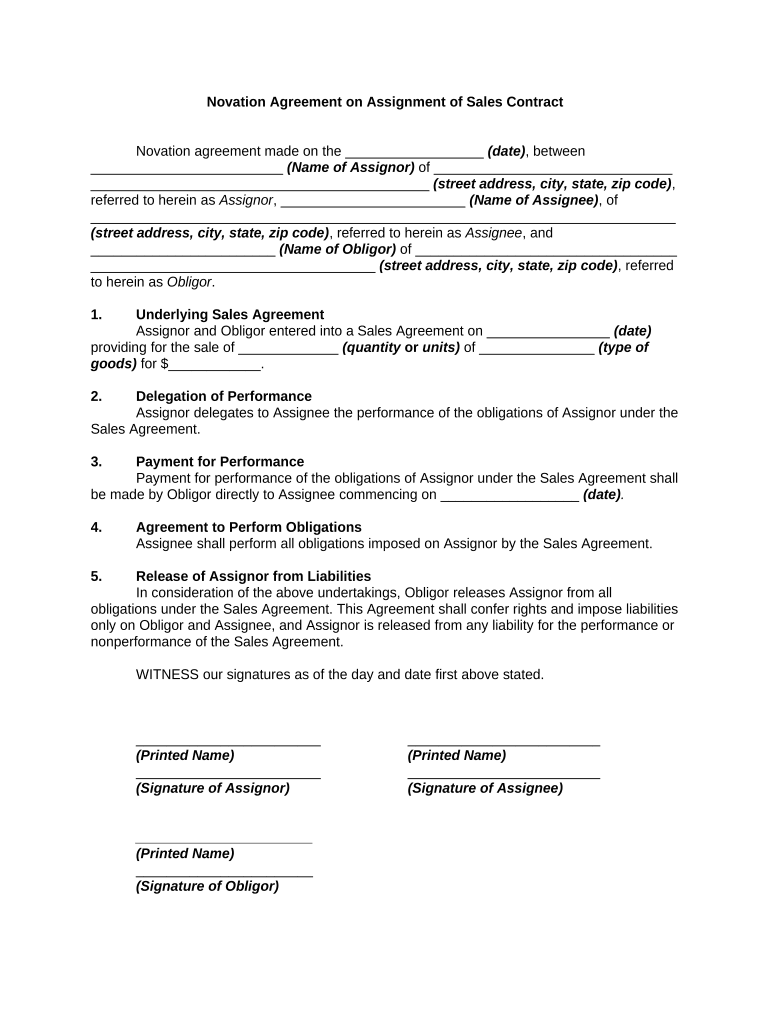
Novation Agreement
What a Novation Agreement Is and When It Matters
Why Use a Novation Agreement
A Novation Agreement creates a clean transfer of contractual duties and rights, avoiding dual liability and clarifying which party is responsible going forward. It preserves continuity while documenting consent and consideration required under contract law and reduces disputes about standing, performance obligations, and liability allocation.
Who Typically Prepares or Signs a Novation Agreement
Parties with ongoing contractual relationships that must transfer obligations or rights—plus in-house counsel and contracting teams—usually manage novations.
- Corporate legal teams managing M&A, divestiture, or supplier changes.
- Finance or treasury teams handling debt substitutions or assignment of receivables.
- Service providers and customers when a contract’s performance is transferred.
Typical Signatory Roles
Assignor — Counsel
General counsel or assigned contracting lawyer represents the original party transferring rights. They confirm the original contract terms, ensure the release of liability language is accurate, and coordinate consent from counterparties and any required third parties.
Assignee — CFO
A finance leader or authorized officer for the incoming party signs to accept obligations and confirm financial capability. They review consideration, indemnities, and immediate performance responsibilities before binding the assignee to the agreement.
Step-by-Step: Completing a Novation Agreement
-
01Review Original Contract: Confirm consent provisions and anti-assignment clauses first.
-
02Draft Novation: Define parties, replaced obligations, effective date, and consideration.
-
03Obtain Consents: Get written consent from the counterparty and any required third parties.
-
04Execute and Distribute: Sign all counterparts, notarize if necessary, and circulate executed copies.
How Novation Replaces One Party with Another
-
Step 1: Original parties agree to substitution terms.
-
Step 2: Incoming party accepts obligations in writing.
-
Step 3: Counterparty gives express consent to the novation.
-
Step 4: Document executed; liability transfers per the effective date.
Configuring an Online Novation Workflow
| Field | Configuration |
|---|---|
| Signature Blocks | Place signers in order; require name, title, and date fields |
| Consent Checkbox | Add a required checkbox confirming counterparty consent |
| Supporting Attachments | Include exhibits or original contract reference files |
| Final Distribution | Auto-send executed copies and PDF audit trail to parties |
Digital Signing and Delivery Options
Use a platform that supports sequential signing, audit trails, and secure storage when executing novation agreements electronically.
- Integrations: Salesforce, NetSuite, Microsoft 365
- Formats: PDF, DOCX, HTML
- Authentication: Email, SMS code, or advanced options
Comparing eSignature Providers for Novation Agreements
| signNow | DocuSign | Adobe Sign | PandaDoc | HelloSign | |
|---|---|---|---|---|---|
| Starting Price | $8/user/mo | $15/user/mo | $14/user/mo | $19/user/mo | $15/user/mo |
| Free Trial | 7-day free trial | Vendor-specific trials | Vendor-specific trials | Vendor-specific trials | Vendor-specific trials |
| Bulk Send | Yes | Yes | Yes | Yes | No |
| Audit Trail | Yes | Yes | Yes | Yes | Yes |
| HIPAA Compliant | Yes | Yes | Yes | No | No |
| Envelope Cap | No cap | 100 env/user/yr | Varies by plan | Varies by plan | Varies by plan |
Key Risks if a Novation Is Defective
Common Preparation Mistakes to Avoid
- Failing to obtain explicit written consent from each counterparty before executing the novation, which can leave the original party exposed to liability.
- Using vague consideration language like 'value received' without specifying the amount or form, creating ambiguity about enforceability and tax treatment.
- Neglecting to update exhibits, schedules, or referenced contracts so the novation does not correctly map substituted obligations and performance timelines.
- Skipping verification of signatory authority—corporate resolutions or officer signing authority should be documented to prevent later challenges.
Typical Deadlines and Time-Sensitive Steps
Effective Date:
Date when obligations transfer and liability shifts to assignee
Consent Deadline:
Counterparty response window for approving the substitution
Recording Window:
Record deeds or security interest changes per local county rules
Tax Reporting:
Report transfers per applicable tax-period deadlines
Document Retention:
Retain executed novation per regulatory retention rules
Key Milestones from Draft to Enforcement
Draft Approval
Internal review and legal sign-off prior to counterparty delivery
Counterparty Consent
Obtain written acceptance and any required amendments
Execution
All parties sign and date all counterparts
Post-Execution Steps
Distribute executed copies; record or notify third parties
Practical Novation Examples
Commercial Lease Novation
A landlord consents to substitute a new tenant after a corporate sale
- New tenant accepts rent and lease obligations
- The lease novation required landlord consent, updated security deposit terms, and timely recording to protect possession rights.
Service Contract Novation
A vendor transfers a long-term support contract during acquisition
- Assignee agrees to deliver services under existing SLAs
- Parties executed a novation with explicit warranty continuation and a defined transition schedule to avoid service interruptions.
Frequently Asked Questions About Novation Agreements
-
Is novation the same as assignment?
No. Assignment transfers benefits but typically does not release the original obligor from duties. Novation replaces one party with another and requires counterparty consent and an express release of the original obligor to eliminate ongoing liability.
-
Can a novation be signed electronically?
Yes. Electronic signatures are generally valid under the ESIGN Act (15 U.S.C. §7001) and UETA if all parties consent. Confirm any industry-specific exceptions or consumer-disclosure rules before using electronic execution.
-
Do I need a notary or witnesses?
Most novations do not legally require notarization for contract validity, but notarization and witnesses strengthen evidentiary weight and may be required for recordable instruments such as deeds or mortgages.
-
What happens if a party does not consent?
Without counterparty consent, the original obligor generally remains liable. Consider negotiating an amendment or pursuing assignment with the counterparty’s explicit acceptance to avoid continued exposure.
-
Should tax implications be reviewed?
Yes. Transfers may create taxable events for parties involved. Consult tax counsel to assess reporting obligations and potential transfer taxes before finalizing the novation.
-
How many counterparts should be executed?
Execute as many counterparts as there are parties and retain original executed copies for records. If recording is required, provide a properly executed single original as the recordable instrument.