Establishing secure connection…Loading editor…Preparing document…

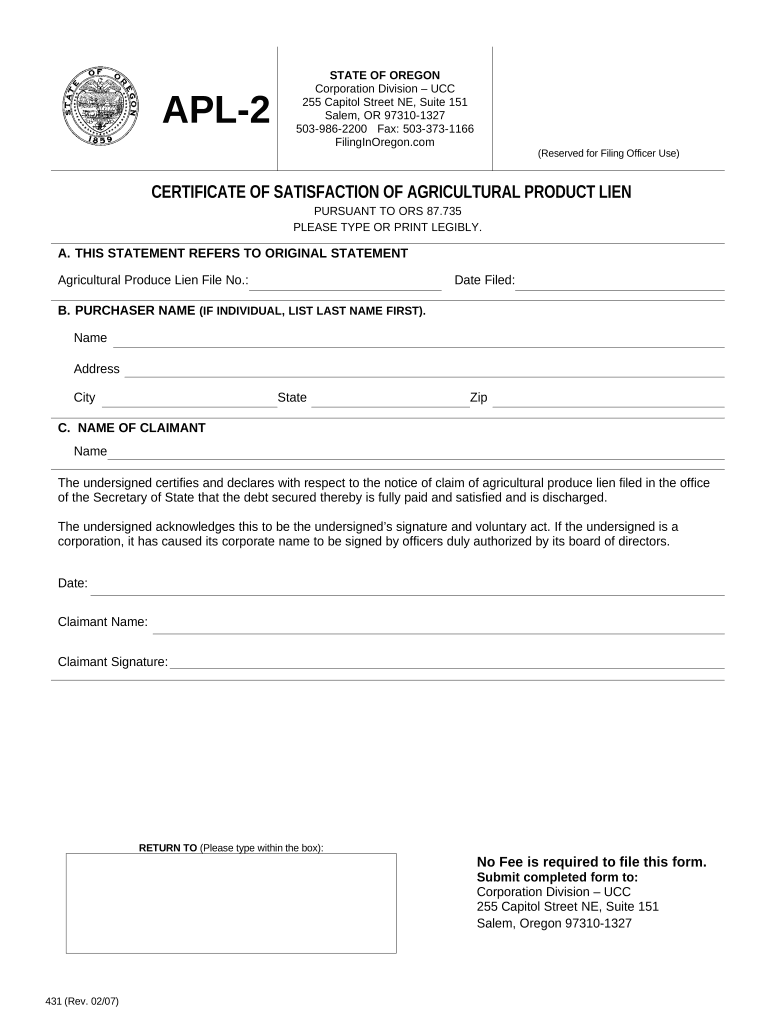
Oregon Certificate of Satisfaction of Agricultural Product Lien

This template is fully customizable. Edit the text, fill out the fields, and send it for signature. Give it a try!
Oregon Certificate of Satisfaction of Agricultural Product Lien

What the Oregon Certificate of Satisfaction of Agricultural Product Lien Is

The Oregon Certificate of Satisfaction of Agricultural Product Lien is a recorded statement filed after an agricultural product lien has been fully satisfied, released, or otherwise extinguished. It notifies the county recorder and the public that the creditor no longer claims a security interest in the specified agricultural goods. Completing and recording this certificate clears the public record, prevents future disputes over title to the products, and updates any affected UCC or county lien filings. It typically includes parties, lien details, payment date, and a signature block for the releasing party.

Why Filing a Certificate of Satisfaction Matters

Filing a certificate promptly removes cloud on title, prevents duplicate claims, and documents that the creditor’s security interest has ended under Oregon law.

Why Filing a Certificate of Satisfaction Matters

Who Typically Prepares and Receives This Certificate

Accurate completion and timely recording protects all parties by preventing lien-related disputes and facilitating subsequent sales or financing.

  • Secured lenders and input suppliers who previously held an agricultural product lien and must record a release or satisfaction document.
  • Farmers and producers who need proof that liens against harvested crops, livestock, or stored products have been cleared.
  • County recording offices and title professionals who rely on recorded satisfactions to update public records and title searches.

Representative Signers and Preparers

Farmer

A farm owner or operator often requests the certificate after paying the secured party. They provide identifying details for the agricultural product and confirm satisfaction so title can be cleared for resale or financing.

Agricultural Lender

A lender or input supplier that held the lien executes the certificate to confirm release. The signer should be an authorized officer or agent with authority to discharge the lien on behalf of the secured party.

Step-by-Step: Completing the Certificate

Follow these steps in order to prepare, sign, and record the Certificate of Satisfaction to ensure the lien is cleared in public records.

  • 01
    Gather documents: Collect the original lien filing details and proof of payment or release.
  • 02
    Complete form: Enter creditor, debtor, product description, filing reference, and date of satisfaction.
  • 03
    Sign and notarize: Authorized signer executes certificate; notarize if county requires notarization.
  • 04
    Record with county: Submit to the county recorder where the original lien was filed and retain a recorded copy.

Process Overview: From Payment to Public Record

This sequence shows the core procedural steps between satisfaction and public-record clearance.

  • Payment or release: Debtor satisfies the obligation or creditor issues a release.
  • Prepare certificate: Complete satisfaction form referencing the original lien.
  • Authenticate signature: Signer signs; notarization or RON if required by jurisdiction.
  • File with recorder: Submit certificate to the county recorder for indexing and recording.

Digital Workflow Settings for eCompletion and Filing

Common configuration choices when using an eSignature platform and preparing the certificate for recording.

Field Configuration
Authentication Email, SMS code, or stronger KBA where required
Signature Type Electronic signature with audit trail or RON notarization
Document Format PDF/A preferred for long-term archival and recorder submission
County Upload Attach recorded copy and include recording metadata

Technical Requirements for eSigning and Submission

Confirm county recorder technical requirements before submitting digitally and retain a complete audit trail for the transaction.

  • File formats: PDF, DOCX accepted by most recorders
  • Integrations: Works with cloud storage and CRMs (Salesforce, NetSuite)
  • Notary support: Platform should support RON or local notarization workflows

Comparing eSignature Vendor Pricing and Capabilities

Basic pricing and capability comparisons for common eSignature vendors. Confirm current plans and features with each vendor before purchasing.

signNow DocuSign Adobe Sign PandaDoc HelloSign
Starting Price $8/user/mo $15/user/mo $14/user/mo $19/user/mo $15/user/mo
Free Trial 7-day free trial Varies by plan Varies by plan Varies by plan Varies by plan
Bulk Send Yes Yes Yes Yes No
Audit Trail Yes Yes Yes Yes Yes
HIPAA Compliant Yes Yes Yes No No

Security and Compliance Considerations

Encryption: TLS 1.2/1.3 in transit; AES-256 at rest
Audit Trail: Full timestamp, IP, and action history
Certifications: SOC 2 Type II, ISO 27001 available
HIPAA: Compliant with BAA available
21 CFR Part 11: Support for FDA-regulated workflows
Access Controls: Role-based permissions and MFA options

Consequences of an Incorrect or Late Filing

Recording Rejection: Requires correction and re-filing
Persistent Lien: Clouds title until properly satisfied
Third-Party Claims: Purchasers may face unexpected encumbrances
Delay Costs: Additional fees and lost transactions
Tax Impact: Potential withholding or reporting complications
Fraud Risk: Incorrect signatures may trigger legal disputes

Common Preparation Errors to Avoid

  • Using inconsistent party names between the original lien and the satisfaction which prevents record matching and causes recorder rejections.
  • Omitting the original filing reference or county, forcing manual search and delaying indexing of the satisfaction.
  • Failing to have the authorized representative sign or notarize when the county’s rules require it, leading to an invalid filing.
  • Submitting the wrong document format or low-quality scans that the county recorder rejects for electronic recording.

Practical Examples from Real Users

These short cases show how organizations have used electronic signing and recording to resolve lien satisfactions efficiently.

Optica Ventures — Efficiency

The firm digitized lien satisfactions to speed closings and reduce mail time.

  • Quick linkage of recorded releases to title files streamlined closings.
  • Brian Fitzgibbons, COO at Optica Ventures LLC, noted that the interface is simple and easy to use, and customers found it straightforward, which reduced follow-up and improved turnaround on releases.

Tech Data — Enterprise Scale

A high-volume filer centralized satisfaction workflows across teams.

  • Centralized templates and audit trails reduced errors and re-submissions.
  • Bob Dutkowsky, CEO of Tech Data, reported improved internal and external customer service and faster time to revenue after standardizing electronic satisfaction and recording processes.

Practical Tips for Accurate and Efficient Completion

Follow these best practices to reduce rejections, speed recording, and minimize downstream disputes.

Match original records
Use the exact names, filing numbers, and product descriptions from the original lien to ensure record linking and avoid recorder rejection or manual remediation work.
Confirm signer authority
Verify that the person signing on behalf of the secured party has written authorization or corporate resolution to discharge liens to prevent challenges to the satisfaction.
Retain supporting proof
Keep payment receipts, release letters, and communications with the creditor; attaching a copy of the release minimizes later disputes about satisfaction timing.
Check county requirements
Confirm the target county recorder’s format, notarization, and electronic submission rules before filing to avoid avoidable rejections and fees.

Key Milestones from Satisfaction to Recorded Clearance

Track these milestones to monitor progress from debt repayment to recorded registry update and to identify where delays commonly occur.

01

Payment Confirmed

Creditor documents receipt or release of the debt

02

Certificate Prepared

Satisfaction form completed with original filing reference

03

Signature Authenticated

Authorized signature obtained and notarized if required

04

Recording Complete

County indexes the satisfaction and updates the public record

Timing and Recording Expectations

While statutory deadlines for recording vary, here are general timing expectations and recommended actions to avoid delay.

File Promptly:

Submit the certificate as soon as satisfaction is documented to reduce title risk

County Processing:

Processing often ranges from same day to two weeks depending on county workload

Correction Window:

If rejected, correct and re-file immediately to avoid prolonged encumbrance

Retain Copies:

Keep recorded and unrecorded originals for evidence of satisfaction

Notify Interested Parties:

Provide recorded copies to lenders, purchasers, and title agents as needed

FAQs and Troubleshooting for Common Issues

Answers to frequent questions about completing, notarizing, and recording the Certificate of Satisfaction of Agricultural Product Lien.


Need help? Contact support

be ready to get more
Join over 28 million airSlate SignNow users