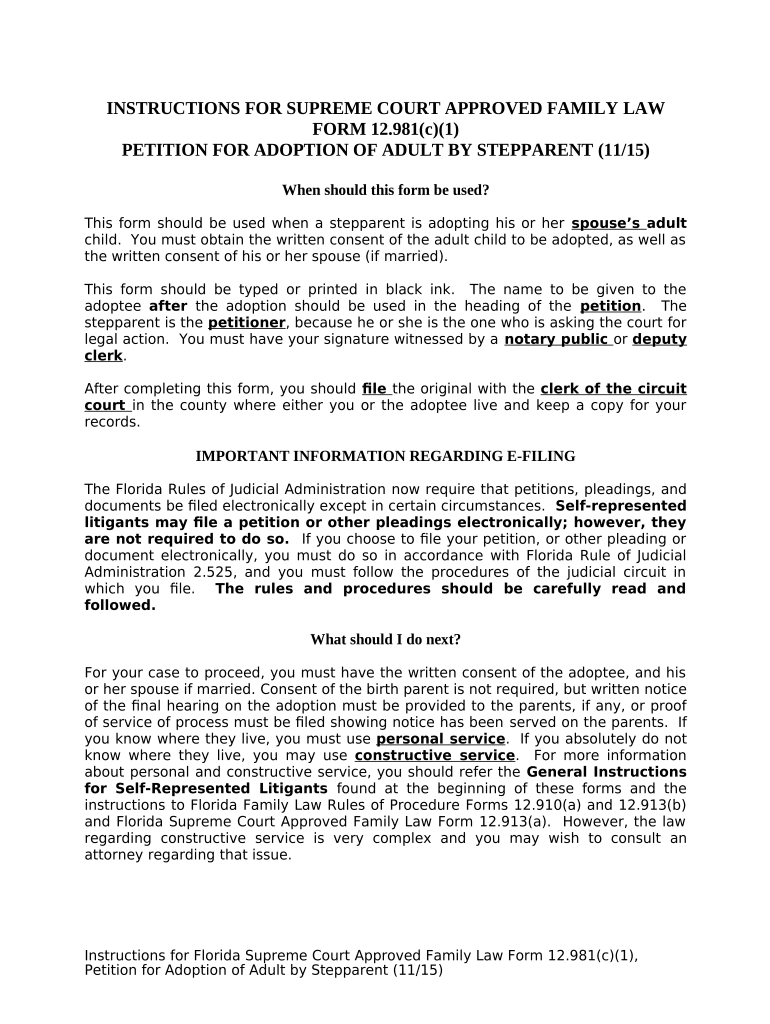
Adult Adoption Petition
What an Adult Adoption Petition Is and When It’s Used
Why Parties File an Adult Adoption Petition
Filing clarifies legal relationships for inheritance, survivor benefits, name changes, or family recognition where biological ties are absent or insufficient. The process can simplify estate planning and confirm parental rights and responsibilities in a way recognized by state law and third parties.
Who Typically Prepares or Signs an Adult Adoption Petition
Parties should confirm local filing requirements and consider counsel for complex situations such as contested adoptions or conflicting parental consents.
- Private individuals and families petitioning to formalize parent-child status for legal or personal reasons, often to secure inheritance rights or to formalize long-standing relationships.
- Estate planning attorneys and family law practitioners who prepare petitions and supporting affidavits, ensuring compliance with local rules and court procedure.
- Court clerks and mediators who assist pro se filers with procedural requirements, filing steps, and scheduling the hearing before a judge.
Step-by-Step: Completing an Adult Adoption Petition
-
01Gather documents: Collect IDs, birth records, and any prior adoption or termination orders.
-
02Draft petition: Complete local petition form with petitioner and adoptee details and requested relief.
-
03Attach consents: Include signed consent forms or affidavits from required parties.
-
04File and serve: File with the clerk, pay fees, and serve notices per court rules.
How to Configure an Online Petition Workflow
| Field | Configuration |
|---|---|
| Authentication Method | Use email with optional SMS code or stronger KBA where required |
| Signature Capture | Allow typed, drawn, or uploaded signatures with audit trail |
| Template Reuse | Save petition as template for future filings and uniform data entry |
| Court Formatting | Include caption, cause number, and margin settings per local rules |
Where and How a Petition Is Filed
-
Probate or Family Court: File the petition in the court with jurisdiction over adoptions in the adoptee’s residence county
-
Clerk Review: Court clerk checks for completeness, fees, and necessary attachments at intake
-
Service of Process: Provide notice to required parties per court rules before the hearing
-
Hearing and Decree: Judge conducts hearing; if granted, court enters a final adoption decree
Digital Filing and eSubmission Considerations
When courts accept e-filings and electronic signatures, ensure audit trails and retention meet both local rules and evidentiary standards.
- Integrations: Connect with filing portals and case management
- File Formats: Use PDF/A or court-preferred PDF formats
- Authentication: Use email, SMS, or multi-factor authentication
Common eSignature Options for Filing and Signing Court Documents
| signNow | DocuSign | Adobe Sign | PandaDoc | HelloSign | |
|---|---|---|---|---|---|
| Starting Price | $8/user/mo | $15/user/mo | $14/user/mo | $19/user/mo | $15/user/mo |
| Free Trial | 7-day free trial | Varies by vendor | Varies by vendor | Varies by vendor | Varies by vendor |
| Bulk Send | Yes | Yes | Yes | Yes | No |
| Audit Trail | Yes | Yes | Yes | Yes | Yes |
| HIPAA Compliant | Yes | Yes | Yes | No | No |
Typical Timeline Items and Court Deadlines
Filing the Petition:
File when all required consents and attachments are collected
Service or Notice:
Serve required parties per court rules before the hearing date
Background Checks:
Complete any checks or reports required by statute or court order
Hearing Scheduling:
Court typically sets a hearing date two to eight weeks after filing
Final Decree Entry:
Judge issues decree at hearing if statutory requirements are satisfied
Common Preparation Pitfalls to Avoid
- Incomplete consent forms that lack signatures or notarization lead to continuances and additional filings.
- Using incorrect court captions or omitting the county can cause clerks to reject the petition at intake.
- Failing to verify names and dates against government IDs creates delays and may require amended petitions.
- Neglecting to check remote notarization acceptance by the court can invalidate e-notarizations or require in-person signatures.
Consequences of Errors or Incomplete Petitions
Practical Tips for Accurate and Efficient Petitions
Practical Examples of Adult Adoption Petitions
Family Recognition Case
A long-term caregiver files to formalize legal parentage after decades of familial relationship and shared finances.
- The adoptee consents and provides identification.
- The court reviewed consent, absence of legal barriers, and family intent, then entered a decree recognizing the parent-child relationship for inheritance and benefits purposes.
Estate Planning Case
An older individual adopts a trusted adult friend to ensure intestate succession aligns with intent.
- No minor welfare issues intervene.
- After filing required consents and a supporting affidavit, the court approved the adoption and the adoptee was added to estate planning documents and beneficiary designations.
Frequently Asked Questions About Adult Adoption Petitions
-
Can an adult be adopted without consent?
Most states require the adult adoptee’s consent; some require consent from biological parents only if parental rights remain. Lack of required consent typically prevents the court from entering a decree and may require additional pleadings.
-
Is a home study required for adult adoptions?
Home studies are generally associated with minor adoptions and are usually not required for adult adoptions. Local court rules can vary, so confirm with the court or counsel whether any background checks or reports are necessary.
-
Can the petition be signed electronically?
Many courts accept electronically signed petitions if the e-signature and retention meet ESIGN and local rules; verify the court’s e-filing and notarization policies before relying on e-signatures.
-
Do I need a notary or RON session?
Courts commonly require notarized signatures on petitions and consents; some jurisdictions accept remote notarization under RON rules. Confirm local notary acceptance and preserve audio-video recordings if RON is used.
-
How long until a final decree is entered?
Timing depends on local court scheduling, completeness of filings, and whether objections arise; many uncontested adult adoptions reach decree within weeks to a few months after filing.
-
How do I correct a filed petition?
If errors are found, file an amended petition or a motion to correct per court rules. Minor clerical mistakes often require an amendment and a small filing fee; significant issues may require re-noticing or supplemental affidavits.