Establishing secure connection…Loading editor…Preparing document…

Notice of Repossession and Removal of Materials

This template is fully customizable. Edit the text, fill out the fields, and send it for signature. Give it a try!
Notice of Repossession and Removal of Materials

What the Notice of Repossession and Removal of Materials Is

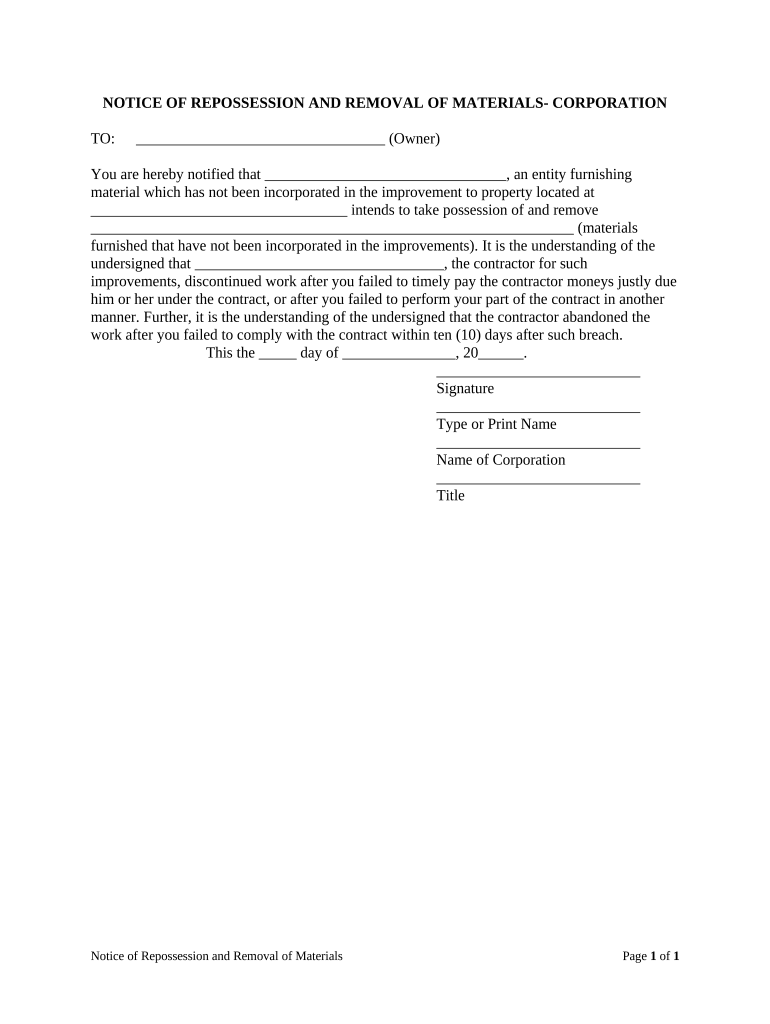
A Notice of Repossession and Removal of Materials is a formal written communication used by a secured party or landlord to announce intent to retake collateral or remove property and materials from a site. It documents the legal basis, describes the items to be repossessed or removed, specifies dates and locations, and explains any cure period or redemption rights. The notice creates a clear record for all parties and supports downstream actions such as peaceful repossession, storage, sale, or disposal of goods under applicable commercial or property law.

Why a Clear, Compliant Notice Matters

A properly prepared notice clarifies legal rights, reduces dispute risk, and preserves remedies under commercial and property law; it also documents timelines and conditions for repossession and removal.

Why a Clear, Compliant Notice Matters

Who Typically Prepares and Receives This Notice

Several parties commonly prepare or receive repossession and removal notices depending on the transaction, industry, and contractual terms.

  • Secured lenders and finance companies sending notices to defaulting borrowers or lessees to reclaim collateral.
  • Property managers and landlords notifying tenants and contractors before removal of fixtures or personal property from leased premises.
  • Equipment lessors and vendors informing customers about termination, retrieval of leased machinery, or site clean-up.

The notice should be tailored to the recipient and the underlying agreement, and it should follow any statutory notice periods that apply.

Core Sections Every Professional Notice Should Include

A concise notice organizes legal basis, item details, timing, access instructions, cure rights, and contact information for the repossessing party.

Heading

Clear title identifying the document as a Notice of Repossession and Removal of Materials and the relevant contract or account number.
Parties

Full legal names and contact details for the secured party (or landlord) and the party receiving the notice, including mailing and email addresses.

Legal Basis

Concise citation of the contractual clause or statutory authority permitting repossession, including account or lease default description.

Item Description

Detailed list of items to be repossessed or removed, with serial numbers, model numbers, or distinguishing marks where applicable.

Timing

Specific dates and windows for repossession or removal, plus any cure or redemption deadlines and the method of service used.

Access and Safety

Instructions regarding site access, any required third-party escorts, remediation of damage, and liability allocation during removal.

Required Information and Fields at a Glance

Notice Date: MM/DD/YYYY
Recipient Name: Full legal name
Account or Lease: Contract/Account ID
Item Details: Serials/models
Location: Street, city, state
Contact Info: Phone and email

Step-by-Step: Preparing and Issuing the Notice

Follow a clear sequence to verify authority, assemble item details, allow required cure time, and deliver the notice using documented methods.

  • 01
    Verify Authority: Confirm contractual or statutory right to repossess before drafting the notice.
  • 02
    Describe Collateral: List items precisely to avoid disputes over scope of repossession.
  • 03
    Set Deadlines: State cure or redemption deadlines in MM/DD/YYYY format.
  • 04
    Deliver Notice: Serve the notice via required methods and retain proof of service.

How to Configure an Online Repossession Notice Workflow

Digital workflows reduce errors and capture an audit trail; configure fields, authentication, and storage before sending.

Field Configuration
Recipient Field Required; email and mailing address capture
Item Details Field Repeatable list with serial/model inputs
Date Fields Use MM/DD/YYYY and restrict past dates
Signature Enable eSignature and audit trail

Where to Send or File the Notice

Choose delivery and filing destinations that satisfy contract terms and applicable law, and retain proof of delivery.

  • Primary Recipient: Send to the named debtor or tenant at the address on file.
  • Registered Agent: For corporate debtors, deliver to the registered agent if required by contract or statute.
  • Local Recorder: File copies if state law requires local recording or notice to municipal authorities.
  • Storage Location: Provide address where items will be stored after repossession, if applicable.

Digital Signing and Technical Requirements

Use an eSignature platform that captures signer intent, attribution, timestamp, and a tamper-evident audit trail.

  • Authentication: Email link, SMS code, or stronger ID methods
  • Document Formats: PDF and DOCX supported
  • Audit Trail: IP, timestamp, action log

Typical Timelines and Deadlines to Include

Timelines vary by contract and statute; state any deadlines explicitly and use dates rather than relative phrases.

Notice Issuance:

Date when the notice is sent; begins the cure period.

Cure Period:

Specified number of days for debtor to remedy default; use MM/DD/YYYY.

Repossession Window:

Date or date range when repossession or removal will occur.

Storage Release:

Deadline to retrieve items from storage before sale or disposal.

Record Retention:

How long notices and receipts will be kept after final disposition.

Common Mistakes to Avoid When Preparing the Notice

  • Failing to confirm contractual or statutory authority before sending notice can expose the sender to wrongful repossession liability and counterclaims.
  • Using vague item descriptions or generic language increases the likelihood of disputes over whether specific property was authorized for removal.
  • Missing or incorrect service method (mail vs. personal delivery) or failure to retain proof of service undermines enforcement and court filings.
  • Failing to state a clear cure amount or deadline can permit the recipient to claim the notice was procedurally defective.

Potential Legal and Financial Consequences of an Incorrect Notice

Wrongful Repossession: Civil liability
Statutory Fines: Consumer protection penalties
Contract Breach: Damages claims
Attachment Loss: Seized property liability
Evidence Gaps: Weakened court proof
Criminal Risk: Trespass or related charges

Practical Examples of Notice Use

Two concise scenarios show common formats and outcomes for a repossession and removal notice.

Auto Lender Scenario

A secured lender sends a notice describing a vehicle by VIN and the default amount owed, with a 10-day cure period.

  • The lender specifies repossession dates and storage location.
  • The clear timeline and itemization reduced disputed claims and supported a subsequent sale under UCC resale procedures, minimizing loss and documenting compliance.

Property Manager Scenario

A property manager issues a notice for removal of abandoned tenant materials after lease termination, listing items and removal window.

  • The manager gives a 7-day retrieval window and storage location.
  • Clear service proof and photographic records prevented a wrongful removal claim and allowed lawful disposal when items were not reclaimed.

Practical Tips for Accurate, Efficient Notices

Follow these best practices to reduce disputes and streamline repossession logistics.

Use Precise Language
Avoid vague descriptors; include serial numbers, VINs, and model identifiers to define collateral unambiguously and reduce buyer or debtor confusion.
Document Service
Retain multiple forms of proof such as certified mail receipts, delivery confirmation, and eSignature audit logs to demonstrate proper notice.
Coordinate Logistics
Plan site access, equipment, and safety precautions in advance; communicate practical removal windows to avoid unnecessary confrontation or property damage.
Limit Attorney Use
Reserve attorney involvement for contested matters; well-drafted templates and checklists reduce legal review time and fees.

eSignature Solutions for Sending and Signing Repossession Notices

Comparison of common eSignature vendors for document delivery, audit trail, and HIPAA support. signNow is listed first per comparison requirements.

signNow DocuSign Adobe Sign PandaDoc HelloSign
Starting Price $8/user/mo $15/user/mo $14/user/mo $19/user/mo $15/user/mo
Free Trial 7-day free trial Varies by vendor Varies by vendor Varies by vendor Varies by vendor
Bulk Send Yes Yes Yes Yes Varies by plan
Audit Trail Yes Yes Yes Yes Yes
HIPAA Compliant Yes Yes Yes No No

FAQs and Troubleshooting for Notices and eSubmission

Common questions about validity, delivery, contested repossession, and electronic execution are answered below to help avoid costly errors.


Need help? Contact support

be ready to get more
Join over 28 million airSlate SignNow users