Purpose
A concise statement of why parties are reconciling, what dispute or accounting items are addressed, and the scope of the reconciliation being documented.
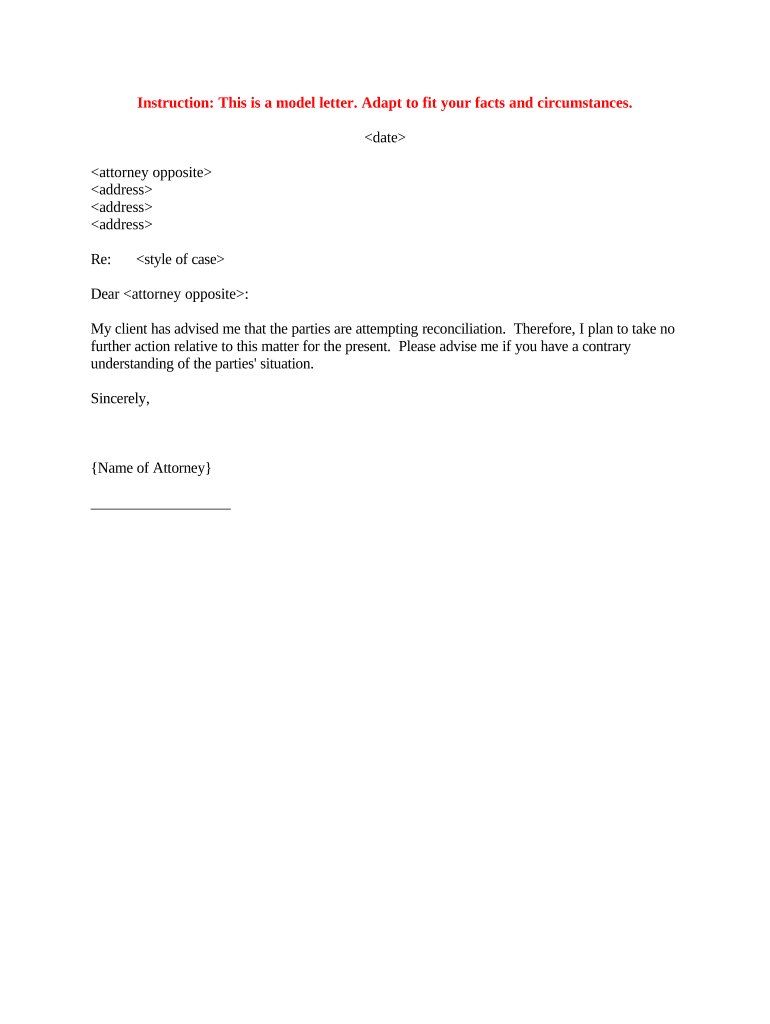
A well-drafted reconciliation letter creates a single authoritative record of what parties agreed, helping prevent misunderstandings and streamlining future enforcement if necessary. It also supports internal controls and audit trails when financial or regulatory obligations are involved.

Use the letter when you need a concise, dated record of agreed terms that all parties acknowledge in writing.
| Field | Configuration |
|---|---|
| Signer Order | Sequential routing when approvals require a defined order |
| Authentication | Email link or SMS code; choose stronger options for sensitive matters |
| Templates | Use a template for recurring reconciliation formats |
| Storage Location | Save signed copies to secure cloud storage and retain audit logs |
Ensure the selected provider supports required compliance frameworks and preserves a tamper-evident audit trail and signed document copy.
Date when the letter is drafted and sent to counterparties
Date by which recipients must sign or object
Date for agreed payments or offsets to be made
Time allowed for internal review before final execution
Date from which retention timelines and audit logs run
Assemble facts, figures, and supporting documentation for review
Legal or finance verifies accuracy and authority
Distribute for signatures using agreed authentication
Store signed copies and related evidence in secure records
| Criteria | Reconciliation Letter | Settlement Agreement |
|---|---|---|
| Enforceability | ||
| Formality | less formal | more formal |
| Typical Length | short | long |
| Use Case | accounting fixes | comprehensive releases |
| signNow | DocuSign | Adobe Sign | PandaDoc | HelloSign | |
|---|---|---|---|---|---|
| Starting Price | $8/user/mo | $15/user/mo | $14/user/mo | $19/user/mo | $15/user/mo |
| Free Trial | 7-day trial | Varies by vendor | Varies by vendor | Varies by vendor | Varies by vendor |
| Bulk Send | Yes (Premium) | Yes | Yes | Yes | No |
| Audit Trail | Yes | Yes | Yes | Yes | Yes |
A concise statement of why parties are reconciling, what dispute or accounting items are addressed, and the scope of the reconciliation being documented.
Full legal names, addresses, and contact information for each party, plus the representative signing on the entity's behalf and their title.
A clear list of invoices, account numbers, or line items reconciled, including amounts, credits, debits, and a short explanation of adjustments.
Specific remedies, payment schedules, offsets, or future review obligations that all parties commit to perform within stated timeframes.
Signature lines with printed name, title, date, and any required notarization or witness lines to validate execution.
Workpapers, spreadsheets, or supporting documentation referenced in the letter and appended as exhibits for transparency.
The general counsel or outside counsel often reviews reconciliation letters to ensure release language and disclaimers do not create unintended liability; counsel also confirms that signatures are executed by authorized officers.
Finance or accounting leadership verifies amounts and authorizes adjustments; they typically sign to confirm acceptance of the reconciled figures and any agreed payment terms.