Establishing secure connection…Loading editor…Preparing document…

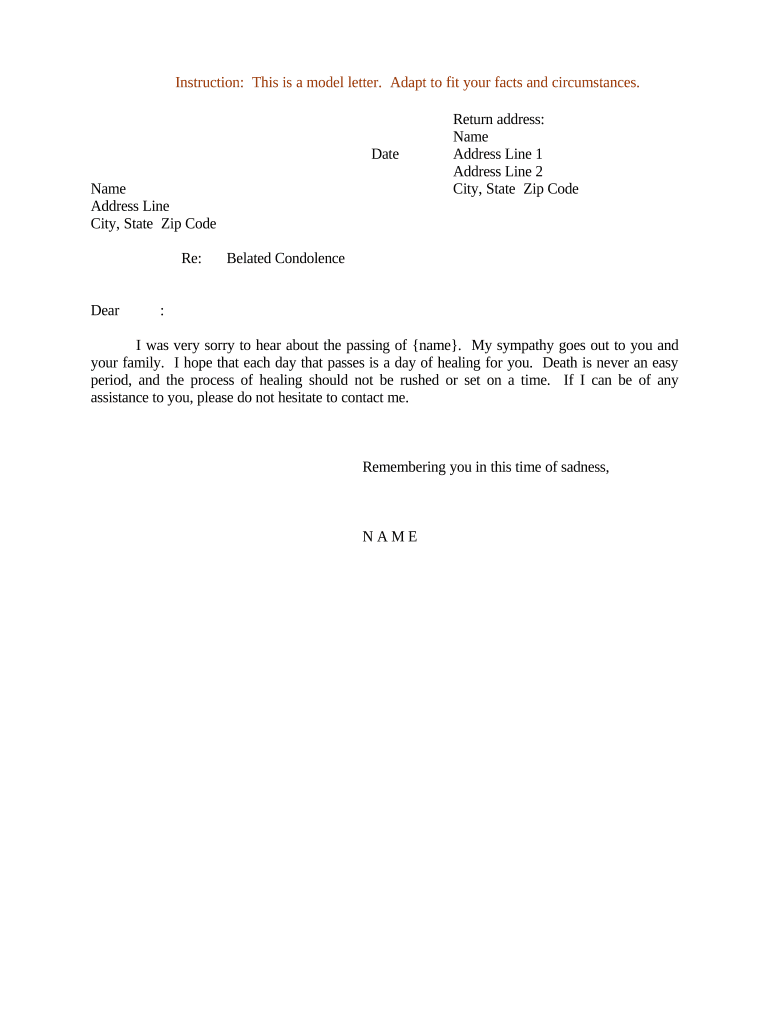
Sample Letter of Condolence

This template is fully customizable. Edit the text, fill out the fields, and send it for signature. Give it a try!
Sample Letter of Condolence

What the Sample Letter of Condolence Is

A Sample Letter of Condolence is a short, respectful written message expressing sympathy to someone who has experienced a death. It models appropriate tone, brief personalization, and practical offers of help while avoiding medical, legal, or financial assertions. Organizations and individuals use the template to ensure consistency, to record outreach in personnel files, and to adapt wording for relatives, coworkers, or community members. The sample helps writers avoid clichés, confirm correct names and dates, and choose appropriate closing language for both private cards and formal notices.

Why a Standard Condolence Letter Matters

A concise, well-structured condolence letter communicates respect, reduces uncertainty about what to say, and documents outreach for personnel or organizational records. Templates save time while helping writers personalize content appropriately for the recipient's relationship to the deceased.

Why a Standard Condolence Letter Matters

Who Typically Uses This Sample Letter

Use the sample as a starting point and adapt tone, level of detail, and any organizational signoff to match the relationship and context.

  • Family members and friends sending a personal note of sympathy within days of the death.
  • Supervisors and HR professionals notifying colleagues and documenting organizational support.
  • Community or volunteer coordinators drafting respectful public acknowledgments or memorial messages.

Core Elements Every Professional Condolence Letter Should Include

A professional condolence letter balances empathy, specificity, and practical support without overstepping privacy or legal boundaries.

Opening

A clear, empathetic opening that names the deceased and acknowledges the loss in one or two sentences, avoiding platitudes.
Expression of Sympathy

A sincere sentence or two communicating compassion; keep language direct and avoid assumptions about beliefs or causes of death.

Personal Memory

One brief personal recollection or honorable quality of the deceased when appropriate and truthful; this adds warmth without revealing sensitive details.

Offer of Support

A specific, practical offer of help (meals, childcare, administrative assistance) rather than a general offer to help later.

Closure

A respectful closing sentence that reiterates sympathy and indicates next steps if applicable, such as providing contact details.

Signature

A full printed name and relationship or role; organizational letters should include position and contact information for follow-up.

Required Information to Include

Sender Name: Full legal or preferred name
Recipient Name: Full name as used by recipient
Deceased Name: Full name of deceased person
Relationship: Your connection to recipient
Date: Letter date in MM/DD/YYYY
Contact Info: Phone or email for follow-up

Step-by-Step: Drafting Your Condolence Letter

Follow these four pragmatic steps to produce a clear, respectful letter without unnecessary delay.

  • 01
    Prepare: Collect correct names, dates, and relationship details before writing.
  • 02
    Open Carefully: Begin with a simple expression of sympathy and name the deceased.
  • 03
    Personalize: Include one brief memory or quality and avoid medical specifics.
  • 04
    Close and Sign: End with an offer of support, printed name, and role or relation.

Where to Send a Completed Letter

Choose the delivery method that matches the relationship and recipient preferences; timing and privacy affect the best route.

  • Postal Mail: A traditional card shows care and may be saved by the recipient.
  • Email: Appropriate for fast delivery when the recipient prefers electronic communication.
  • Hand Delivery: Use for close family or workplace colleagues when personal presence is appropriate.
  • eSignature: Use only for formal organizational letters that require signed certification.

Digital Delivery and Platform Considerations

For organizational use, ensure the chosen platform supports audit trails, secure storage, and any required privacy compliance such as HIPAA when protected health information is included.

  • File Formats: PDF or DOCX are widely supported
  • Authentication: Email or SMS verification protects identity
  • Integrations: Works with common cloud storage

Configuring an Online Template for Reuse

Set up a reusable template with required fields and delivery controls to standardize organizational outreach.

Field Configuration
Template Name Unique name to identify the condolence template
Recipient Role Define signer or recipient fields and permissions
Signature Field Place signature and date fields where required
Delivery Options Select email, postal notice, or secure link with reminders

Timing Guidance: When to Send a Condolence Letter

Send messages promptly while allowing sensitivity to recipient needs; timing affects perceived sincerity.

Immediate Acknowledgment:

Send a brief message within 48–72 hours when possible

Standard Letter Timing:

A formal condolence letter is appropriate within one to two weeks

After Funeral:

If circumstances delay writing, send within one month with sincere explanation

Follow-Up Support:

Offer practical help and check in again after several weeks

Document Retention:

Record the outreach date in personnel files for organizational tracking

Common Mistakes to Avoid

  • Using overly formal or impersonal templated language that feels generic and dismissive.
  • Including detailed medical or cause-of-death information that may breach privacy or cause distress.
  • Delaying the message until it seems convenient, which can reduce perceived sincerity and support.
  • Failing to confirm correct spellings of names, dates, or relationships before sending the message.

Risks from Incorrect or Insensitive Letters

Reputational Harm: Insensitive content can damage trust
Privacy Violation: May trigger HIPAA or privacy concerns
Emotional Harm: Incorrect details can cause distress
Legal Exposure: Avoid statements that imply liability
Record Errors: Mismatched names complicate personnel records
Policy Conflicts: May conflict with organizational protocols

Practical Tips for Accurate, Respectful Completion

Small choices in wording, timing, and delivery have a disproportionate effect on how support is received.

Use the Deceaseds Correct Name
Confirm the spelling and preferred form of the deceaseds name with a reliable source; incorrect names cause avoidable distress and undermine sincerity.
Keep It Short and Specific
Limit the message to a few meaningful sentences and one specific memory or offer of help to avoid overwhelming the recipient.
Avoid Medical Details
Do not include cause of death or clinical information unless the family explicitly authorized sharing or it is already public.
Proofread and Validate
Review for tone, typos, and factual accuracy; when acting for an organization, follow review and approval policies before sending.

Sample Situations and Letter Uses

These short examples show how a condolence letter might be adapted to common personal and organizational settings.

Employer Notification

When a coworker dies, send a brief message naming the deceased and expressing sympathy

  • Keep it professional and sincere
  • Close with resources and a contact for bereavement assistance so colleagues know where to get support, and document outreach in HR records.

Community Organization

A neighborhood group may publish a short tribute and private condolence notes

  • Use a respectful collective voice
  • Offer specific ways to assist the family such as meal coordination, and include a contact for volunteers to sign up.

Comparing eSignature Options for Formal Organizational Letters

This table compares basic vendor pricing and capabilities relevant when an organization chooses an eSignature solution for formal condolence or HR communications.

signNow DocuSign Adobe Sign PandaDoc HelloSign
Starting Price $8/user/mo $15/user/mo $14/user/mo $19/user/mo $15/user/mo
Free Trial 7-day free trial Varies by vendor Varies by vendor Varies by vendor Varies by vendor
Bulk Send Yes Varies by plan Varies by plan Varies by plan Varies by plan
Audit Trail Yes Yes Yes Yes Yes
HIPAA Compliant Yes Yes Yes No No
Envelope Cap No envelope cap 100 envelopes/user/year Varies by plan Varies by plan Varies by plan

FAQs and Troubleshooting for Condolence Letters

Common questions about legality, privacy, timing, and electronic delivery when preparing a condolence letter.


Need help? Contact support

be ready to get more
Join over 28 million airSlate SignNow users