Establishing secure connection…Loading editor…Preparing document…

Letter of Congratulations on Book Publication

This template is fully customizable. Edit the text, fill out the fields, and send it for signature. Give it a try!
Letter of Congratulations on Book Publication

What this Letter Is and When to Use It

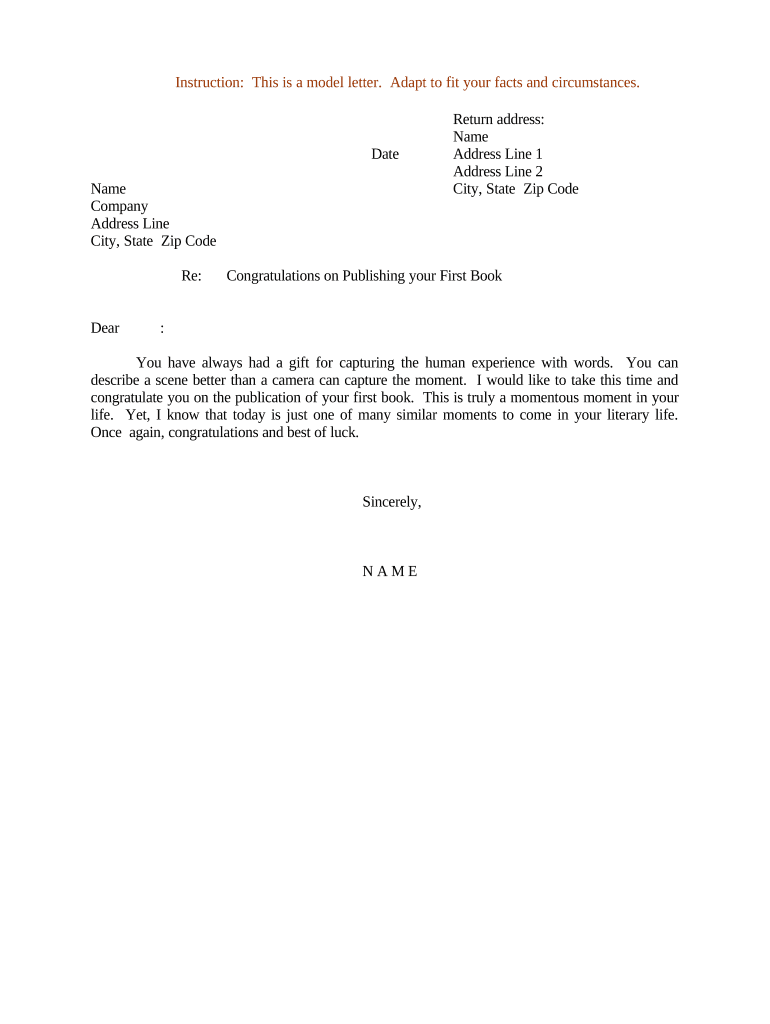
A Letter of Congratulations on Book Publication is a short, formal communication recognizing an author or contributor when a book is published. It typically names the author, the book title, publisher, and publication date, and offers congratulations for the achievement. The letter is used by publishers, agents, colleagues, academic departments, and organizations to acknowledge publication milestones, support publicity, or to document institutional recognition. It is generally ceremonial rather than contractual, can be delivered in print or electronically, and may accompany a complimentary copy, press release, or social announcement.

Why Sending a Clear Congratulations Letter Matters

A well‑written letter records the milestone, supports the author’s promotion or tenure record, aids publicity, and strengthens professional relationships without creating legal obligations.

Why Sending a Clear Congratulations Letter Matters

Who Typically Sends or Receives These Letters

Match sender authority and organizational formatting expectations to the recipient’s needs and any institutional recordkeeping practices.

  • Publishers and editors acknowledging an author’s completed publication and offering distribution details or review copies.
  • Academic departments and supervisors recognizing faculty or student scholarship for promotion, tenure, or institutional records.
  • Agents, collaborators, colleagues, and professional associations celebrating publication and amplifying publicity.

Essential Elements to Include in a Professional Letter

A concise structure keeps the letter professional and useful: identify parties, reference the publication, offer congratulations, and close with contact details and signature.

Header

Sender name and organization plus date and mailing or email address; establishes origin and makes the letter recordable.
Salutation

Personalized greeting using the recipient’s preferred name or title to maintain professional tone and rapport.

Publication Details

Full book title, subtitle, publisher imprint, and formal publication date so the record is specific and verifiable.

Congratulatory Body

One to three paragraphs describing the achievement, noting notable aspects (peer review, award, impact) and expressing institutional or personal recognition.

Enclosures

List any accompanying materials (complimentary copy, press release, review copies) so the recipient understands what to expect.

Closing

Signature block with typed name, title, organization, and contact information; date and signature method (handwritten or e‑signed) noted.

Required Information to Record in the Letter

Author name: Full legal name
Book title: Exact title and subtitle
Publisher: Imprint and publisher name
Publication date: MM/DD/YYYY preferred
Sender details: Name, title, organization
Signature method: Handwritten or electronic

Step-by-Step: Drafting and Sending the Letter

Follow these four steps to create a clear, accurate, and deliverable Letter of Congratulations on Book Publication.

  • 01
    Draft core text: Write a concise congratulatory paragraph and include publication facts.
  • 02
    Verify details: Confirm title, publisher, and date with the publisher’s metadata.
  • 03
    Add sender info: Include organizational letterhead or sender credentials for recordkeeping.
  • 04
    Choose delivery: Decide print, email, or eSignature distribution and send accordingly.

Configuring an Online Version for Reuse

Set up a reusable template in your document system so letters are consistent and recorded centrally.

Field Configuration
Sender name Auto‑populate from account profile
Author name Fillable text field, required
Publication details Grouped fields for title/publisher/date
Signature Optional eSignature field with date

Where to Send or File the Letter

Decide destinations based on purpose: personal delivery to the author, institutional filing, or PR distribution for publicity.

  • Author delivery: Email or mail the recipient directly
  • Institutional files: Store a PDF copy in personnel or departmental records
  • PR channels: Share a press version with communications teams
  • Library/archive: Deposit a copy with institutional repository if applicable

Technical Options for Sending and Signing Online

Choose a delivery method that balances formality and recordkeeping needs; record signed copies in the appropriate institutional system.

  • File formats: PDF, DOCX supported
  • Integrations: Works with Google Workspace and Microsoft 365
  • Authentication: Email link or SMS code

Timing Considerations and Typical Deadlines

Plan the letter to align with publication and publicity timelines to maximize recognition and avoid misinformation.

Issue timing:

Send promptly on or shortly after official publication date

Press alignment:

Coordinate with marketing for simultaneous announcements

Promotional copies:

Ship review or author copies per publisher schedule

Institutional record:

File a signed copy within 30 days for personnel records

Correction window:

Correct factual errors as soon as discovered to avoid propagation

Common Mistakes to Avoid

  • Using an incorrect book title or publication date, which can undermine publicity and record accuracy.
  • Omitting publisher or imprint details, making the acknowledgment harder to verify for promotion or citation.
  • Adopting an overly casual or overly legal tone that mismatches the sender’s relationship to the author.
  • Failing to store or archive a signed copy, which complicates academic or HR documentation later.

Risks and Practical Consequences of Errors

Reputational risk: Inaccurate details
Recordkeeping gap: Missing signed copy
Privacy concern: Unintended disclosure
Contract confusion: Mistaken contractual language
Administrative delay: Misrouted letters
Correction costs: Time required to reissue

Example Scenarios: How Organizations Use This Letter

Realistic use cases show common formatting and routing choices across organizations.

University Press Announcement

A department sends an official congratulations letter to a faculty author using letterhead

  • The letter lists book metadata and offers copies for the departmental library
  • The signed PDF is filed in the promotion dossier and copied to communications for a campus news item.

Publisher to Collaborator

A publisher sends a congratulatory note to a contributing editor after release

  • It acknowledges editorial contribution and distribution plans
  • The note accompanies a review copy and is used in author publicity materials.

eSignature Pricing and Capability Snapshot for Sending Letters

Compare common eSignature vendors on starting price and key capabilities relevant to signing or distributing a congratulatory letter.

signNow DocuSign Adobe Sign PandaDoc HelloSign
Starting Price $8/user/mo $15/user/mo $14/user/mo $19/user/mo $15/user/mo
Free Trial 7-day free trial Varies Varies Varies Varies
Bulk Send Yes (premium) Yes Yes Yes No
Audit Trail Yes Yes Yes Yes Yes
Envelope Cap No cap 100 envelopes/user/year Varies Varies Varies

Frequently Asked Questions About the Letter

Answers to common questions clarify legal status, signing options, and recordkeeping for a Letter of Congratulations on Book Publication.


Need help? Contact support

be ready to get more
Join over 28 million airSlate SignNow users