Establishing secure connection…Loading editor…Preparing document…

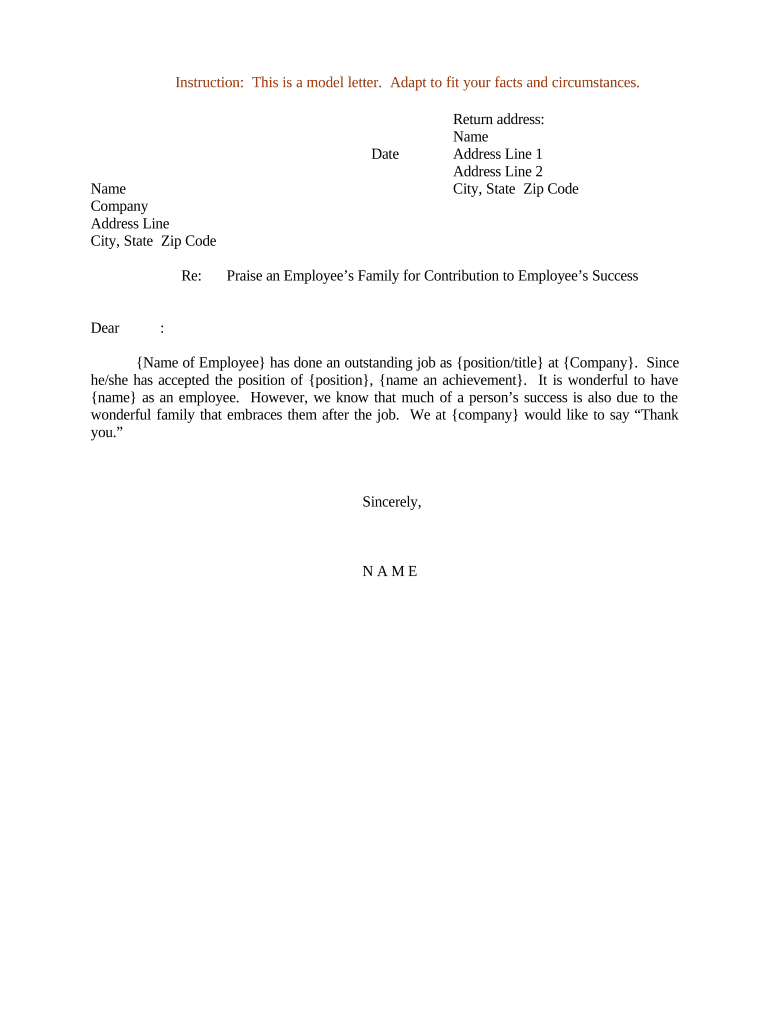
Letter of Appreciation for Employee's Family

This template is fully customizable. Edit the text, fill out the fields, and send it for signature. Give it a try!
Letter of Appreciation for Employee's Family

What the Letter of Appreciation for Employee's Family Is

A Letter of Appreciation for an Employee's Family is a formal, written acknowledgment from an employer to a worker's family recognizing support, a personal milestone, or assistance during an employee absence. Typical uses include expressing thanks after a serious illness, honoring family support following bereavement, or recognizing a household contribution during extended caregiving. The letter documents the employer's acknowledgement, conveys empathy, and can be retained in the employee's personnel file as a non-disciplinary record that supports morale and internal recognition practices.

Why this Letter Matters and When It’s Appropriate

Use the letter to recognize family support, communicate condolences, or document employer appreciation; it reinforces workplace culture and clarifies the employer’s position.

Why this Letter Matters and When It’s Appropriate

Who Typically Issues and Receives This Letter

Employers, HR teams, direct managers, and corporate communications staff commonly prepare and send these letters.

  • Human resources teams managing employee relations and personnel records.
  • Managers or supervisors personally acknowledging an employee’s family support.
  • Corporate communications when a formal organizational condolence or recognition is warranted.

Step-by-Step: Create and Send the Letter

Follow these steps to prepare, approve, and distribute a respectful, compliant letter to an employee’s family.

  • 01
    Draft content: Compose a concise, respectful message focused on appreciation.
  • 02
    Verify details: Confirm names, relationship, and preferred delivery method.
  • 03
    Obtain consent: Get employee permission to contact their family and to include any sensitive details.
  • 04
    Send and record: Deliver via chosen channel and file a copy in the personnel record.

Amendment and Approval Workflow

Use this short grid for internal review, approval, and future edits to the letter.

01

Draft:

Create initial letter draft including purpose and respectful language.
02

Manager review:

Manager checks tone, accuracy, and appropriate level of detail.
03

HR approval:

HR confirms consent and privacy considerations are addressed.
04

Finalize:

Apply final signature and date before distribution.
05

Archive:

Store a copy in the employee’s personnel file following retention rules.
06

Update:

If facts change, issue a corrected letter and note the amendment.

Essential Elements to Include in the Letter

A professional letter of appreciation should be concise, respectful, and clearly document the employer’s acknowledgement while protecting personal information.

Salutation

Address the family member by name and include a respectful opening that establishes the purpose of the letter without oversharing sensitive details.
Context

Briefly explain why the letter is sent (for example: to thank the family for support during a medical leave) while avoiding confidential health information absent written consent.

Expression of Appreciation

Offer clear, specific appreciation for the family’s support or actions, using neutral, empathetic language appropriate to the situation.

Organizational Identification

Include the employer’s name, sender’s title, and a contact point for follow-up to provide legitimacy and a route for additional questions.

Signature and Date

Sign and date the letter. For electronic versions, include a clear attribution (typed name, title, and timestamp) to satisfy ESIGN’s attribution requirements.

Privacy Note

If the letter references medical or protected details, note that information was shared with consent and reference privacy protections in place.

Required Data Elements and Privacy Checklist

Recipient Name: Full legal name
Employee Name: Exact personnel record name
Date: MM/DD/YYYY
Sender Info: Name and title
Delivery Method: Email, mail, or secure portal
Consent Status: Employee consent noted

How to Configure an Online Letter Workflow

Set up fields, approvers, and storage destinations when sending the letter digitally to ensure consistent delivery and record retention.

Field Configuration
Recipient Name Required text field; autofill from personnel record
Employee ID Hidden reference field for internal filing
Consent Checkbox Required checkbox with timestamp
Delivery Method Select: Email | Postal Mail | Secure Portal

Where to File and How to Route the Final Letter

Decide a delivery channel and the destination for the retained copy before sending to ensure compliance and easy retrieval.

  • Primary Delivery: Email to recipient or printed mail depending on preference.
  • Personnel File: Store a copy in the employee’s confidential personnel file.
  • Shared HR Folder: Save an administrative copy in secure HR storage systems.
  • Audit Trail: Capture delivery timestamp and signer attribution.

Distribution Methods and Platform Compatibility

Choose a platform that supports secure delivery, audit trails, and the integrations your HR systems require.

  • Email Delivery: Simple, widely used; ensure secure transport and explicit consent.
  • Secure Portal: Best for sensitive content; stores copy with access controls.
  • eSignature Platforms: Support audit trails and retention; integrate with HR systems.

Timing Considerations and Typical Turnaround

There is no fixed statutory filing deadline for a letter of appreciation; apply consistent internal timing to maintain fairness and records integrity.

Issue Promptly:

Send within 7–14 days of the triggering event to acknowledge support promptly.

Approval Window:

Allow 2–3 business days for manager and HR review on routine letters.

Employee Consent:

Obtain consent before contacting family; document consent immediately.

Retention Start:

Retention period begins on the letter date.

Correction Period:

If errors are found, reissue corrected letter within 14 days and note amendment.

Common Mistakes to Avoid

  • Including medical details without explicit, documented employee consent and thereby risking privacy violations.
  • Using overly informal language that could be misinterpreted as an official employment decision or promise.
  • Failing to record consent or distribution method, leaving gaps in personnel records and audit trails.
  • Sending to the wrong recipient or using an outdated address, creating privacy and reputational risks.

Risks of Incorrect or Improper Letters

Privacy Violation: Potential HIPAA exposure if health data shared without consent
Reputational Harm: Public release or misaddressed letters can damage trust
Record Gaps: Missing consent records complicate audits
Legal Misinterpretation: Overly detailed statements may be misconstrued as employment guarantees
Data Breach Risk: Unsecured email can expose personal information
Noncompliance: Failure to document consent may violate company privacy policies

Practical Examples from Real-World Uses

Two concise scenarios illustrate appropriate tone, routing, and what to record in personnel files.

Small Business Example

A local employer thanks a spouse after an extended caregiving leave

  • Letter notes appreciation and offers a contact for HR follow-up
  • The letter is stored in the employee file and a copy emailed to the family with documented employee consent.

Healthcare Employer Example

A hospital sends a formal appreciation to a family after staff redeployment during an emergency

  • Message is vetted by HR and legal to avoid PHI disclosure
  • The signed letter is retained in a secure HR repository and access restricted per HIPAA rules.

Tips for Clear, Respectful, and Compliant Letters

Follow these practical recommendations to keep communications consistent, respectful, and legally mindful.

Keep language neutral and empathetic
Use concise, respectful wording that expresses appreciation without implying obligations or promising benefits. Avoid diagnostic or medical language unless authorized.
Document consent and delivery
Record the employee’s permission to contact family members and retain proof of delivery and any approvals in the personnel record for auditability.
Limit sensitive details
Do not include protected health information or other sensitive data without a signed authorization; consider redaction or a generic description instead.
Use secure storage and retention
Store the letter in the HR system or secure file share with appropriate access controls and follow your organization’s retention schedule.

eSignature Pricing and Feature Comparison for Delivering the Letter

Compare common eSignature options for sending, signing, and storing a Letter of Appreciation; signNow is listed first per comparative format.

signNow DocuSign Adobe Sign PandaDoc HelloSign
Starting Price $8/user/mo $15/user/mo $14/user/mo $19/user/mo $15/user/mo
Free Trial 7-day free trial Varies by vendor Varies by vendor Varies by vendor Varies by vendor
Bulk Send Yes Yes Yes Yes No
Audit Trail Yes Yes Yes Yes Yes
HIPAA Compliant Yes Yes Yes No No

Frequently Asked Questions and Troubleshooting

Answers to common questions about preparing, delivering, and storing a Letter of Appreciation for an employee’s family.


Need help? Contact support

be ready to get more
Join over 28 million airSlate SignNow users