Establishing secure connection…Loading editor…Preparing document…

Fundraising Request Letter

This template is fully customizable. Edit the text, fill out the fields, and send it for signature. Give it a try!
Fundraising Request Letter

What a Fundraising Request Letter Is and When to Use It

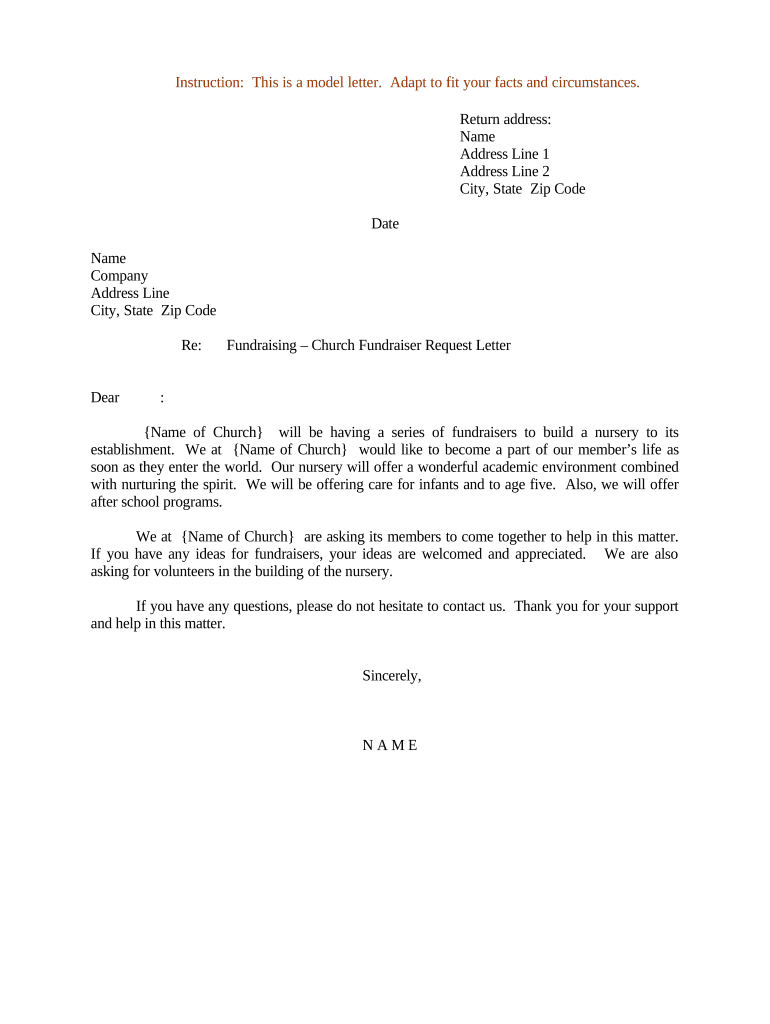
A Fundraising Request Letter is a written request sent to individuals, foundations, corporations, or other potential donors asking for financial or in-kind support for a specific program, campaign, or general operating needs. It typically explains the organization’s mission, the purpose of the funding request, the amount sought or suggested giving levels, the intended use of funds, and any tax-deductibility information. The letter may be tailored to the recipient, include supporting documents, and be distributed by mail, email, or as a signed PDF to formalize commitment and follow institutional approval workflows.

Why a Clear Fundraising Request Letter Matters

A concise, well-structured fundraising letter increases donor clarity, reduces follow-up questions, and speeds decisions by presenting purpose, requested amount, and impact. It supports legal and accounting workflows by documenting donor intent and any agreed restrictions.

Why a Clear Fundraising Request Letter Matters

Who Typically Sends and Receives These Letters

Tailor tone and compliance language to the recipient type (individual, foundation, corporate) and to any applicable solicitation or tax reporting requirements.

  • Nonprofit development teams requesting unrestricted or program-specific gifts from individual donors and foundations.
  • Educational institutions and PTAs seeking support for scholarships, programs, or capital improvements.
  • Religious and community organizations soliciting operational or project support from congregants and local businesses.

Core Parts of an Effective Fundraising Request Letter

A professional fundraising request letter combines clear purpose, donor-centered language, and compliance details so recipients can quickly understand what is requested and how to respond.

Header

Organization name, logo, and date. Establishes sender identity and provides a reference for tracking and recordkeeping.
Greeting

Personalized salutation using the recipient’s proper legal name or preferred name to increase engagement.

Purpose Statement

A concise paragraph that explains the need, the impact of support, and why the timing matters for this request.

Specific Ask

Clear requested dollar amount(s) or in-kind item description and suggested giving levels or recognition opportunities.

Compliance Note

Tax-deductibility language, EIN, and any conditions on the gift; helps donors and accounting staff comply with reporting rules.

Signature Block

Name, title, contact information, and signature line for the authorized signatory to validate the request.

Step-by-Step: How to Prepare and Send a Fundraising Request Letter

Follow these essential steps to draft, approve, and distribute the letter while preserving a clear audit trail and donor records.

  • 01
    Draft the Letter: Write purpose, ask, and tax information in clear, donor-focused language.
  • 02
    Internal Review: Have finance and legal review compliance language and gift restrictions.
  • 03
    Obtain Authorization: Get signatures from the authorized officer and document approval date.
  • 04
    Distribute and Record: Send via chosen channels and record delivery and donor responses in CRM.

How to Configure an Online Workflow for a Fundraising Letter

Set up a digital template and a signing workflow so the letter can be completed, signed, and tracked electronically with minimal manual steps.

Field Configuration
Template Create reusable template with merge fields for recipient and amounts.
Signer Authentication Use email verification or SMS codes for recipient authentication.
Conditional Fields Enable conditional text for restricted vs unrestricted gift language.
Audit Trail Capture timestamps, IP, and signer identity automatically.

Sharing and Digital Submission Options

Ensure chosen tools support audit trails, retention policies, and any necessary integrations with fundraising or accounting systems.

  • Delivery Methods: Email, secure link, or printed letter for physical delivery.
  • File Formats: PDF, DOCX, or HTML versions for compatibility.
  • Integrations: Connect with CRM systems for tracking and reconciliation.

Typical Digital Flow from Draft to Signed Record

This simple flow shows how the letter moves from creation to a signed, auditable file that your finance and development teams can rely on.

  • Upload Document: Add the letter to the eSignature platform and select the template.
  • Place Fields: Insert signature, date, and data fields for recipient completion.
  • Send to Signer: Deliver by email or secure link and request signature.
  • Receive Signed Copy: Signed PDF and audit trail are stored for records.

Typical Timelines and Follow-up Schedule for an Appeal

Plan timing to align with campaign goals, donor decision windows, and internal processing so responses are collected and recorded promptly.

Initial Mail Date:

Send 4–8 weeks before campaign deadlines to allow decisions and follow-up.

First Follow-up:

Issue reminder 7–14 days after the initial letter if no response.

Second Follow-up:

Send a final reminder 2–3 weeks after the first follow-up.

Record Payment:

Log gifts within 3 business days of receipt for accounting.

Close Campaign:

Complete reconciliation and reporting within 30 days of campaign close.

Common Mistakes to Avoid When Preparing the Letter

  • Using vague language about the use of funds, which can prevent donors from making a confident decision and complicate restricted gift accounting.
  • Failing to include organization EIN or tax receipt language, leaving donors unable to claim deductions or causing donor confusion.
  • Not obtaining internal authorization before sending, which can create conflicts with pledged use and budget authority.
  • Ignoring donor privacy and consent requirements for personal data, risking regulatory or reputational issues under data protection rules.

Risks and Potential Consequences of Errors

Incorrect TIN: Triggers backup withholding and reporting complications under IRC §3406.
Misstated Donations: May cause IRS corrections and penalties under IRC §6721 for incorrect returns.
Unapproved Promises: Creates contractual obligations beyond authorized budgets or authority.
Privacy Violations: Can breach donor consent terms and applicable privacy rules.
Registration Failures: Charitable solicitation rules may impose fines or stop fundraising activities.
Reputational Harm: Mistakes can reduce donor trust and future giving.

How to Update or Revise a Sent Fundraising Request Letter

Follow an amendment workflow to document revisions, maintain a clear record of changes, and notify affected donors where required.

01

Identify Change:

Record the reason and scope of the revision.
02

Draft Amendment:

Prepare revised text and mark version history.
03

Obtain Approval:

Get authorized signer approval documented.
04

Notify Recipients:

Send update with clear explanation to prior recipients.
05

Record Version:

Store both original and revised copies with timestamps.
06

Reconcile Gifts:

Update accounting entries for any changes in terms.

Real-World Examples of Document-Driven Fundraising Workflows

These short cases illustrate organizations that streamlined signature workflows and recordkeeping for fundraising and related agreements.

Optica Ventures LLC

Optica simplified signature handling for investor and donor correspondence to reduce turnaround times.

  • The interface is simple and easy-to-use for our team.
  • Brian Fitzgibbons, COO, reported easier execution and fewer manual steps, resulting in faster confirmations and improved record consistency across fundraising files.

Martin Properties

A small organization moved appeals and pledge confirmations online to maintain compliance while remote.

  • I can process and execute all of these documents online with 100% compliance and built-in security.
  • Tim Martin, Founder, noted that mobile and offline signing support allowed staff to collect commitments efficiently during community events.

Who Can Sign a Fundraising Request Letter

Executive Director

Typically the primary authorized signer who can bind the organization for pledge letters and confirm gift acceptance. Their signature signals institutional approval and often triggers accounting and pledge recording workflows.

Development Director

May sign on behalf of the organization for donor communications when specifically authorized. Their authority should be documented in board resolutions or internal delegation policies to ensure acceptance and compliance.

Typical eSignature Pricing and Feature Snapshot for Fundraising Letters

Compare common vendor starting prices and core features relevant to signing and storing fundraising request letters; signNow is listed first per platform comparison conventions.

signNow DocuSign Adobe Sign PandaDoc HelloSign
Starting Price $8/user/mo $15/user/mo $14/user/mo $19/user/mo $15/user/mo
Free Trial 7-day free trial No No Yes, limited Yes, limited
Bulk Send Yes Yes Yes Yes No
Audit Trail Yes Yes Yes Yes Yes
HIPAA Compliant Yes Yes Yes No No

Frequently Asked Questions About Fundraising Request Letters

Answers to common operational and compliance questions to help avoid delays and ensure legal and accounting requirements are met.


Need help? Contact support

be ready to get more
Join over 28 million airSlate SignNow users