Establishing secure connection…Loading editor…Preparing document…

Letter Granting Permission to Play Sports

This template is fully customizable. Edit the text, fill out the fields, and send it for signature. Give it a try!
Letter Granting Permission to Play Sports

What the Letter Granting Permission to Play Sports Is

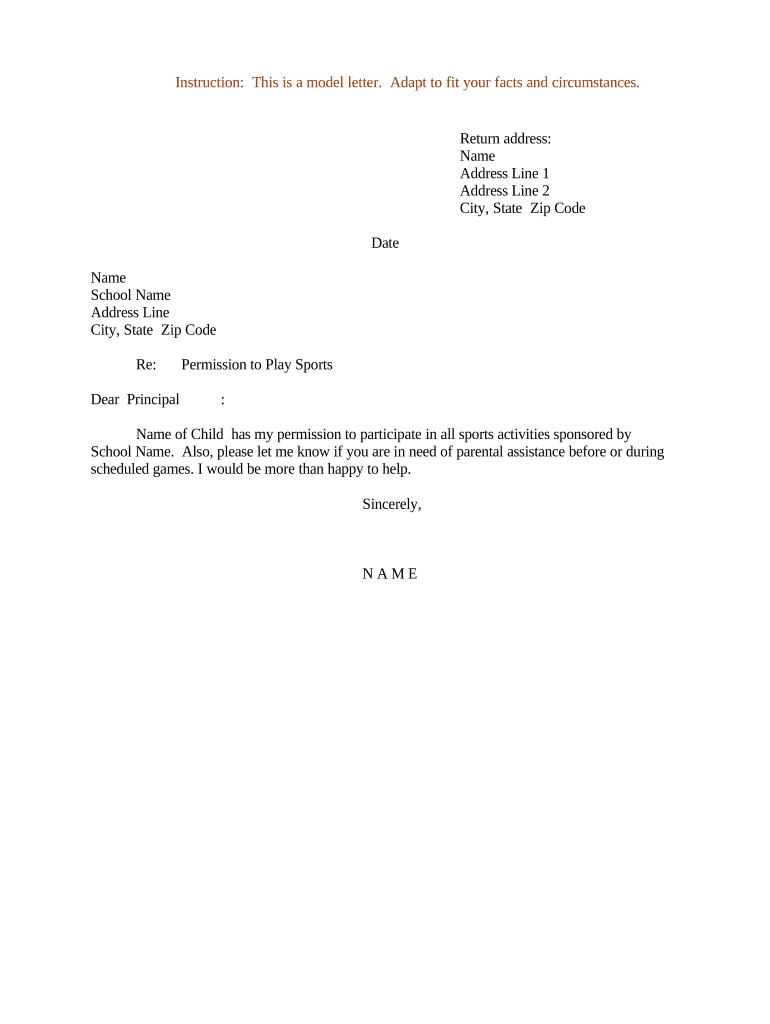
A Letter Granting Permission to Play Sports is a written authorization, typically signed by a parent or legal guardian, that allows a minor or dependent to participate in organized athletic activities. It documents consent for participation, acknowledges awareness of risks, and may include medical information, emergency contacts, insurance details, and any activity-specific restrictions. Organizations and schools often require a signed letter or an equivalent permission form before allowing a participant to practice, compete, or travel with a team. The letter serves as a record of consent and helps clarify responsibilities among guardians, organizers, and medical providers.

Why a Clear Permission Letter Matters

A concise, complete permission letter protects the participant, clarifies medical and emergency instructions, and reduces liability questions for schools or clubs. It ensures organizers have the information they need to act quickly and consistently in routine and emergency situations.

Why a Clear Permission Letter Matters

Who Typically Prepares and Receives This Letter

The letter is retained by the organizing body and a copy should remain with the guardian; schools may attach it to student health records or event rosters.

  • Parents or legal guardians completing consent and medical details for their child to participate.
  • School athletic staff verifying permission and documenting authorization for team activities.
  • Club or recreation program coordinators collecting signed consent before travel or competition.

Typical Signers and Their Roles

Parent / Legal Guardian

A parent or court-appointed guardian signs to authorize the minor's participation and to confirm medical and emergency instructions. This signature establishes consent and identifies who may make urgent medical decisions if the guardian is unavailable.

Athletic Director

An athletic director or program coordinator accepts and files the letter to clear the participant for team activities. Their acknowledgement documents that the organization has received required consent and relevant medical details.

Essential Elements to Include in the Letter

A professional permission letter combines identification, activity specifics, medical facts, and an explicit consent statement so organizers can act appropriately and document compliance.

Participant Info

Full legal name, date of birth, school or team affiliation, and participant ID where applicable; this matches the child to rosters and medical charts.
Guardian Details

Parent or guardian full name, primary telephone, secondary telephone, and preferred email for routine and emergency contact purposes.

Activity Description

Sport name, season dates, scheduled events, travel details, and locations covered by the consent; this defines the scope of authorization.

Medical Summary

List allergies, ongoing medications, recent injuries, physician name and phone, and special handling instructions for the participant.

Consent Statement

A clear declaration that the guardian authorizes participation, acknowledges risks, and permits organizers to obtain emergency medical treatment if needed.

Signatures

Signature line for guardian with printed name and date plus a staff acknowledgement or witness line when required by policy.

Supporting Documents and File Formats to Keep

Include standard supporting items and save the final letter in common formats so schools and providers can access and retain records consistently.

Medical Authorization

A physician-signed medical release or similar provider note for significant medical conditions; include phone numbers and any clearance statements.

Insurance Card Copy

Front/back photo or scan of the participant's health insurance card so emergency clinics can verify coverage quickly.

Emergency Contacts

A separate sheet listing two alternate contacts with relationship and phone numbers for use if guardians are unreachable.

Export Formats

Save signed letters as PDF/A for long-term records; keep editable DOCX copies for internal updates and archiving.

Step-by-Step: Completing a Permission Letter

Follow these steps to draft, sign, and deliver a usable permission letter that organizers will accept without further clarification.

  • 01
    Collect Details: Gather participant identity, medical info, and event specifics before drafting.
  • 02
    Write Authorization: Include a clear consent sentence that names the activity and dates.
  • 03
    Sign and Date: Guardian signs and dates in the signature block using MM/DD/YYYY.
  • 04
    Deliver Copy: Provide the original to organizers and keep a copy for the guardian.

How to Customize and Submit the Letter Online

Digital completion speeds distribution and ensures the letter is stored with a timestamped audit trail; configure fields before sending.

Field Configuration
Participant Name Field Single-line text; required; auto-validate against roster when possible
Medical Notes Field Multi-line text; optional; limit 500 characters for clarity
Signature Field Mandatory e-sign field with signer name and date
Attachment Field Optional file upload for insurance or physician notes

Where to Send or File the Completed Letter

Route the signed letter so organizers, medical staff, and guardians each retain a copy and the organization records it with the participant file.

  • Team Records: Primary copy retained by the coach or athletic office for event check-in.
  • School Health Office: Upload a copy to the school nurse’s secure health records if required.
  • Parent Copy: Guardian keeps a dated copy for travel or insurance questions.
  • Emergency Provider: Provide a copy to emergency responders when traveling off-site.

Digital Signing and eSubmission Considerations

Choose a platform that supports HIPAA controls where medical data is present, produces a tamper-evident PDF with audit trail, and keeps a retrievable copy for the organization and guardian.

  • Authentication: Email or SMS code verification limits unauthorized signing
  • Data Security: Encryption in transit and at rest protects sensitive health details
  • File Formats: Support for PDF and DOCX preserves formatting

Timelines, Deadlines, and Processing Expectations

Understand typical timing requirements so participants are cleared before the first practice or trip and so emergency records remain current.

Season Start Deadline:

Submit permission at least 48–72 hours before the first practice or event

Medical Updates:

Update medical information immediately after a change in condition or medication

Travel Clearance:

Provide signed authorization and insurance copy before any out-of-state travel

Renewal Frequency:

Re-sign annually or whenever program policies change

Record Retention:

Organization should retain for the duration of participation plus recommended retention periods

Key Milestones from Draft to Participant Clearance

A straightforward milestone sequence helps organizers track when clearance is complete and when follow-up is needed.

01

Draft Completed

Guardian provides all participant and medical details for the letter.

02

Signed and Dated

Guardian signs, dating the document to confirm consent timing.

03

Organizer Review

Staff confirms completeness, attachments, and any special instructions.

04

Final Clearance

Participant is added to rosters and authorized to participate.

Common Mistakes to Avoid

  • Leaving medical fields vague or incomplete forces staff to delay clearance while seeking clarifying information from guardians.
  • Using unsigned or undated letters can render the authorization unenforceable under organization policies.
  • Failing to provide accurate emergency contact numbers prevents timely notification during incidents and complicates medical decision-making.
  • Attaching outdated insurance cards or missing physician contact details can slow emergency treatment and reimbursements.

Risks If the Letter Is Incomplete or Incorrect

Delayed Clearance: Missing information may prevent participation until corrected
Medical Mistreatment: Incomplete medical details increase risk of inappropriate treatment
Liability Disputes: Ambiguous consent language can complicate responsibility allocation
Insurance Denial: Incorrect or missing insurance data may hurt reimbursement claims
Record Rejection: Unsigned or unauthenticated letters may be refused by institutions
Policy Noncompliance: Failure to meet school or district rules can bar participation

Frequently Asked Questions About Permission Letters

Answers to common questions about validity, signatures, notarization, and updates to help guardians and organizers handle typical issues.


Need help? Contact support

be ready to get more
Join over 28 million airSlate SignNow users