Establishing secure connection…Loading editor…Preparing document…

Letter Regarding Disruptive Child

This template is fully customizable. Edit the text, fill out the fields, and send it for signature. Give it a try!
Letter Regarding Disruptive Child

What the Letter Regarding Disruptive Child Is

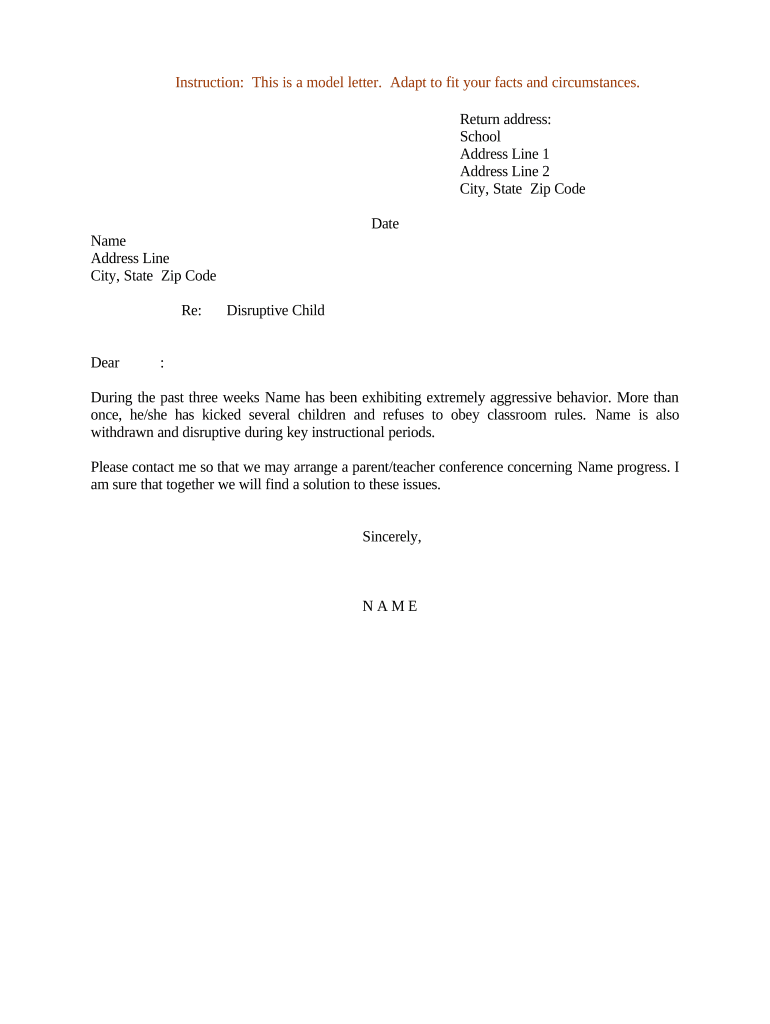
A Letter Regarding Disruptive Child is a formal written record used to describe specific incidents of disruptive behavior involving a student, communicate concerns to school personnel or guardians, and request actions such as meetings, interventions, or disciplinary review. The letter should state observable facts (dates, times, witnesses), avoid opinion or hearsay, and specify the outcome sought. It becomes part of the student file or case record and can support later meetings, Individualized Education Program (IEP) discussions, or administrative decisions when retained with other documentation.

Why a Clear, Neutral Letter Matters

A well‑written letter documents facts, sets expectations, and preserves an auditable record of concerns and requests. Neutral wording reduces legal exposure, supports due process for the student, and helps administrators coordinate responses consistently.

Why a Clear, Neutral Letter Matters

Who Typically Prepares or Receives This Letter

Multiple school stakeholders prepare or receive these letters depending on context and responsibility.

  • Classroom teachers reporting repeated disruptive incidents and requesting administrative follow up.
  • School administrators documenting incidents, notifying parents, and proposing next steps.
  • Parents or guardians documenting concerns and requesting meetings or formal interventions.

Maintain a copy for the student file and share only with authorized recipients under district and federal privacy rules.

Representative Signers and Readers

School Principal

As the building administrator, the principal documents incidents that materially affect school operations, coordinates investigations, and records corrective actions. Their letter entries are used in disciplinary proceedings and to notify district offices when escalation is required.

Parent / Guardian

A parent or guardian may write to describe how a child's behavior affects learning or safety, request meetings or accommodations, and provide supporting documentation; their letters become part of the student's education record under district policy and FERPA.

Key Elements to Include in a Professional Letter

Include essential factual elements and a clear requested outcome so the recipient can act and the record remains legally useful.

Incident Details

Provide date, time, location, and a concise sequence of observable actions rather than opinions; name any staff or students who directly observed the behavior.
Behavior Description

Describe the conduct with neutral language (what was said or done), avoiding labels or diagnoses unless supported by documented evaluations.

Impact

Explain how the behavior affected classroom instruction, other students, or safety to justify requested remedies or interventions.

Prior Steps

Note any prior informal interventions, communications, or supports already tried and their dates to show escalation history.

Requested Action

State specific requests (meeting, evaluation, disciplinary review, safety plan) and propose reasonable scheduling windows.

Signature Block

Sign, print name, list role or relationship to student, and include contact information and the date signed.

Step‑by‑Step: Drafting and Sending the Letter

Follow these steps to create a clear, documented letter that school staff can act on and retain appropriately.

  • 01
    Draft: Write factual incident details without judgment.
  • 02
    Review: Check for accuracy and remove speculative language.
  • 03
    Sign: Sign and date the letter before sending.
  • 04
    Send: Deliver to the appropriate administrator and keep a dated copy.

Sample Digital Workflow for Sending and Tracking

A simple digital workflow helps ensure delivery, preserves an audit trail, and supports later review.

Field Configuration
Upload Document PDF or DOCX upload to secure platform
Add Metadata Student name, incident date, case ID
Set Recipients Principal, counselors, parent/guardian
Track Delivery Record timestamps and read receipts

How Electronic Delivery Typically Works

E‑delivery creates a timestamped record and can reduce delays while preserving privacy controls.

  • Upload: Sender uploads the finalized letter file.
  • Assign Recipients: Designate school officials and parent addresses.
  • Send: Platform emails secure access or signing links.
  • Archive: Signed copies and audit logs are stored.

Platform Considerations for Secure eDelivery

Choose a platform that supports secure file types, audit trails, and required privacy controls for student records.

  • Integrations: Works with Google Workspace, Microsoft 365, and SIS platforms
  • File Formats: Accepts PDF and DOCX with embedded audit trail
  • Authentication: Supports email, SMS, or stronger signer verification

Verify the platform supports FERPA and HIPAA controls where applicable and provides exportable audit logs for retention and review.

Timing to Consider When Sending or Responding

Timing affects administrative responses, investigations, and rights to appeal; plan letters to allow reasonable response windows.

Immediate Notification:

Send within 24–72 hours of the incident when safety concerns exist.

Meeting Requests:

Allow 5–10 business days for administrators to schedule an initial meeting.

IEP Evaluation:

Request an evaluation promptly if special education needs are suspected.

Appeal Period:

District appeal windows vary; request written timelines from administrators.

Record Retention:

Keep copies according to school policy and applicable law.

Key Milestones After the Letter Is Sent

Track milestones so responses and next steps occur within reasonable, documented timeframes.

01

Acknowledgment Received

School confirms receipt and assigns a case contact.

02

Initial Meeting Scheduled

Stakeholders meet to review facts and options.

03

Intervention Implemented

Agreed supports or disciplinary actions put in place.

04

Follow‑up Review

Outcomes are assessed and documented.

How This Letter Differs From Related Documents

Compare common alternatives so you use the most appropriate form for your objective.

Document Type Typical Use Notarization
Disruptive Child Letter behavior reporting
Behavior Incident Report staff internal record
Formal Referral iep/process initiation
Disciplinary Notice official sanction notice

Common Preparation Pitfalls to Avoid

  • Using emotive language or unverified accusations that shift focus from facts and can provoke disputes or legal pushback.
  • Failing to include dates, times, or witness names which weakens the record and complicates later verification.
  • Sharing the letter with unauthorized recipients, risking FERPA or privacy violations and unintended disclosures.
  • Skipping follow‑up steps after sending the letter, which can leave concerns unaddressed and reduce accountability.

Legal and Procedural Risks to Keep in Mind

Defamation Risk: Avoid false statements
Privacy Violation: FERPA protected information
Retaliation Claim: Avoid punitive behavior
Procedural Default: Missed internal deadlines
Incomplete Record: Limits review opportunities
Unauthorized Sharing: May violate district rules

Security and Compliance Controls to Use

FERPA Awareness: Protects education records
HIPAA Considerations: When health data included
ESIGN / UETA: Electronic record validity
TLS Encryption: Encrypt in transit
AES‑256 Storage: Encrypt at rest
Audit Trail: Preserve access logs

eSignature Pricing Comparison for Document Delivery and Tracking

Comparison of typical vendor starting prices and key capabilities for sending and tracking letters and related school documentation.

signNow DocuSign Adobe Sign PandaDoc HelloSign
Starting Price $8/user/mo $15/user/mo $14/user/mo $19/user/mo $15/user/mo
Free Trial 7‑day free trial Trial varies Trial varies Trial varies Trial varies
Bulk Send Yes Yes Yes Yes Yes
Audit Trail Yes Yes Yes Yes Yes
HIPAA Compliant Yes Yes Yes No No
Envelope Cap No cap 100 envelopes/user/year Varies by plan Varies by plan Varies by plan

Practical Examples of Letter Use

Two example scenarios show how a concise factual letter supports school response and documentation.

School Example

A teacher documents repeated classroom disruptions with dates and witness names to request an administrator meeting.

  • The administrator schedules a review within one week.
  • The neutral, dated record helps the team decide on targeted interventions and documents the district response for the student file.

Parent Example

A parent describes out‑of‑school incidents that affect classroom behavior, requests an IEP review, and provides supporting notes.

  • The request prompts an evaluation referral.
  • The written request becomes part of the record and supports timely coordination between parents, educators, and specialists.

Practical Tips for Accuracy and Efficiency

Apply these best practices to make the letter actionable and defensible while minimizing privacy and legal risks.

Stick to Observable Facts
Report what you saw or heard, with dates and times; avoid conclusions or diagnostic language unless documented by a qualified professional.
Use Neutral Tone
Neutral phrasing reduces escalation and preserves credibility if the record is reviewed in appeals or due process proceedings.
Limit Distribution
Share only with staff and parents who have an educational need to know; unauthorized sharing can trigger FERPA concerns.
Keep an Audit Trail
Record delivery method and retain copies with timestamps to support timelines and administrative reviews.

Frequently Asked Questions About Using the Letter

Answers to common questions about content, delivery, and legal considerations when preparing or sending a Letter Regarding Disruptive Child.


Need help? Contact support

be ready to get more
Join over 28 million airSlate SignNow users