Establishing secure connection…Loading editor…Preparing document…

Letter from Tooth Fairy to Child

This template is fully customizable. Edit the text, fill out the fields, and send it for signature. Give it a try!
Letter from Tooth Fairy to Child

What a Letter from Tooth Fairy to Child Is and When It’s Used

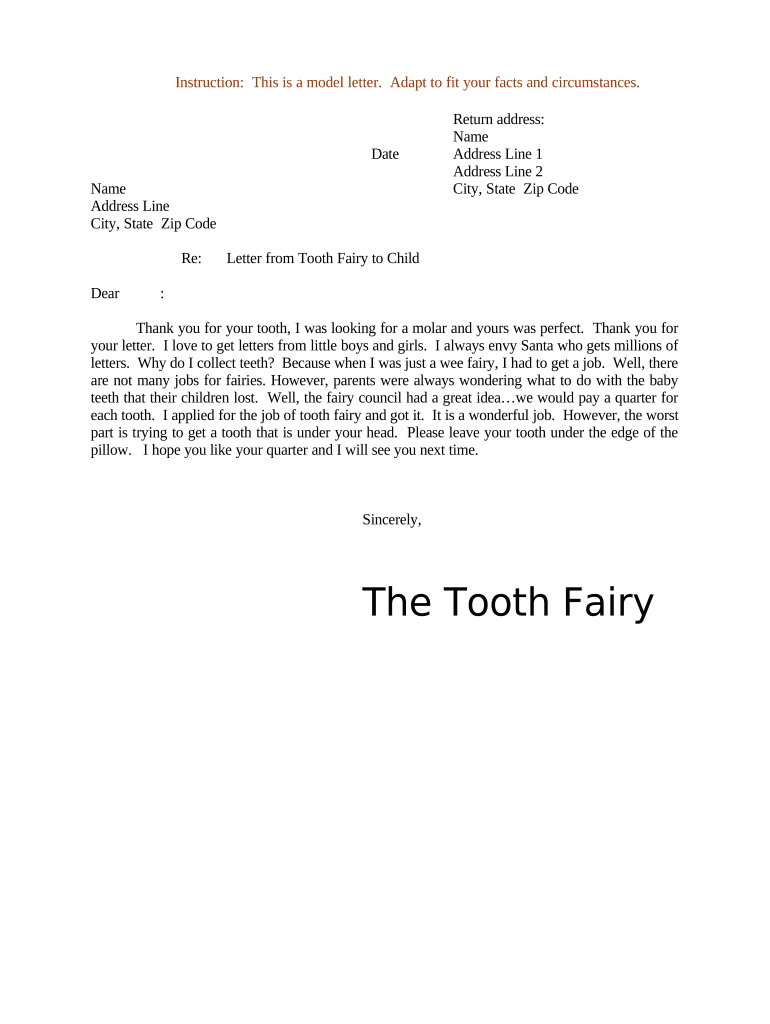
A Letter from Tooth Fairy to Child is a short, informal note left with a lost tooth or a small reward intended to celebrate a child’s milestone. Typical content includes the child’s name, a congratulatory message, a reference to the tooth, and a signature from the Tooth Fairy persona. The letter is generally a keepsake rather than a legal document; parents, guardians, or caregivers usually prepare and deliver it. Digital versions are common for themed emails, printable templates, or as part of a school or pediatric practice activity.

Why Use a Letter from Tooth Fairy to Child

A clear, friendly letter turns a small childhood event into a memorable keepsake, supports emotional development, and helps create family rituals. It can be personalized to reinforce positive behaviors and to mark the occasion with a tangible memento.

Why Use a Letter from Tooth Fairy to Child

Who Typically Prepares and Keeps These Letters

The same groups typically store a copy as a keepsake; no notarization or legal filing is required.

  • Parents and guardians: personalize tone and delivery to the child’s age and family traditions.
  • Educators and school staff: use printable templates for classroom activities or health lessons.
  • Pediatric clinics: provide branded printable notes or digital messages for patient engagement.

Step-by-Step: Create and Leave the Letter

Follow these four steps to prepare, personalize, and deliver a Letter from Tooth Fairy to Child with consistent presentation.

  • 01
    Select Template: Choose a printable or digital template that matches the desired tone.
  • 02
    Personalize Text: Insert the child’s name, date, and a short congratulatory message.
  • 03
    Choose Delivery: Decide physical placement under pillow or digital message and note any props.
  • 04
    Save Copy: Keep a digital or paper copy for the child’s memory book.

Typical Workflow from Draft to Keepsake

A simple create-to-deliver workflow helps maintain consistency and lets multiple caregivers coordinate the presentation.

  • Draft: Prepare the letter using a template or freeform text.
  • Review: Confirm spelling, date, and appropriateness for the child’s age.
  • Deliver: Place the letter securely or send via agreed digital channel.
  • Archive: Store a copy in a keepsake box or digital folder.

How to Customize and Complete the Letter Online

Common platform settings and configuration options for digital templates and printable exports.

Field Configuration
Template Source Select a printable PDF or plain text template
Personalization Fields Enable name, date, and message fields
Authentication Optional parent verification only
Export Options PDF or JPG for print, or email for digital delivery

Delivery Options and Technical Considerations

Keep one archived copy in digital or paper form to preserve the memory and for family recordkeeping.

  • Physical Print: Printable on standard 8.5x11 paper
  • Email Delivery: Send as PDF attachment or inline image
  • Mobile Message: Share via secure family messaging app

Key Elements to Include in a Professional-Looking Letter

These six elements give the Letter from Tooth Fairy to Child structure, personality, and keepsake value while remaining simple and child-friendly.

Personal Greeting

A warm opening that addresses the child by name, immediately creating a personal connection and ensuring the child knows the note is for them.
Occasion Reference

Briefly mention the lost tooth or milestone to anchor the note to the event and help the child remember the context later.

Positive Message

One or two encouraging sentences that celebrate the child’s milestone and reinforce positive self-image without overwhelming detail.

Playful Signature

A consistent Tooth Fairy signature or mark that can become part of family tradition and collectible continuity over multiple letters.

Date Stamp

A clear date helps build a chronological keepsake collection and provides context for later reminiscing.

Optional Token Note

A line indicating a small token, coin, or gift left with the letter reinforces the ritual and clarifies the purpose of the delivery.

Supporting Options and Add-Ons

Optional features let caregivers tailor the experience while keeping the letter concise and age-appropriate.

Design Styles

Choose whimsical, classic, or themed templates that match child interests without adding complex language or images.

Language Variants

Provide multilingual text if the household uses multiple languages; keep translations simple and culturally appropriate.

Accessibility

If needed, use larger fonts or read-aloud audio notes for younger or visually impaired children.

Digital Badges

Add a printable sticker or a small digital badge to enhance the keepsake experience without adding privacy risk.

Required Information and Minimal Data to Include

Child Name: First name only
Date: MM/DD/YYYY format
Tooth Note: Short descriptor
Signature: Playful persona name
Delivery Method: Pillow or digital
Keeper: Parent stores copy

Common Risks and Consequences of Errors

Privacy Exposure: Sharing contact details unnecessarily
Inaccurate Name: Child may be confused
Overly Detailed Health Info: Avoid medical specifics
Misdelivery: Letter delivered to wrong child
Choking Risk: Small gifts may be unsafe
No Legal Effect: Not a legal document

Common Mistakes When Preparing the Letter

  • Including excessive personal data such as full address or birth date; keep entries minimal for privacy.
  • Using complex vocabulary not suited to the child’s age, which can confuse rather than delight the recipient.
  • Forgetting to save a copy; without an archived version the family may lose the keepsake memory later.
  • Leaving a physical reward unsupervised that presents a choking hazard for very young children.

Two Practical Examples of Letter Use

These brief scenarios show how caregivers and organizations adapt the Letter from Tooth Fairy to Child for different settings.

Home Keepsake

A parent writes a short, playful note celebrating the child’s first lost tooth and tucks it under the pillow.

  • The note includes name, date, and a small coin.
  • The parent saves a copy in a memory box to be shown at milestone birthdays and later archived in a digital family album.

Classroom Activity

A teacher uses a printable template to celebrate several students’ lost teeth during a lesson on dental health.

  • Each note is personalized with first names only.
  • The teacher sends printed copies home with students and keeps a sanitized classroom template for future activities while following school privacy guidelines.

Practical Tips for Accurate and Efficient Completion

Follow these guidelines to ensure the letter is safe, personal, and easy to reproduce for future use.

Keep Personal Data Minimal
Limit identifying information to the child’s first name and date. Avoid including full addresses, birth dates, or medical details to reduce privacy risk and simplify storage.
Match Tone to Age
Use short sentences, simple vocabulary, and playful phrasing for toddlers and preschoolers, while older children may appreciate a slightly more descriptive message or humor.
Use Durable Formats
For physical keepsakes, print on heavier paper or laminate a copy; for digital files, save a high-resolution PDF so the letter can be reprinted or shared in the future.
Coordinate With Caregivers
Confirm delivery method and timing with other adults in the household to prevent accidental discovery and ensure the presentation remains a delightful surprise.

When to Issue the Letter — Common Timing Options

Timing depends on family preference and the child’s routine; choose a consistent approach for continuity and ritual.

Same Night Delivery:

Leave the letter under the pillow the night the tooth is lost.

Morning Surprise:

Place the note where it will be found in the morning.

School Day Exchange:

Teacher provides a note and brief recognition during class.

Pediatric Office Pickup:

Clinic hands a printed note at a visit for engagement.

Milestone Compilation:

Collect dated letters for an annual memory book or scrapbook.

Key Steps from Creation to Archival

A simple numbered sequence helps caregivers standardize the letter process and preserve copies as keepsakes.

01

Create Template

Design or select a template that fits the family tone and printing needs.

02

Personalize Content

Fill child name, date, and a brief congratulatory message.

03

Deliver Letter

Place the letter and any small token in the agreed location.

04

Archive Copy

Store a digital and/or physical copy for future memory keeping.

Comparing eSignature Options for Creating and Archiving Letters

Basic pricing and feature differences across common eSignature vendors; signNow is listed first per platform comparison conventions.

signNow DocuSign Adobe Sign PandaDoc HelloSign
Starting Price $8/user/mo $15/user/mo $14/user/mo $19/user/mo $15/user/mo
Free Trial 7-day free trial Varies by vendor Varies by vendor Varies by vendor Varies by vendor
Bulk Send Yes (Business Premium) Yes Yes Yes No
Audit Trail Yes Yes Yes Yes Yes
HIPAA Compliant Yes Yes Yes No No
Envelope Cap No envelope cap 100 envelopes/user/year Varies by plan Varies by plan Varies by plan

FAQs — Common Questions About the Letter from Tooth Fairy to Child

Answers to frequently asked questions about customization, privacy, electronic copies, and the letter’s legal status.


Need help? Contact support

be ready to get more
Join over 28 million airSlate SignNow users