Establishing secure connection…Loading editor…Preparing document…

South Carolina Will Instructions

This template is fully customizable. Edit the text, fill out the fields, and send it for signature. Give it a try!
South Carolina Will Instructions

What the South Carolina Will Instructions Cover

The South Carolina Will Instructions provide stepwise guidance for preparing a last will and testament that follows state formalities, identifies beneficiaries, appoints an executor, and describes how to distribute assets. These instructions explain required fields, witness and notarization options, and the difference between a simple will, a self-proving will, and common estate administration steps. They also note limitations on electronic execution: while ESIGN and UETA validate many e-signatures for contracts, wills are a recognized exception in most jurisdictions and typically require in-person witnessing or a self-proving affidavit.

Why Clear Will Instructions Matter in South Carolina

Accurate instructions reduce probate delays, lower dispute risk, and help ensure your estate plan reflects current intentions while meeting South Carolina execution rules.

Why Clear Will Instructions Matter in South Carolina

Who Typically Uses These Instructions

These instructions suit individuals planning a basic will, attorneys preparing documents, and estate administrators checking execution steps.

  • Individuals creating or updating a personal will in South Carolina, often without complex trusts.
  • Estate attorneys and paralegals preparing wills and self-proving affidavits for clients.
  • Executors and fiduciaries confirming formalities before submitting documents to probate court.

Typical Roles Involved

Testator

An adult who creates the will. Must be of sound mind and sign in the presence of the required number of competent witnesses to satisfy South Carolina formalities; errors in execution can result in probate challenges.

Estate Attorney

A licensed attorney who reviews estate language, confirms witness/notary requirements, prepares a self-proving affidavit when appropriate, and assists with probate filings if administration becomes necessary.

Essential Information to Include

Full Legal Name: Exact name on ID
Date of Birth: MM/DD/YYYY format
Residence: Street, city, state
Executor Name: Full name and contact
Beneficiaries: Names and shares
Witnesses: Two competent witnesses

Consequences of Incorrect Execution

Invalid Will: Will may be declared invalid
Probate Delays: Court proceedings extended
Increased Costs: Higher attorney and court fees
Disputes: Higher litigation risk
Tax Exposure: Missed estate tax planning
Asset Misdistribution: Beneficiaries receive unintended shares

Common Preparation Pitfalls to Avoid

  • Using informal signatures or initials instead of the full, witnessed signature required under South Carolina formalities, which can invalidate the document.
  • Failing to name successor executors or guardians for minor children, leaving the court to select replacements during probate.
  • Listing beneficiaries with ambiguous descriptions (for example, using only first names) that complicates identification and distribution.
  • Neglecting to attach or prepare a self-proving affidavit, which can force witnesses to testify in probate rather than allowing streamlined admission of the will.

How These Instructions Are Used in Practice

Real-world examples show common drafting scenarios and how simple changes affect probate outcomes.

Individual with Simple Estate

A homeowner with a bank account and single beneficiary executed a will with two witnesses in the presence of an attorney.

  • Will was admitted to probate without contested issues.
  • The executor transferred assets per the will, avoiding intestacy and limiting court involvement by using clear beneficiary designations and a self-proving affidavit.

Blended-Family Planning

A testator with children from different marriages used specific bequests and a residuary clause.

  • Executor contact information was provided.
  • Clear beneficiary descriptions and alternate executor naming reduced ambiguity, and attorney-prepared language addressed spousal election rights and potential tax considerations to reduce later disputes.

Step-by-Step: Completing South Carolina Will Instructions

Follow these four core steps to draft and execute a valid will under South Carolina formalities.

  • 01
    Identify Parties: Enter full legal names and relationships.
  • 02
    List Assets: Describe property and assign beneficiaries.
  • 03
    Appoint Executor: Name primary and successor executors.
  • 04
    Sign and Witness: Sign before two witnesses; add notary if self-proving.

Where to File or Submit a Will in South Carolina

After execution, identify the appropriate county probate court and prepare required filings to begin administration.

  • County Probate Court: File will to open probate case.
  • Executor Records: Submit death certificate and will copy.
  • Self-Proving Affidavit: Attach if available to avoid witness testimony.
  • Attorney Assistance: Counsel files and guides probate steps.

Key Parts of a Professional South Carolina Will

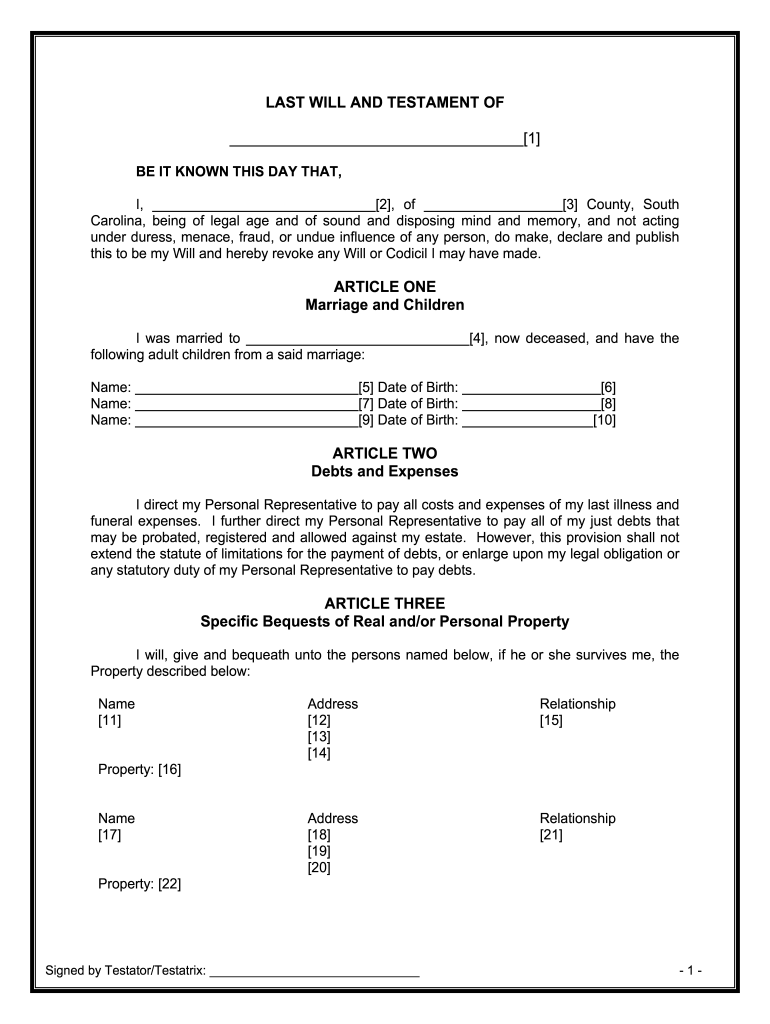
A properly drafted will includes clear identification, appointment of fiduciaries, detailed gifts, and clauses that simplify probate while reflecting state formalities.

Testator Details

Full legal name, residence, and capacity statement so the document clearly identifies the person whose estate it governs and establishes mental competency.
Executor Appointment

Name a primary and alternate executor with contact details and brief powers to manage estate administration and represent the estate in probate court.

Specific Bequests

List cash gifts and named personal property with beneficiary names; include contingencies if a beneficiary predeceases the testator.

Residuary Clause

Direct how remaining estate assets are to be distributed after specific bequests, taxes, and debts are satisfied to prevent partial intestacy.

Guardian Nomination

If minors are involved, name guardians and alternates to reduce court discretion and provide clarity for child care decisions.

Self-Proving Affidavit

A notarized affidavit attached to the will that, when executed at signing, eliminates the need for live witness testimony at probate.

Customizing and Completing the Will Online

Configure online settings to capture signatures, manage witnesses, and optionally include a self-proving affidavit during remote preparation.

Field Configuration
Signature Method Wet signature or witnessed e-sign options
Witness Handling Collect two witness names and signatures
Notary Enable notarization or attach notarized affidavit
Templates Use attorney-reviewed templates for accuracy

Digital Signing and eSubmission Considerations

Electronic workflows can streamline preparation, but verify that execution methods meet South Carolina will formalities.

  • Supported Formats: PDF, DOCX accepted
  • Integrations: Salesforce, NetSuite, Google Workspace
  • Authentication: Email, SMS, advanced options

eSignature Vendor Comparison for Will Preparation

Comparison focuses on starting price, trial availability, bulk send, audit trail, HIPAA compliance, and envelope limits for common eSignature vendors.

signNow DocuSign Adobe Sign PandaDoc HelloSign
Starting Price $8/user/mo $15/user/mo $14/user/mo $19/user/mo $15/user/mo
Free Trial 7-day free trial Varies by plan Varies by plan Varies by plan Varies by plan
Bulk Send Yes Yes Yes Yes No
Audit Trail Yes Yes Yes Yes Yes
HIPAA Compliant Yes Yes Yes No No

Timing to Prepare and Execute a Will

Key timing considerations help ensure validity and reduce post-death administration friction.

When to Draft:

Draft while competent and update after major life events

Execution Timing:

Sign in presence of required witnesses to make effective

Self-Proving Affidavit:

Execute at signing to avoid witness testimony later

After Death:

File will with probate court to open administration

Periodic Review:

Review every 3–5 years or after major changes

Milestone Timeline for Will Preparation and Probate

A typical sequence moves from drafting to execution to probate and final distribution; each stage has distinct tasks and timelines.

01

Drafting Complete

Will language finalized and reviewed by counsel as needed

02

Execution Event

Testator signs with two witnesses; notarize for self-proving affidavit

03

Probate Filing

Executor files will and death certificate to start administration

04

Estate Distribution

Assets distributed following debts, taxes, and court approvals

FAQs: Problems and Practical Answers

Answers to common questions about execution, witnesses, electronic signing, updating, revocation, and storage for South Carolina wills.


Need help? Contact support

be ready to get more
Join over 28 million airSlate SignNow users