Establishing secure connection…Loading editor…Preparing document…

Settlement Agreement

This template is fully customizable. Edit the text, fill out the fields, and send it for signature. Give it a try!
Settlement Agreement

What a Settlement Agreement Is and When It Applies

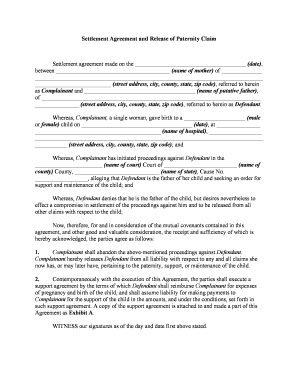
A Settlement Agreement is a written contract that resolves a dispute between parties by documenting agreed terms such as payment, release of claims, confidentiality, and performance obligations. It replaces further litigation or administrative action when signed by all parties and can include dismissal language for any related court pleadings, payment schedules, and conditions precedent to enforceability.

Why Use a Formal Settlement Agreement

A clear Settlement Agreement reduces litigation risk, sets enforceable expectations, allocates payment and tax responsibilities, and documents release language. It creates an evidentiary record for courts and regulators and can include confidentiality, non-disparagement, and enforcement provisions to limit future disputes.

Why Use a Formal Settlement Agreement

Who Typically Prepares and Signs a Settlement Agreement

Settlement Agreements are used by individuals, businesses, insurers, and counsel to close disputes outside of trial; the drafter depends on complexity and the need for legal review.

  • Individual claimants and respondents involved in personal disputes such as employment, consumer, or small business claims.
  • Corporate legal or HR teams resolving employment separations, vendor disputes, or contract breaches.
  • Insurance companies and claims adjusters settling covered losses or subrogation claims.

Parties often involve counsel for negotiation and review, and third parties such as escrow agents may appear where staged payments or conditional releases are required.

Primary Signatory Roles

Claimant / Plaintiff

An individual or entity releasing claims in exchange for consideration; must have authority to bind the claimant and should ensure the agreement states whether attorneys' fees are paid or reserved.

Respondent / Defendant

The party making payment or other performance in exchange for release; corporate respondents should execute through an authorized officer with documented signing authority to avoid later challenges.

Essential Clauses to Include in a Settlement Agreement

A professional Settlement Agreement should include plain-language clauses that define scope of release, payment terms, confidentiality, governing law, dispute resolution, and representations and warranties.

Settlement Amount

Specify total consideration, payment schedule, escrow instructions if any, and whether payments are gross or net of taxes and fees.
Release of Claims

Clearly state the claims released, effective date of release, any carve-outs, and whether the release is mutual or one-sided.

Confidentiality

Define the scope of confidential information, permitted disclosures, and carve-outs for legal or regulatory obligations.

Payment Mechanics

Describe payment method, delivery instructions, timing, late-payment remedies, and conditions that trigger payment.

Representations

Include each party's representations about authority, absence of other agreements, and non-contravention of law or prior obligations.

Governing Law

Specify controlling state law and venue for disputes; include attorney fees or arbitration clauses if agreed by the parties.

Step-by-Step: Complete and Execute a Settlement Agreement

Follow these core steps to prepare and finalize a legally effective Settlement Agreement with minimal friction.

  • 01
    Draft terms: Record agreed points in plain language.
  • 02
    Review counsel: Have attorneys confirm enforceability.
  • 03
    Finalize fields: Fill names, dates, amounts, and conditions.
  • 04
    Sign and store: Obtain signatures and retain executed copies.

How to Amend or Revise a Settlement Agreement

Use a clear amendment process to change terms without risking the original agreement's enforceability.

01

Check amendment clause:

Confirm how amendments must be made and signed.
02

Draft amendment:

Reference original agreement date and parties.
03

Obtain approvals:

Get signatures from all original parties.
04

Consider consideration:

New consideration may be required to bind changes.
05

Attach exhibit:

Make the amendment an exhibit to the original.
06

Record version:

Retain both old and new signed versions.

Configuring an Online Signing Workflow for a Settlement Agreement

Set up fields, authentication, and retention rules to ensure the executed agreement meets legal requirements and internal controls.

Field | Configuration Field placement | Signature, date, initials, conditional fields
Authentication Email link or SMS code; use stronger ID verification if required
Notifications Auto-notify parties on signature and document completion
Templates Save standard clauses as reusable templates for consistency
Retention Set retention period and export formats (PDF/A preferred)

Digital Signing and File Format Requirements

Use a platform that supports PDF and DOCX uploads, audit trails, and integrations with your document storage and CRM systems.

  • File formats: PDF, DOCX, and flattened PDF/A exports
  • Integrations: Salesforce, NetSuite, Microsoft 365, Google Workspace
  • Security: TLS in transit; AES-256 at rest

Choose a solution supporting conditional fields, advanced signer authentication for high-risk matters, and an audit trail that captures timestamps, IP addresses, and signer attribution for evidentiary strength.

Where to Send and How to Share the Signed Agreement

Decide distribution and filing routes in advance to ensure obligations such as court dismissals or notice requirements are completed promptly.

  • Send to parties: Email executed copies to all signatories
  • File with court: File dismissal or stipulated order if required
  • Deliver to counsel: Provide final executed PDF to each attorney
  • Archive record: Store signed copy in secure repository

Common Deadlines and Timing Expectations

Settlement timelines depend on payment scheduling, court deadlines, and any agreed notice periods; track dates carefully to avoid default.

Execution deadline:

Date by which parties must sign, often within 10–30 days

Payment due dates:

List each installment date and grace periods

Objection window:

Time allowed to contest terms after signing

Tax reporting:

Issuer may need to report payments on Form 1099 where required

Court filing:

File stipulations or dismissals per local rules

Key Milestones from Negotiation to Closure

Track sequential milestones to ensure payments and dismissals occur as agreed and to preserve enforcement rights.

01

Negotiation Complete

Parties agree on core terms and consider counsel review

02

Agreement Execution

All required signatures obtained and dated

03

Payment Fulfillment

Payments made per schedule and confirmed

04

Case Closure

File dismissal or administrative close as applicable

Common Mistakes to Avoid When Preparing a Settlement Agreement

  • Using vague release language that fails to identify claims, leading courts to interpret the release narrowly and allow re-litigation.
  • Failing to specify payment mechanics, which can result in disputes about amounts, timing, or whether taxes were withheld.
  • Overlooking required third-party consents such as insurer subrogation, lien holders, or regulatory approvals that can invalidate settlement terms.
  • Not confirming signatory authority for corporations or trustees, creating a risk the agreement will be challenged as unauthorized.

Penalties and Risks of Errors in a Settlement Agreement

Tax Exposure: Improper reporting may trigger IRS assessment
Unenforceability: Ambiguous terms can lead courts to void provisions
Sanctions: Court sanctions for false statements or bad-faith filings
Liens: Unreleased liens can impair payment distribution
Statute Limits: Missed deadlines can bar claims or defenses
Authority Gaps: Signatures by unauthorized persons may be invalid

Export Formats and Supporting Documents to Keep with the Agreement

Store final records in durable formats and include supporting exhibits such as releases, payment confirmations, and court filings.

Download Options

Export executed agreement as PDF/A and standard PDF for long-term preservation and portability across systems.

Supporting Docs

Attach payment receipts, escrow instructions, correspondence, and any required tax forms as exhibits to the signed agreement.

Audit Trail

Keep the signing audit trail showing timestamps, IP addresses, and signer attribution to support enforceability.

Template Reuse

Maintain a versioned template library to ensure consistent clauses and reduce drafting time for future settlements.

Real-World Examples of Online Settlement Execution

These examples show how parties used online signing to finalize settlements while preserving evidence and speed.

Optica Ventures LLC

Optica needed a straightforward method to finalize commercial releases across multiple parties

  • The team used an online signature workflow to gather approvals quickly
  • The COO noted the interface was simple for the team and clients, enabling efficient closure while maintaining a reliable audit trail.

Martin Properties

A property management firm used an electronic workflow to resolve tenant claims without in-person meetings

  • The founder processed and executed documents remotely
  • The firm reported executing settlements online with compliance and security, improving turnaround on disputed accounts.

How a Settlement Agreement Differs from a Release

Compare core differences between a Settlement Agreement and a standalone Release to choose the correct document for your matter.

Criteria Settlement Agreement Release Agreement
Purpose resolve dispute and set obligations narrowly release specific claims
Typical Parties plaintiff and defendant claimant and payer
Includes payments may be yes or no
Court filing needed sometimes rarely

eSignature Vendor Comparison for Executing Settlement Agreements

The table compares starting price, trial availability, bulk-send capability, audit trail, HIPAA compliance, and envelope caps across common eSignature vendors; signNow is listed first for clarity.

signNow DocuSign Adobe Sign PandaDoc HelloSign
Starting Price $8/user/mo $15/user/mo $14/user/mo $19/user/mo $15/user/mo
Free Trial 7-day free trial Yes Yes Yes Yes
Bulk Send Yes Yes Yes Yes No
Audit Trail Yes Yes Yes Yes Yes
HIPAA Compliant Yes Yes Yes No No

Frequently Asked Questions about Settlement Agreements

Answers to common questions about e-signing, notarization, tax reporting, amendments, storage, and signer authority for Settlement Agreements.


Need help? Contact support

be ready to get more
Join over 28 million airSlate SignNow users