Eligibility
Documented statement that the estate meets Alabama's small-estate statutory thresholds and qualifying conditions, citing estate size, asset types, and any disqualifying factors such as pending formal administration or unresolved liens.
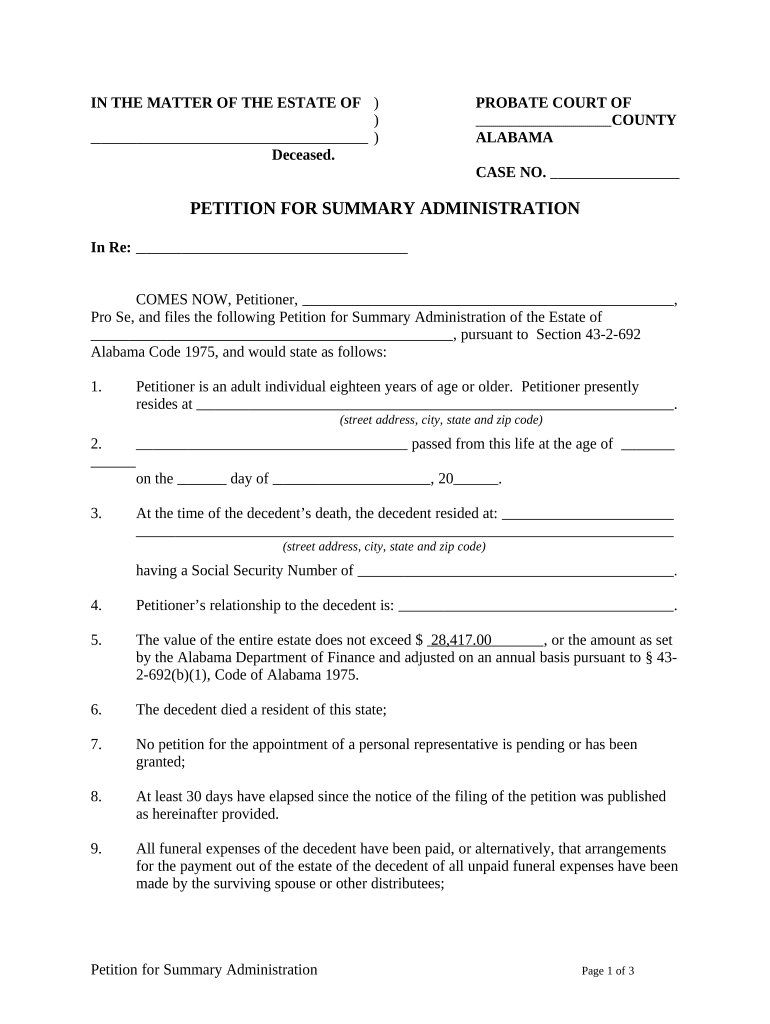
Summary administration offers a faster, lower-cost path to transfer small estates in Alabama compared with formal probate. It minimizes paperwork, reduces attorney fees, and often removes the need for lengthy hearings while creating a court-recognized document that helps clear title for beneficiaries.

Typical filers include surviving spouses, adult heirs, estate administrators, and probate attorneys handling uncomplicated Alabama small estates.
An appointed estate administrator or personal representative who files the summary proceeding to transfer assets, settle small creditor claims, and obtain court orders for distribution. Often used when estate complexity is low and the administrator seeks a quicker, lower-cost resolution than full probate.
An adult beneficiary who needs clear title to accounts, vehicles, or limited real property interests and prefers a streamlined court process. Beneficiaries frequently use summary administration to avoid extended probate timelines and to receive court-recognized documentation that third parties accept for transfer.
Documented statement that the estate meets Alabama's small-estate statutory thresholds and qualifying conditions, citing estate size, asset types, and any disqualifying factors such as pending formal administration or unresolved liens.
A clear inventory of personal property, accounts, and any real property interests subject to summary disposition, including account numbers, vehicle identification numbers, and approximate values for the record.
Proof of statutory notice to known creditors or an affidavit affirming notice attempts; follow Alabama probate notice timelines to preserve distribution immunity from later claims.
A signed, sworn affidavit executed by the petitioner attesting to facts about the decedent, heirs, assets, and the absence of pending formal administration, meeting notarization requirements.
A concise proposed order or judgment for distribution that the clerk or judge may enter to transfer title, release funds, or direct custodial institutions to distribute assets.
When real property is affected, include instructions for recording the court order with the county land records office and any deed or title forms required by the recorder.
A surviving spouse used a summary affidavit to transfer two bank accounts and a vehicle without opening formal probate.
An estate executor used summary procedures to collect receivables and transfer business equipment after a sole proprietor's death, avoiding inventory-heavy probate.