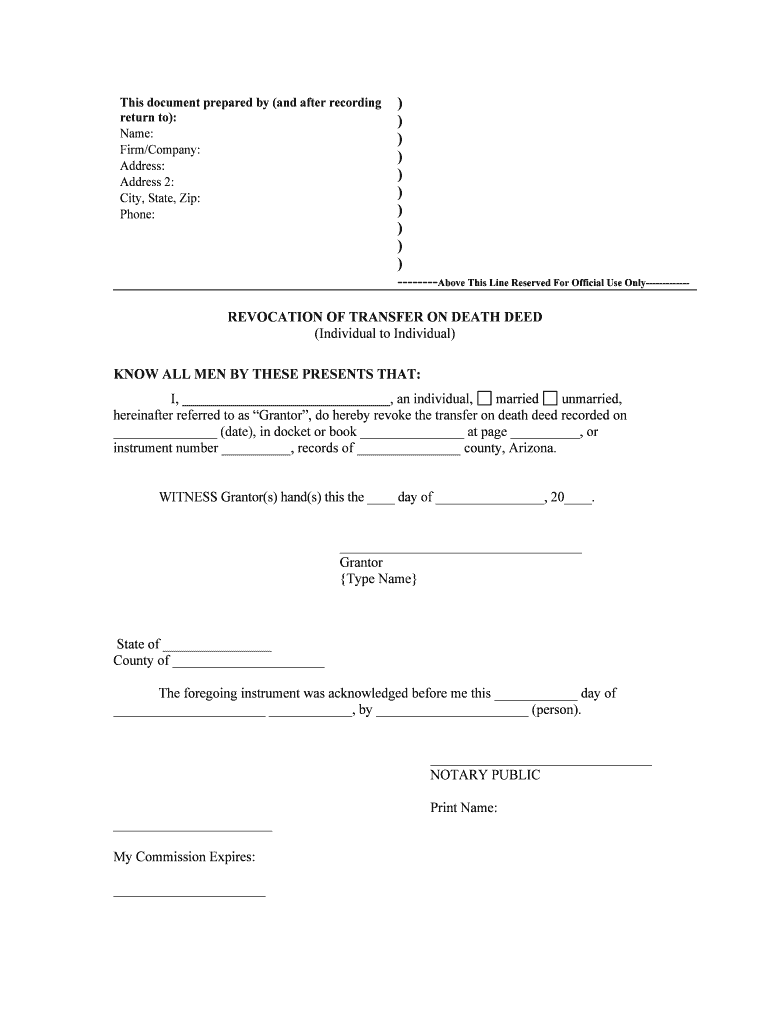
Transfer on Death
What a Transfer on Death Document Is and When It Applies
Why Use a Transfer on Death Designation
A Transfer on Death designation streamlines post-death transfers by bypassing probate for eligible property, preserves privacy, and can lower administration costs while leaving control and revocation authority with the owner during life.
Who Typically Uses Transfer on Death Documents
Typical users who benefit from Transfer on Death designations include individual owners of real estate, brokerage accounts, and bank accounts.
- Retirees and estate planners seeking to simplify asset transfer outside probate.
- Property owners with single-family homes or investment real estate holdings.
- Account holders who want direct beneficiary transfer for brokerage and bank accounts.
Stepwise Process to Complete and Submit a TOD
-
01Identify Asset: Record precise property address or account identifiers.
-
02Name Beneficiaries: Provide full legal names and tax IDs.
-
03Designate Shares: Allocate percentages or specific interests per beneficiary.
-
04Sign & Submit: Sign, date, notarize if required, and send to custodian.
How the TOD Transfer Is Processed by Custodians
-
Upload Document: Submit the completed TOD to the asset custodian.
-
Verification: Custodian confirms beneficiary identity and documentation.
-
Record Transfer: Title or account is updated in beneficiary name.
-
Issue Confirmation: Custodian provides written confirmation of completed transfer.
Configuring Digital Workflows for TOD Completion
| Field Configuration and Routing Instructions | Defines field type, required status, and routing roles. |
|---|---|
| Signer Authentication Method and Strength | Email link, SMS code, or KBA per custodian requirements. |
| Notarization and Witness Requirements Workflow | Include RON, in-person, or witness steps when state mandates. |
| Required Attachments and Proofs for Processing | Attach death certificate, account statements, and ID copies. |
| Retention Policy and Audit Trail Configuration | Enable audit logs, timestamps, and long-term storage settings. |
Platform and Integration Considerations for Electronic TODs
Choose eSignature and delivery platforms that support custodian file formats, required authentication, and RON where necessary.
- Formats: PDF, DOCX, or accepted custodian templates.
- Integrations: Connectors for banks, brokerages, and county recorders.
- Authentication: Email, SMS, KBA, or multi-factor options.
Principal Risks and Penalties from Errors or Omissions
Common Mistakes to Avoid When Preparing a TOD
- Failing to use precise account numbers or property addresses causes custodians to reject the TOD request and request additional proof.
- Listing informal nicknames or abbreviated names for beneficiaries leads to identity verification problems and potential withholding or delayed transfers.
- Not updating beneficiary designations after life events, such as divorce or death, can result in unintended recipients and contested transfers.
- Assuming TOD applies to all asset types; many assets require beneficiary forms specific to the custodian or state recording requirements.
Timing and Deadlines to Consider for TOD Documents
When to Submit:
Submit TOD before death; changes require new form
Custodian Processing Time:
Processing varies; expect 2–8 weeks after death certificate
Tax Reporting Window:
Beneficiary reports income in the year received per IRS rules
Recording Deadlines:
Real estate TOD may require timely county recording to change title
Update Frequency:
Review TOD designations after major life events annually recommended
Comparing eSignature Pricing and Capabilities for TOD Workflows
| signNow | DocuSign | Adobe Sign | PandaDoc | HelloSign | |
|---|---|---|---|---|---|
| Starting Price | $8/user/mo | $15/user/mo | $14/user/mo | $19/user/mo | $15/user/mo |
| Free Trial | 7-day | Varies | Varies | Varies | Varies |
| Bulk Send | Yes | Yes | Yes | Yes | No |
| Audit Trail | Yes | Yes | Yes | Yes | Yes |
| HIPAA Compliant | Yes | Yes | Yes | No | No |
| Envelope Cap | No cap | 100 envelopes/user/year | Varies | Varies | Varies |
Frequently Asked Questions About Transfer on Death Forms
-
Can a TOD be changed after it's signed?
Yes. The owner may revoke or replace a Transfer on Death designation at any time while alive by completing a new designation, filing an updated form with the custodian, and ensuring the prior form is superseded per custodian rules. State law and asset terms control validity.
-
Is notarization required for TOD?
Notarization requirements differ by asset type and state. Real estate transfers commonly require a notarized acknowledgement and county recording; financial institutions may accept a signed beneficiary form without notarization. Check state recording rules and custodian policies before submission to avoid rejection.
-
Will TOD avoid probate completely?
TOD transfers generally bypass probate for assets with valid beneficiary designations, but assets with liens, disputes, or unclear beneficiary information may still be subject to probate or creditor claims. Consult estate counsel if the estate is complex or competing claims exist.
-
Can TOD affect taxes for beneficiaries?
Beneficiaries may have tax consequences when they receive income-producing assets; capital gains basis and reporting depend on asset type, date of transfer, and applicable IRS provisions. Beneficiaries should obtain tax advice and check filing requirements for the year of receipt.
-
Who must sign the TOD form?
The owner(s) of the asset must sign; joint owners should follow survivorship rules and all registered owners typically must sign. Custodians may require notarization or witness signatures depending on state law and internal policy.
-
What if a beneficiary predeceases the owner?
If a beneficiary dies before the owner, the TOD designation may lapse or pass to contingent beneficiaries named on the form. Without contingent designations, state intestacy rules or the owner's will will determine distribution; keep beneficiary designations current.