Establishing secure connection…Loading editor…Preparing document…

Utah Letters Testamentary

This template is fully customizable. Edit the text, fill out the fields, and send it for signature. Give it a try!
Utah Letters Testamentary

What Utah Letters Testamentary Are and what they do

Utah Letters Testamentary are court-issued documents that formally appoint an executor or personal representative to administer a decedent's estate under Utah probate procedures. After the probate court determines a will's validity or orders administration, the clerk issues these letters to confirm the fiduciary's authority to collect assets, pay debts, and transfer property. Letters typically identify the estate case number, the appointed fiduciary, any court-imposed limitations, and the issuance date; third parties accept certified copies as proof of legal authority to act for the estate.

Why obtaining Letters Testamentary matters

Letters Testamentary give clear, court-recognized authority to an executor, reducing vendor friction when accessing bank accounts or conveying title.

Why obtaining Letters Testamentary matters

Who typically needs and uses Letters Testamentary

Typical users include probate attorneys, appointed executors, estate administrators, and financial institutions requiring formal proof of authority.

  • Estate executors: to access accounts, collect assets, and settle debts under court authority.
  • Probate attorneys: to present certified letters when negotiating transfers, claims, or creditor resolutions.
  • Banks and title companies: to verify authority before releasing funds or completing property transfers.

Step-by-step: obtaining and using Letters Testamentary in Utah

Follow these practical steps to obtain and use Letters Testamentary within Utah probate proceedings efficiently and correctly.

  • 01
    File Petition: File the probate petition with the appropriate county probate court clerk.
  • 02
    Attend Hearing: Appear at the probate hearing if the court requires notice or testimony.
  • 03
    Court Issues Letters: Judge signs the appointment order and the clerk issues Letters Testamentary.
  • 04
    Obtain Certified Copies: Request certified copies from the clerk for banks, title companies, and other institutions.

Where to present and how Letters Testamentary are used

After issuance, distribute certified Letters Testamentary to institutions and third parties that require formal proof of fiduciary authority.

  • County Probate Court: Official record of appointment and original court order held by the clerk.
  • Certified Copies: Provide certified copies bearing clerk signature and seal for acceptance by third parties.
  • Banks & Brokers: Present letters to access accounts, transfer funds, or manage investments on behalf of the estate.
  • Title Companies: Use letters to clear title and complete real property transfers during settlement.

Digital workflow considerations for preparing Letters Testamentary

Set up a digital workflow to prepare, sign, notarize, and distribute Letters Testamentary while preserving an auditable record.

Field Configuration
Document Format Use searchable PDF/PDF-A for archival and long-term storage.
Signature Placement Include blocks for executor, judge (order), and clerk signature/seal.
Authentication Method Use in-person notarization or robust ID proofing for official acceptance.
Certified Copy Delivery Issue stamped paper copies and secure certified PDF copies as needed.

Key risks and legal consequences to avoid

Unauthorized Acts: Personal liability possible
Missed Notifications: Creditors may file claims
Improper Copies: Banks may refuse access
Incorrect Parties: Actions can be voided
Tax Exposure: Filing errors increase audits
Court Sanctions: Contempt or fines possible

Common preparation mistakes and how they slow probate

  • Using inconsistent names for the decedent or executor across documents, causing banks or title companies to request additional proof and delaying disbursements.
  • Failing to obtain multiple certified copies up front, which forces repeated trips to the clerk and can suspend asset transfers during business days.
  • Providing incomplete case numbers or incorrect county information, which leads to misfiled records and requires corrected filings with the court clerk.
  • Relying solely on scanned or unsigned copies for institutions that require court-certified originals or sealed certified PDFs, causing refusals to act.

Essential elements included in a professional Letters Testamentary package

A complete Letters Testamentary package contains court-identifying information, clear identification of the fiduciary, and certified documentation required by third parties.

Court Caption

Identifies the probate court, county, case number, and docket information so institutions can verify the official record before accepting authority.
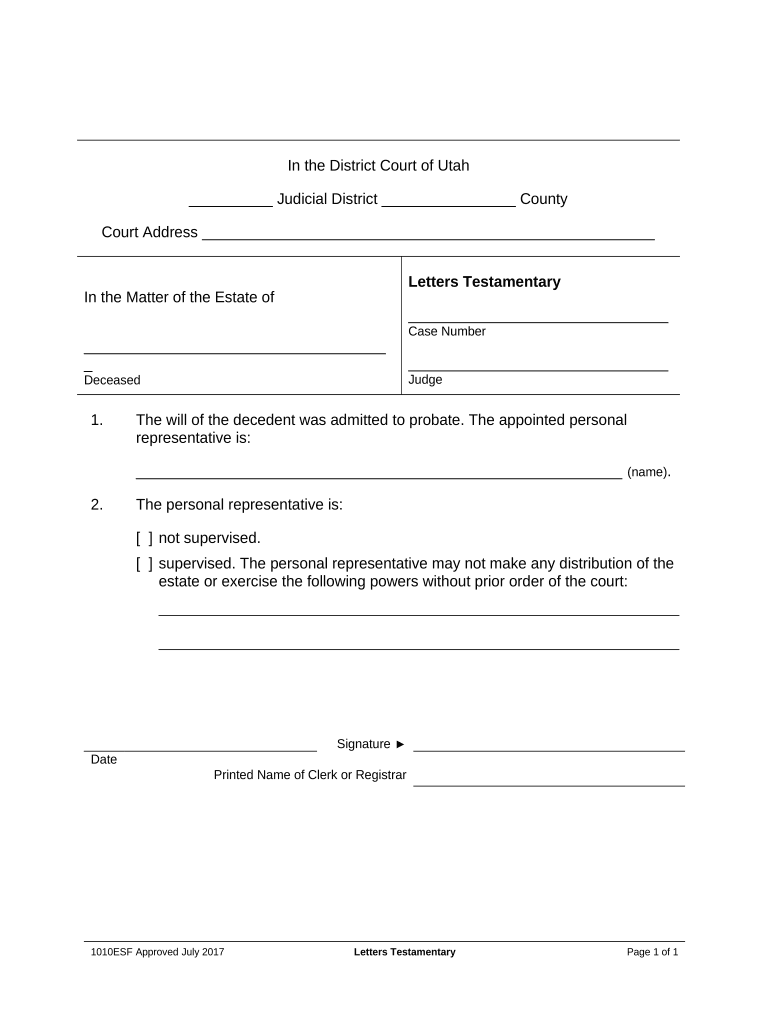
Decedent Details

Lists the decedent's full legal name, date of death, and any identifying information that matches death certificates and estate records.

Fiduciary Identity

Names the executor/personal representative and includes contact details so vendors can confirm authority and send required notices.

Scope of Authority

Specifies any limitations, bond requirements, or special powers the court granted or withheld from the fiduciary's authority.

Clerk Certification

Contains the probate clerk's signature and court seal or stamp to certify authenticity for banks, title companies, and government agencies.

Certified Copies

Provides stamped certified paper copies and make-ready certified PDFs for distribution to institutions that accept digital certified records.

Time-sensitive steps to track during probate and administration

Several tasks have statutory or practical deadlines; track filing, notice, tax, and accounting timeframes to avoid claims and penalties.

File Petition Promptly:

File the initial probate petition as soon as practicable after death to initiate administration and protect estate assets.

Creditor Notice Period:

States set different claim periods; publish and mail notices promptly to limit creditor claims against the estate.

Obtain Certified Copies:

Request certified Letters and copies soon after issuance so institutions can act without delay.

Tax Filing Deadlines:

Federal and state tax returns, including possible estate tax filings, have fixed deadlines; consult tax counsel for timing.

Final Accounting Timeline:

Prepare estate accounting per court rules and local deadlines to obtain discharge and close administration.

eSignature vendor pricing and feature snapshot relevant to document workflows

Common eSignature providers offer features that can streamline proof collection and certified distribution; signNow is listed first for direct comparison.

signNow DocuSign Adobe Sign PandaDoc HelloSign
Starting Price $8/user/mo $15/user/mo $14/user/mo $19/user/mo $15/user/mo
Free Trial 7-day free trial Varies Varies Varies Varies
Bulk Send Yes Yes Yes Yes No
Audit Trail Yes Yes Yes Yes Yes
HIPAA Compliant Yes Yes Yes No No
Envelope Cap No cap 100 envelopes/user/year Varies Varies Varies

Security and data points often required on Letters Testamentary

Court Case Number: Exact file number for verification
Decedent Name: Full legal name as recorded
Executor Identity: Full name and contact details
Issue Date: Date issued (MM/DD/YYYY)
Court Seal: Clerk signature and official seal
Authority Limits: Any court-imposed restrictions

FAQs and troubleshooting for Utah Letters Testamentary

Answers to common questions about obtaining, using, and verifying Letters Testamentary in Utah probate practice.


Need help? Contact support

be ready to get more
Join over 28 million airSlate SignNow users