Establishing secure connection…Loading editor…Preparing document…

Washington Writ of Garnishment

This template is fully customizable. Edit the text, fill out the fields, and send it for signature. Give it a try!
Washington Writ of Garnishment

What a Washington Writ of Garnishment Is

A Washington writ of garnishment is a court-issued order that allows a judgment creditor to collect money owed by seizing funds or property held by a third party (the garnishee). In practice the creditor files a request with the county court clerk, the court issues the writ, and the writ is served on the garnishee who must freeze or remit the specified assets. Writs commonly target bank accounts, wages, or other nonexempt property; exemptions and procedural rules vary by statute and by county clerk practice in Washington state.

Why the Washington Writ of Garnishment Matters

A writ of garnishment provides a formal, enforceable path to satisfy a money judgment when voluntary payment fails. It centralizes collection through legal process, not private collection, and creates a documented chain of service and remittance that courts can enforce and review.

Why the Washington Writ of Garnishment Matters

Who Typically Prepares and Responds to a Writ

Creditors, attorneys, and court clerks usually initiate the writ; garnishees and debtors respond under statutory timelines.

  • Judgment creditors and their counsel initiating collection through the courts
  • Banks, employers, or other garnishees served with the writ and required to respond
  • Debtors who may claim exemptions or request hearings under state law

Key Roles and Who Signs

Creditor

The judgment holder or their attorney petitions the court for the writ, completes required forms precisely, and signs declarations or verification statements under penalty of perjury when required by local rule.

Garnishee

Banks, employers, or third-party holders receive service of the writ and must complete an answer or affidavit and remit nonexempt funds to the court or creditor per statute and clerk instructions.

Required Information and Verification Data

Court Identifier: County and case number
Judgment Details: Amount owed
Creditor Name: Legal entity
Debtor Name: Exact legal name
Garnishee Info: Name and address
Service Method: Process server details

Penalties and Risks of Errors

Improper Service: Writ may be voided
Incorrect Amounts: Credit to debtor delayed
Missed Deadlines: Sanctions possible
Ignoring Exemptions: Liability for wrongfully seizing funds
False Statements: Perjury exposure
Clerk Rejection: Refiling required

Common Preparation Pitfalls to Avoid

  • Using an informal or incomplete case number that prevents the clerk from locating the judgment and delays issuance of the writ.
  • Failing to verify the garnishee's correct legal name and account identifiers, which can result in noncompliance or refusal by the garnishee to act.
  • Overlooking debtor exemptions under Washington law and proceeding without allowing the debtor an opportunity to claim exempt funds.
  • Submitting unsigned or unverified affidavits of service or verification forms that the court clerk will return as deficient.

How Writs Are Used in Practice

Two representative examples show typical creditor and garnishee workflows and the practical outcomes courts expect.

Small Business Debt Recovery

A creditor obtains judgment for unpaid invoices and files for garnishment

  • The creditor serves the bank holding the debtor's operating account
  • The bank freezes the account and returns an answer; nonexempt funds are remitted to satisfy the judgment after exemptions are resolved.

Unpaid Consumer Judgment

A consumer judgment holder seeks wage garnishment where permitted

  • Employer receives the writ and calculates disposable earnings
  • Employer withholds per statutory limits, files the garnishee response, and sends withheld funds to the court for distribution.

Step-by-Step: Completing a Washington Writ of Garnishment

Follow these sequential steps to prepare, file, and serve the writ while preserving statutory rights and debtor protections.

  • 01
    Confirm Judgment: Verify docketed judgment and unpaid balance
  • 02
    Prepare Writ: Complete court-ordered garnishment form accurately
  • 03
    File with Clerk: Submit form and pay filing fee
  • 04
    Serve Garnishee: Use approved service methods and obtain proof

How the Garnishment Process Flows

A concise process map showing the typical interactions between creditor, court, garnishee, and debtor.

  • Court Issues Writ: Clerk signs and issues order
  • Serve Garnishee: Process server delivers paperwork
  • Garnishee Answers: Affidavit or response filed
  • Funds Remitted: Nonexempt amounts transferred

Key Components of a Complete Writ Package

A professional writ submission groups the writ, supporting affidavits, service proof, and clerk instructions to minimize delays and clerk rejections.

Writ Form

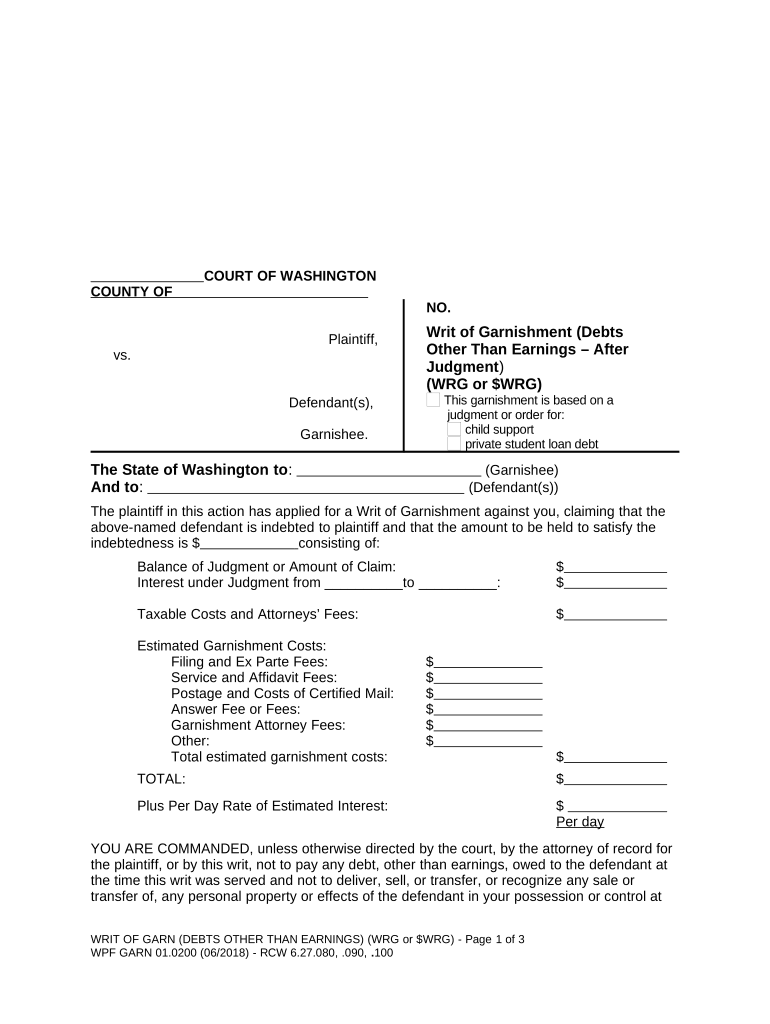
Completed court form specifying judgment, amount sought, debtor and garnishee identification, and statutory citation where required; use exact legal names.
Affidavit of Debt

A sworn statement proving the judgment balance and any post-judgment interest, signed by the creditor or attorney under penalty of perjury.

Service Affidavit

Proof of service completed by the process server including date, method, and recipient signature; critical for proving proper notice to the garnishee.

Exemption Notice

A clear notice to the debtor explaining possible exemptions and how to contest the garnishment per state statute or clerk practice.

Clerk Filing Cover

A cover letter or checklist for the clerk that lists attachments, filing fee, and requested clerk actions to expedite processing.

Return Instructions

Directions for the garnishee on remitting funds, including court account details, mailing address, and any bond requirements.

How to Configure an Online Workflow for the Writ

Set up an electronic workflow to prepare, review, notarize, and route writ documents with audit trails and signer authentication.

Field Configuration
Writ Template Prepopulate judgment and party fields
Signature Order Set creditor then clerk then garnishee
Authentication Use email + SMS code for key signers
Audit Trail Enable timestamps, IP, and download logs

Digital Signing and eSubmission Considerations

Ensure the platform supports state-accepted e-signatures, notarization where applicable, and preserves a verifiable audit trail.

  • File Formats: PDF and DOCX supported
  • Integrations: Works with court e-filing portals
  • Authentication: Multi-factor options available

Timelines and Typical Deadlines to Expect

Timing varies by county and type of garnishment. Observe local rules and statutory response periods to avoid forfeiting rights.

Filing to Issuance:

Clerk issuance time varies; some counties issue same day

Service Window:

Serve the garnishee promptly to trigger statutory answer periods

Garnishee Response:

Garnishee must file an answer per statute or clerk directive

Exemption Claim:

Debtor may file exemption claim within specified state timeframe

Remittance Deadline:

Nonexempt funds remitted per court order or clerk instructions

Key Processing Milestones

A sequential milestone view of the most important stages from judgment to collection and closure.

01

Judgment Entry

Confirm the final judgment is entered on the court docket

02

Writ Preparation

Draft writ and supporting affidavits for filing

03

Service and Proof

Serve garnishee and file affidavit of service

04

Fund Transfer

Garnishee remits nonexempt funds as ordered

Platform Pricing Comparison for eSignatures

Common eSignature vendors and typical starting prices for teams; signNow is shown first per vendor comparison conventions.

signNow DocuSign Adobe Sign PandaDoc HelloSign
Starting Price $8/user/mo $15/user/mo $14/user/mo $19/user/mo $15/user/mo
Free Trial 7-day trial Varies Varies Varies Varies
Bulk Send Yes Yes Yes Yes No
Audit Trail Yes Yes Yes Yes Yes

Frequently Asked Questions and Troubleshooting

Answers to common questions about preparing, serving, and enforcing a Washington writ of garnishment, including next steps when issues arise.


Need help? Contact support

be ready to get more
Join over 28 million airSlate SignNow users