Establishing secure connection…Loading editor…Preparing document…

Writ Execution Sample

This template is fully customizable. Edit the text, fill out the fields, and send it for signature. Give it a try!
Writ Execution Sample

What the Writ Execution Sample Is and When It Applies

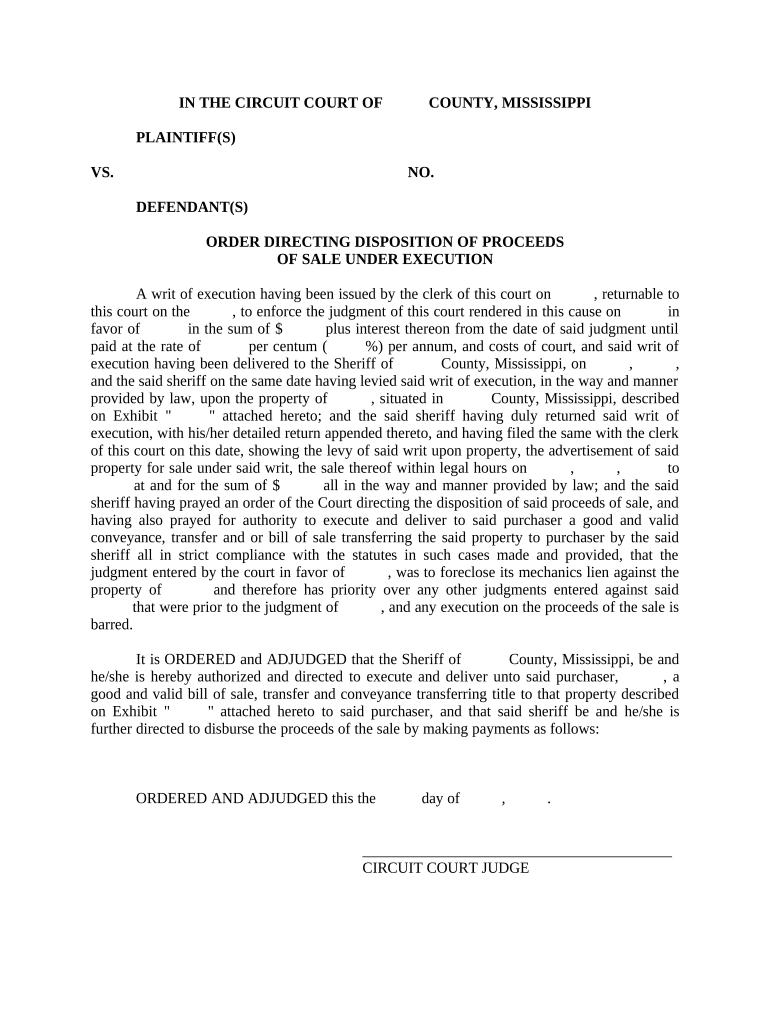
A Writ Execution Sample is a court-issued enforcement document authorizing an officer—typically a sheriff or marshal—to seize or otherwise enforce a money judgment or court order. This sample provides a standard layout and required fields used by practitioners to prepare a valid writ for service and execution. It clarifies parties, judgment details, property descriptions, and execution instructions so the executing officer can carry out the court order within statutory procedures and local practice.

Why a Clear, Complete Writ Execution Sample Matters

A professionally prepared writ reduces service delays, prevents return-for-correction rejections, and documents the legal basis for levy or turnover actions. Accurate forms improve enforceability and preserve the judgment creditor’s remedies.

Why a Clear, Complete Writ Execution Sample Matters

Who Commonly Prepares or Signs a Writ Execution Sample

Typical users include judgment creditors, creditor counsel, court clerks, and sheriff offices preparing to execute a judgment.

  • Judgment Creditor Counsel: Prepares writ language, confirms judgment amount, and ensures statutory prerequisites are met.
  • Court Clerk / Prothonotary: Issues or certifies the writ per local court rules and affixes court seal.
  • Sheriff or Marshal Office: Receives writ and executes seizure, levy, or turnover per the writ’s instructions and state law.

Each participant has specific responsibilities; accurate information and proper routing reduce enforcement risk.

Core Elements to Include in a Professional Writ Execution Sample

A complete writ lists the issuing court, case number, judgment details, executing officer instructions, and explicit property or asset descriptions so the officer can identify and seize the correct assets.

Issuing Court

Name of court and division, along with the case number and judge or clerk information to establish authority for execution and recordation.
Parties

Full legal names and contact addresses of judgment creditor and debtor; include business entity type and registered agent if applicable.

Judgment Amount

Total principal, interest, costs, and post-judgment fees itemized with dates and calculation method to avoid disputes at levy.

Writ Instructions

Clear execution actions (levy, garnishment, seizure, turnover) and geographic or asset limitations so the officer can act lawfully.

Asset Description

Specific property identifiers: VIN, account numbers, real property legal description, or household contents to prevent mistaken seizures.

Return and Certification

Space for executing officer’s return, dates of service, and certification language required for filing the return with the court.

Essential Data Elements and Security Markers

Case ID: Exact docket or case number.
Court Seal: Court certification or seal present.
Judgment Total: Itemized amount.
Officer Name: Designated executing officer.
Service Dates: Date(s) of execution.
Return Filed: Return and disposition.

Step-by-Step: How to Complete the Writ Execution Sample

Follow these core steps in sequence to prepare a valid writ that an executing officer can rely on.

  • 01
    Confirm Judgment: Verify judgment amount, docket number, and enforceability.
  • 02
    Draft Writ: Populate court heading, parties, and precise execution instructions.
  • 03
    Obtain Clerk Signature: Submit draft to clerk for issuance and sealing.
  • 04
    Deliver to Officer: Serve the writ on the appropriate enforcement officer with supporting documents.

How the Writ Execution Process Typically Flows

A concise workflow clarifies responsibilities and preserves chain of custody from issuance through return filing.

  • Issuance: Court clerk issues and seals the writ.
  • Service: Writ delivered to the executing officer.
  • Execution: Officer levies or seizes assets per writ.
  • Return: Officer files return and any sale notices with clerk.

Online Workflow Settings to Prepare and Route a Writ

Configure an online workflow so drafts, clerk review, and officer delivery occur in a controlled, auditable sequence.

Field Configuration
Document Template Lock core fields; allow clerk edits only.
Review Step Require attorney approval before clerk submission.
Clerk Issuance Auto-flag for clerk signature and court seal.
Officer Delivery Export PDF for secure transmission or physical handoff.

Comparing Paper Writ vs Electronic Writ Execution Sample

Choose the format based on court acceptance, notary needs, and local acceptance of e-signed legal instruments.

Criteria Paper Writ Electronic Writ
Court Acceptance universally accepted varies by court
Notarization often physical notary ron possible in some states
Execution Speed depends on courier faster electronic routing
Audit Trail manual logs digital audit trail

eSignature Vendor Pricing and Feature Snapshot for Writ Preparation

Platform choice affects per-user cost, bulk sending, audit capabilities, and HIPAA or legal compliance features important for sensitive enforcement documents.

signNow DocuSign Adobe Sign PandaDoc HelloSign
Starting Price $8/user/mo $15/user/mo $14/user/mo $19/user/mo $15/user/mo
Free Trial 7-day free trial Varies by plan Varies by plan Varies by plan Varies by plan
Bulk Send Yes (Business Premium) Varies by plan Varies by plan Varies by plan Varies by plan
Audit Trail Yes Yes Yes Yes Yes
Envelope Cap No cap 100 envelopes/user/year Varies Varies Varies

Consequences and Common Risks from an Incorrect Writ

Filing Defect: Clerk rejection possible.
Improper Service: Execution voided or delayed.
Wrong Party: Liability for unlawful seizure.
Missed Deadline: Statutory relief may be lost.
Return Inaccuracies: Officer return may be stricken.
Contempt: Sanctions for noncompliance.

Common Preparation Mistakes to Avoid with Writs

  • Using an incorrect case number or misspelling party names that lead to clerk rejection and delays in issuance.
  • Providing vague property descriptions that prevent an officer from locating or identifying assets for levy.
  • Failing to verify local clerk fee schedules and sheriff costs, resulting in returned writs or unpaid execution fees.
  • Assuming universal court acceptance of e-signed writs without confirming local eFiling or RON policies.

Timing Considerations and Typical Deadlines to Track

Track statutory judgment lifespans, clerk filing windows, officer return deadlines, and any stay or appeal timelines affecting execution.

Judgment Lifespan:

Varies by state; verify renewal and expiration rules.

Clerk Issuance Time:

Issuance depends on clerk backlog and completeness of submission.

Officer Return Deadline:

Often a short window after execution; check local rule.

Redemption / Stay:

Some assets allow redemption periods or stay on appeal.

Appeal Timelines:

Appeals can suspend execution; confirm docket status before levy.

Who Is Authorized to Sign or Approve a Writ Execution Sample

Court Clerk / Judge

The court clerk or judge issues and certifies the writ. Clerks follow local court rules to affix seals and signatures; judicial signatures or court stamps authenticate the writ for enforcement.

Judgment Creditor or Attorney

The judgment creditor or authorized counsel completes the draft and requests issuance. Counsel certifies amounts and may sign declarations supporting the writ before clerk submission.

Notarization and Witness Steps for Writ Execution Documents

Follow prescribed notarization and witness procedures, including remote options where permitted, to preserve legal effect and clerk acceptance.

01

Prepare Document

Complete form before notarization; do not leave blank fields for later insertion.

02

Select Notarization Type

Choose in-person or RON consistent with state rules.

03

Identity Proofing

Require government ID or RON credential analysis per state standards.

04

Audio-Video for RON

Record session where required and retain per statute.

05

Witness Requirements

Add witnesses only if state or court requires them.

06

Notary Journal

Notary records transaction details per commission rules.

07

Clerk Acceptance

Confirm clerk will accept RON or electronic acknowledgement.

08

File Return

Ensure certified notarial or RON evidence accompanies the return.

How to Amend or Correct a Writ Execution Sample

Use the amendment workflow below to correct clerical errors or update execution instructions without invalidating the writ.

01

Identify Error:

Document the specific error and authority for correction.
02

Prepare Amendment:

Draft corrected writ or proposed amendment language.
03

Obtain Approval:

Get attorney or court clerk sign-off before reissuance.
04

Refile with Clerk:

Submit corrected writ for reissuance and sealing.
05

Notify Officer:

Provide executed officer with corrected writ and record of changes.
06

File Return:

File both original return and corrective documentation.

Downloading, Exporting, and Saving the Writ Execution Sample

Save and distribute final writs in standard archival formats and retain copies for the court record and execution officer.

PDF

Export a flattened PDF/A for archival and clerk submission; preserves layout and reduces the risk of post-issuance edits.

DOCX

Keep an editable DOCX copy for internal review and amendments, but submit non-editable formats to the clerk when required.

Signed Certificate

Include a certificate of completion or notarial evidence alongside the signed writ when filing returns or sharing with officers.

Secure Storage

Store originals in a secure case management system with access controls and audit logging for chain-of-custody.

Practical Tips for Accurate, Efficient Writ Preparation

Small process improvements reduce enforcement delays and legal risk; use checklists and digital controls where possible.

Use a Checklist
Adopt a jurisdiction-specific checklist including clerk fees, notary needs, and officer service rules to ensure completeness.
Lock Key Fields
Prevent post-issuance edits by locking judgment details and case identifiers in your template or PDF.
Confirm Acceptance
Verify with the court clerk whether e-signed or RON-acknowledged writs are acceptable before filing or issuance.
Maintain Audit Trail
Keep timestamps, signer attribution, and delivery logs to support post-execution disputes.

Illustrative Use Cases Showing How Writs Are Processed

Real-world examples show common paths from judgment to enforcement and the value of clear writ drafting.

Optica Ventures LLC

A small firm implemented an online template for court writs to reduce clerk resubmissions.

  • The template enforced required fields and clerk-ready formatting.
  • Result: fewer rejections, clearer instructions for officers, and reduced administrative back-and-forth with the court.

Martin Properties

A property manager standardized writs for levy against tenants’ personal property to ensure correct legal descriptions.

  • Standard clauses clarified sale authorization and notice periods.
  • Result: consistent officer returns and improved recovery timing while maintaining full compliance with local rules.

Frequently Asked Questions About the Writ Execution Sample

Answers to common questions about acceptance, signing, and execution of writs across jurisdictions and e-signature contexts.


Need help? Contact support

be ready to get more
Join over 28 million airSlate SignNow users