Court Caption
Full court name, county, and jurisdiction. This locates the proceeding and must match the judgment entry exactly to avoid clerk rejection or jurisdictional challenge.
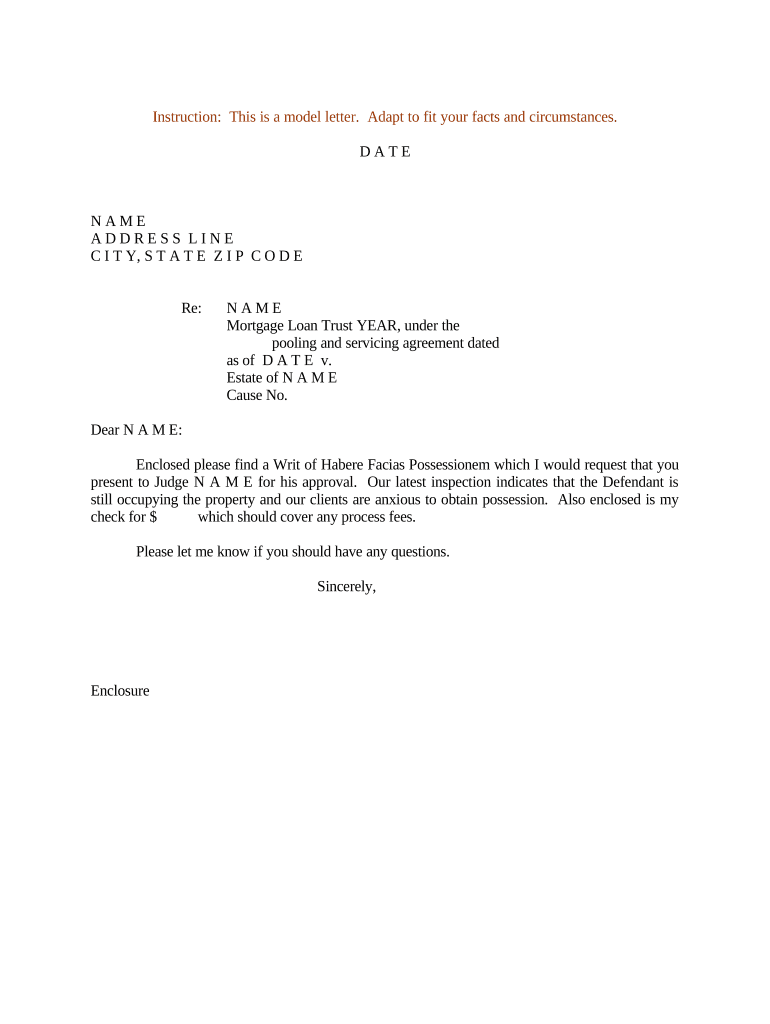
A correct writ clarifies enforcement authority, protects creditor remedies, and reduces the risk of procedural challenge. It ensures the sheriff has actionable instructions, documents chain of custody, and creates a record suitable for court review or appeal.

Full court name, county, and jurisdiction. This locates the proceeding and must match the judgment entry exactly to avoid clerk rejection or jurisdictional challenge.
The court docket or case number tied to the judgment. Accurate numbering ensures the clerk and sheriff link the writ to the correct file and avoid administrative delays.
Total principal, interest, post-judgment fees, and costs itemized with calculation dates and rates where applicable to permit precise levy amounts and reduce disputes.
Debtor full legal name and last known address; include business entity type and EIN if applicable to prevent misidentification and wrongful levy.
Clear description of tangible property, accounts receivable, or intangible assets subject to levy, including addresses, account numbers, or VINs to aid enforcement.
Specific instructions to the sheriff on levy methods, sale procedures, timelines, and return deadlines so execution complies with local rules and reduces liability.
| Field | Online Setting | Requirement | Suggested setting |
|---|---|
| Upload Document | PDF/A format preferred |
| Add Fields | Use fixed text and required fields |
| Signer Authentication | Email plus SMS or RON where required |
| Clerk / Notary | Enable original stamp upload |
Use a platform that supports court-acceptable PDF output, secure signer authentication, and storage compliant with legal retention requirements.
File writ once judgment is final and appeal stays are resolved; exact timing depends on state rules.
Clerk processing often occurs within days but may take longer in busy dockets.
Sheriff schedules levy according to workload and local practice; expect weeks to months.
Most jurisdictions require advance public notice prior to sale; notice length varies by statute.
Some states permit debtor redemption after sale within a statutory period; check local law.
Court enters final judgment and records amount due.
Clerk issues writ with official stamp and returns to creditor or attorney.
Sheriff levies property, garnishes accounts, or takes custody as directed.
Assets sold under statute; proceeds applied to judgment, costs, and fees.
Parties should coordinate with enforcement officers and local clerks to confirm procedural steps, required originals, and acceptable electronic copies before filing.