Establishing secure connection…Loading editor…Preparing document…

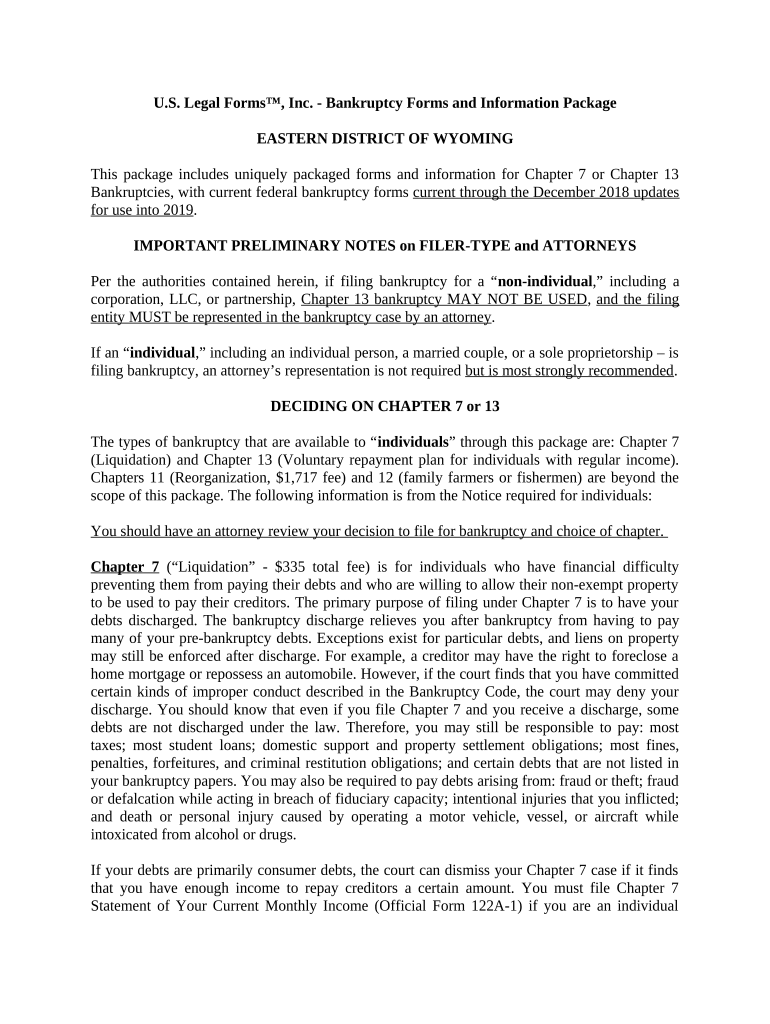
Bankruptcy Forms and Information Package

This template is fully customizable. Edit the text, fill out the fields, and send it for signature. Give it a try!
Bankruptcy Forms and Information Package

What the Bankruptcy Forms and Information Package Contains

Bankruptcy Forms and Information Package provides a consolidated set of standard forms, instructions, and reference materials used when initiating or responding to a bankruptcy case in the United States. It typically includes the voluntary petition, schedules of assets and liabilities, statement of financial affairs, means test worksheets, creditor matrix, and creditor notice templates, together with filing checklists and local court guidance. The package helps ensure required fields are completed, supporting documents are collected, and procedural steps are followed to reduce filing errors and processing delays.

Why a Standardized Package Matters for Filing and Recordkeeping

Using a Bankruptcy Forms and Information Package standardizes filings, reduces incomplete submissions, and documents consent and intent for e-signed records under the ESIGN Act (15 U.S.C. ch. 96) and UETA where adopted, supporting enforceability and consistent record retention.

Why a Standardized Package Matters for Filing and Recordkeeping

Who Prepares and Relies on This Package

Practical for attorneys, trustees, debtors, creditors, and court clerks who prepare or review bankruptcy filings.

  • Bankruptcy attorneys preparing petitions, schedules, and disclosure statements for clients.
  • Chapter 7 and Chapter 13 trustees reviewing creditor lists and means test calculations.
  • Creditors and claims agents using standardized notices and proof of claim forms.

Core Elements of a Professional Bankruptcy Package

A complete professional package groups forms, instructions, checklists, data validation, signature fields, and court filing guidance to reduce errors and support compliance.

Core Forms

Includes voluntary petition, schedules A–J, statement of financial affairs, means test worksheets, creditor matrix, and any required local forms to create a complete filing packet for the court.
Instructions

Step-by-step completion notes, checklists for supporting documents, and guidance on court-specific requirements to help reduce common errors and expedite acceptance at the clerk's office quickly.

Data Validation

Built-in checks flag missing or inconsistent entries, enforce numeric formats and date conventions, and prompt attachments for verification to decrease rejection risk and downstream corrections.

Signature Fields

Preplaced signature, initial, and date fields with conditional routing options and authentication settings help document intent and attribution for ESIGN/UETA legal tests, and retention requirements.

Court Export

Export final signed package as a court-ready PDF/A with embedded audit trail and completion certificate suitable for electronic court filing where permitted and for reliable archiving.

Local Rules

Includes notes on local bankruptcy court practices, required cover sheets, filing formats, and clerk preferences to minimize procedural rejections and support correct service of process.

Step-by-Step: Prepare and Assemble the Package

Follow this sequence to complete and assemble the Bankruptcy Forms and Information Package before filing with the bankruptcy court.

  • 01
    Collect Documents: Gather tax returns, pay stubs, bank statements, and titles.
  • 02
    Complete Forms: Fill schedules, statement of affairs, and means test accurately.
  • 03
    Review & Sign: Confirm accuracy, obtain signatures and any required notarizations.
  • 04
    File & Serve: File petition with court and serve required notices to creditors.

Typical Electronic Submission Workflow

Typical e-submission flow for the package when using an electronic signature and document management platform.

  • Upload Document: Add PDFs or DOCX files to the platform.
  • Place Fields: Insert signature, initial, date, and conditional fields for signers.
  • Authenticate Signers: Choose email link, SMS code, or stronger methods.
  • Audit & Store: Capture timestamp, IP, and certificate; export final PDF/A.

Recommended Digital Workflow Configuration

Configure the online workflow to match filing order, authentication, and document retention policies used for bankruptcy submissions.

Field Configuration
Signing Order Sequential or parallel signer order
Authentication Email only, SMS code, or KBA
Document Retention PDF/A archival with audit trail
Notifications Automated recipient reminders and copies

Platform and Integration Considerations

Ensure the platform supports PDF, DOCX, conditional fields, and verifiable audit trails for court-ready submissions.

  • Formats: PDF, DOCX, PDF/A supported
  • Integrations: NetSuite, Salesforce, Google Workspace
  • Security: AES-256 at rest standard, TLS 1.2 and 1.3 in transit

Security, Encryption, and Compliance Snapshot

Encryption: AES-256 at rest standard
Transport: TLS 1.2 and 1.3 in transit
Audit Trail: Tamper-evident timestamps and IP logs
Certifications: SOC 2 Type II and ISO 27001
HIPAA: Compliant with BAA available
ESIGN/UETA: Legal framework compliance for electronic records

Immediate Risks and Consequences of Errors

Incorrect Creditor Notice: May lead to claim default
Late Filing: Case delays and possible dismissal
Means Test Errors: Trustee objections and repayment changes
Missing Signatures: Court refusal to accept filing
Wrong Social: Backup withholding or identity flags
Notarization Missing: Evidence questions and service issues

Common Preparation Challenges to Anticipate

  • Incomplete creditor addresses and duplicate entries commonly cause creditor notice failures and increase administrative burden for trustees and claims agents.
  • Misstated income or omitted assets on means test worksheets often trigger trustee review, potential plan modification, or dismissal risk.
  • Incorrect formatting or noncompliant PDFs can block e-filing portals; verify PDF/A compatibility and embedded fonts before submission.
  • Using inconsistent names or initials across supporting documents increases verification friction and may delay creditor claims processing.

Key Timeframes and Administrative Deadlines

Key filing and response timeframes vary by court; confirm local rules but note common administrative deadlines and creditor timelines below.

Prepare and file voluntary petition packet:

Assemble forms, schedules, and supporting exhibits before submission.

341 Meeting (Creditors' Meeting) Scheduling:

Typically scheduled after the court accepts the petition.

Deadline to File Proofs of Claim:

Varies; unsecured creditors typically file within claims period.

Plan Confirmation and Objection Deadlines:

Court sets schedule for objections and confirmation hearings.

Notice of appeal and post-confirmation motions:

Timeframes governed by Federal Rules and local rules.

Milestone Sequence from Filing to Discharge

Sequential milestones from filing to discharge highlight key administrative stages and typical court interactions in a bankruptcy case.

01

Filing the Petition

File voluntary petition and pay fees or request installment plan.

02

341 Creditor Meeting

Trustee questions debtor under oath; creditors may appear.

03

Plan Proposal/Objection Period

Debtor or trustee files plan; parties may object before confirmation.

04

Discharge and Case Close

Court issues discharge order; case administration concludes when closed.

Pricing and Feature Snapshot for eSignature Vendors

Compare common vendor starting prices, trial availability, bulk send, audit trail, HIPAA compliance, and envelope caps for eSignature providers relevant to bankruptcy workflows.

signNow DocuSign Adobe Sign PandaDoc HelloSign
Starting Price $8/user/mo $15/user/mo $14/user/mo $19/user/mo $15/user/mo
Free Trial 7-day trial Varies Varies Varies Varies
Bulk Send Yes Yes Yes Yes Varies
Audit Trail Yes Yes Yes Yes Yes
HIPAA Compliant Yes Yes Yes No No
Envelope Cap No cap 100 envelopes/user/year Varies Varies Varies

Practical Examples from Organizations Using Standardized Packages

Real-world examples show how a structured package reduces errors, expedites trustee review, and supports electronic processing in different organizational contexts.

Martin Properties

Martin Properties used a standardized bankruptcy package to complete complex lien and property schedules for remote closings and tenant issues.

  • Reduced turnaround time on filings.
  • The organized templates and prefilled fields reduced clerical corrections, minimized follow-up requests from trustees, and allowed the firm to assemble court-ready PDFs consistently, lowering administrative hours and improving client response times.

Fertility Centers of Illinois

Fertility Centers of Illinois standardized signature collection for patient financial disclosures and creditor notifications using a centralized package and e-sign workflows.

  • Improved compliance tracking and auditability.
  • Standard templates ensured consistent patient authorizations, reduced manual scanning, and, with secure audit trails, supported HIPAA considerations while simplifying later audits and reducing administrative overhead.

Best Practices to Minimize Errors and Support Court Acceptance

Follow these practical tips to minimize errors, meet court requirements, and streamline electronic signing and recordkeeping for bankruptcy filings.

Verify full creditor names and accurate addresses
Cross-check entries against billing statements, tax records, and public records. Deduplicate entries, include account numbers where available, and confirm service addresses to prevent missed notices and ensure proper claims processing by trustees and courts.
Use consistent legal name formats across documents
Enter debtor and creditor names exactly as shown on official documents. Avoid nicknames, abbreviations, or omitted suffixes. Consistency reduces identity mismatches, creditor disputes, and errors during automated validation in e-filing systems.
Attach required supporting documents and exhibits
Include tax returns, pay stubs, bank statements, vehicle titles, and appraisals as indicated. Clearly label exhibits and reference them in schedules to help trustees verify assets and reduce requests for supplemental information.
Confirm electronic signature method meets legal tests
Ensure the e-sign method documents intent, consent, signer identity, and reliable retention. Preserve audit trails with timestamps and IP addresses. Verify local court acceptance of the chosen e-signature method, and retain evidence for potential challenges.

Frequently Asked Questions and Troubleshooting

Answers to common questions about preparing, signing, and submitting the Bankruptcy Forms and Information Package, including e-signature and retention concerns.


Need help? Contact support

be ready to get more
Join over 28 million airSlate SignNow users