Establishing secure connection…Loading editor…Preparing document…

Wyoming Order on Motion

This template is fully customizable. Edit the text, fill out the fields, and send it for signature. Give it a try!
Wyoming Order on Motion

What a Wyoming Order on Motion Is and why it matters

A Wyoming Order on Motion is a written judicial directive entered by a Wyoming court that disposes of a motion filed by a party. It records the judge’s decision, any required actions, deadlines, and the legal basis for the ruling, and it is docketed in the official court record. Orders on motions may grant relief, deny requests, set hearings, impose sanctions, or require compliance with discovery. Because an order becomes an official court entry, it follows court rules for preparation, entry by the clerk, service on parties, and potential appeal.

Why clear, correct orders protect case integrity

A properly prepared Order on Motion creates an enforceable, searchable record that preserves rights and timelines, reduces disputes about oral rulings, and supports orderly appeals or compliance.

Why clear, correct orders protect case integrity

Who prepares, signs, and relies on these orders

Typical users include attorneys, judges, and court clerks who draft, enter, and serve orders on motions.

  • Attorneys preparing proposed orders after motion hearings and drafting precise relief and timelines.
  • Judges adopting or editing proposed language to reflect findings, conclusions, and the precise relief ordered.
  • Court clerks entering and docketing the signed order, then serving parties per local rules.

Primary roles and responsibilities

Attorney (Movant)

Prepares the proposed Order on Motion, ensures the relief requested is precisely described, and confirms that the order matches the judge’s oral ruling before submitting for signature and filing.

Court Official

Includes the judge who signs or adopts the order and the clerk who enters and serves it; the clerk ensures compliance with local filing and service protocols and preserves the order in the docket.

Key elements every professional Order on Motion should include

A concise, well-structured order reduces ambiguity and supports enforceability; include standardized headings, findings, rulings, and service instructions to match Wyoming court practice.

Case Caption

Full caption with court name, parties, and case number exactly as shown on court pleadings to ensure correct docketing and service.
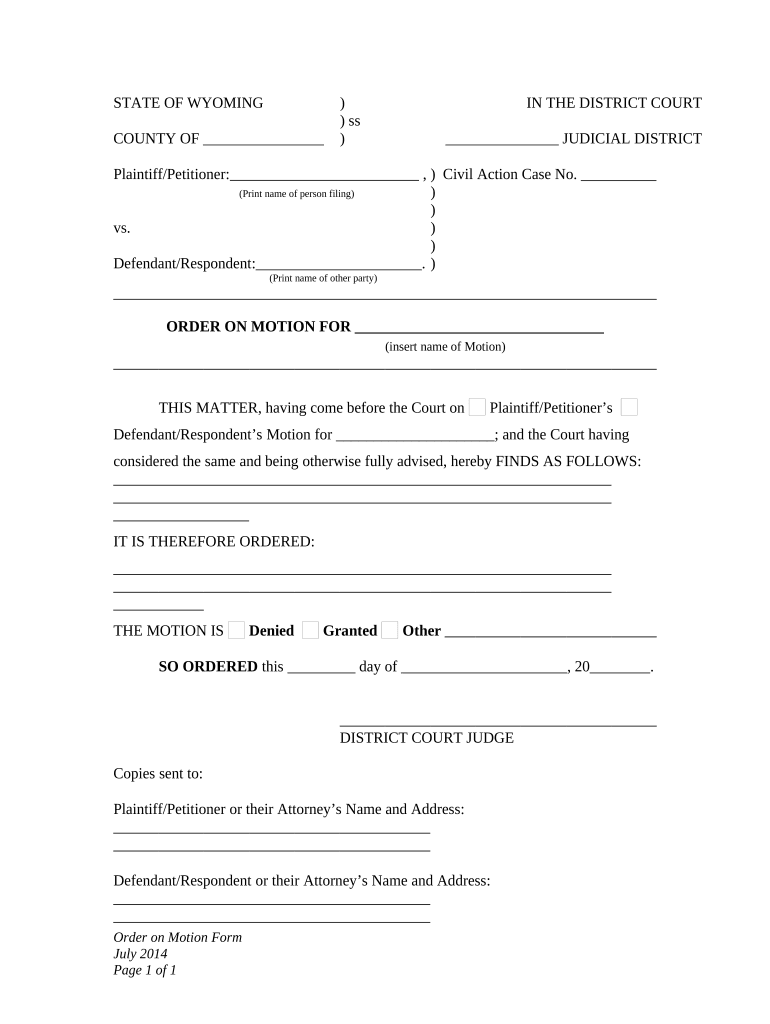
Motion Identified

Specify the motion title and filing date so the order ties clearly to the record and any underlying pleadings or exhibits.

Findings

Concise factual and legal findings that justify the ruling; include references to key evidence or legal standards relied upon.

Disposition

A clear directive granting, denying, or modifying relief with precise operative language and any conditions or deadlines.

Sanctions or Relief

If applicable, state sanctions, monetary awards, or remedial steps with deadlines and methods for compliance or payment.

Service Instructions

How the order is to be served, who must be served, and any filing or notice duties for the clerk and parties.

Required fields typically present on the order

Court Name: Exact court title
Case Number: Docket identifier
Party Names: Full legal party names
Motion Title: Motion caption and date
Judge Signature: Judge signature block
Clerk Entry: Docketing stamp/date

Step-by-step: prepare, enter, serve, and archive the order

Follow a consistent sequence—from drafting a proposed order to clerk entry and official service—to minimize defects and preserve appeal rights.

  • 01
    Draft Proposed Order: Prepare precise language reflecting the court's ruling immediately after the hearing.
  • 02
    Judge Review: Submit to the judge for signature or adoption per local procedures.
  • 03
    Clerk Entry: Clerk stamps and dockets the signed order into the official record.
  • 04
    Serve Parties: Serve all parties per local rule and note proof of service in the docket.

Customizing an online workflow for order preparation and filing

Use a consistent digital workflow for templates, version control, and clerk handoff when e-filing or submitting proposed orders.

Field Configuration
Upload Format PDF or PDF/A preferred for archival and e-filing
Signer Type Judge signs original; clerks docket copy for record
Authentication Clerk verifies signature and entry against courtroom record
Notification E-filing system notifies parties and attaches proof of service

Typical routing for an Order on Motion

Orders usually travel from counsel to the judge, then to the clerk for entry and service; electronic systems can streamline notifications and archiving.

  • Prepare Order: Draft and format the proposed order for review.
  • Judge Signs: Judge signs or issues signed order through the court.
  • Clerk Dockets: Clerk enters the order into the case file.
  • Serve Parties: Certified service or e-filing notice provided to parties.

Digital delivery and system requirements for orders

Ensure files meet court technical requirements—format, file size, and authentication—before submitting via e-filing or email where allowed.

  • Accepted Formats: PDF or PDF/A files
  • E-filing Systems: Court's approved e-filing portal
  • Authentication: Clerk or judge verification

Common timing considerations and deadlines

Timelines depend on local rules; note filing, entry, service, and appeal clocks that begin when the clerk enters the order into the docket.

Motion Filing Deadline:

Per local scheduling orders or civil rules.

Judge Decision Timeframe:

Varies by case complexity and court calendar.

Service Deadline:

Serve the entered order per local service rules promptly.

Appeal Filing Deadline:

Commonly 30 days from entry; verify Wyoming appellate rules.

Clerk Entry Deadline:

Prompt docketing recommended to start appeal and compliance clocks.

Common preparation and filing errors to avoid

  • Using incorrect case captions or case numbers that lead to misdocketing and delayed service or lost records.
  • Drafting vague operative language that fails to state precise relief, dates, or performance obligations for parties to follow.
  • Failing to follow local signature procedures, resulting in the clerk refusing to enter or serve the order.
  • Omitting or misplacing proof of service, which can prevent effective notice and impede enforcement or appeal.

Consequences of defective or improperly entered orders

Sanctions Risk: Court may impose fees or sanctions
Appeal Delay: Incorrect entry can toll or delay appeal
Vacatur Risk: Order may be set aside for defects
Service Defect: Improper service undermines enforcement
Contempt Exposure: Noncompliance can lead to contempt
Record Integrity: Missing docket entries compromise the record

Practical scenarios showing how orders are used

Two concise examples show common uses of a Wyoming Order on Motion and the downstream actions they trigger.

Discovery Dispute

After a discovery hearing, counsel submits a proposed order

  • Court grants narrowed production
  • Clerk dockets entry, counsel serves opposing parties, and production proceeds under the stated timeline and sanctions conditions.

Temporary Relief

A movant requests temporary injunctive relief before trial

  • Judge grants conditional relief pending a hearing
  • The order sets bond, dates for further briefing, and service requirements so parties know immediate obligations.

Frequently asked questions about Wyoming Orders on Motion

Answers to common procedural and electronic-submission questions that arise when preparing, signing, and filing orders in Wyoming courts.


Need help? Contact support

be ready to get more
Join over 28 million airSlate SignNow users