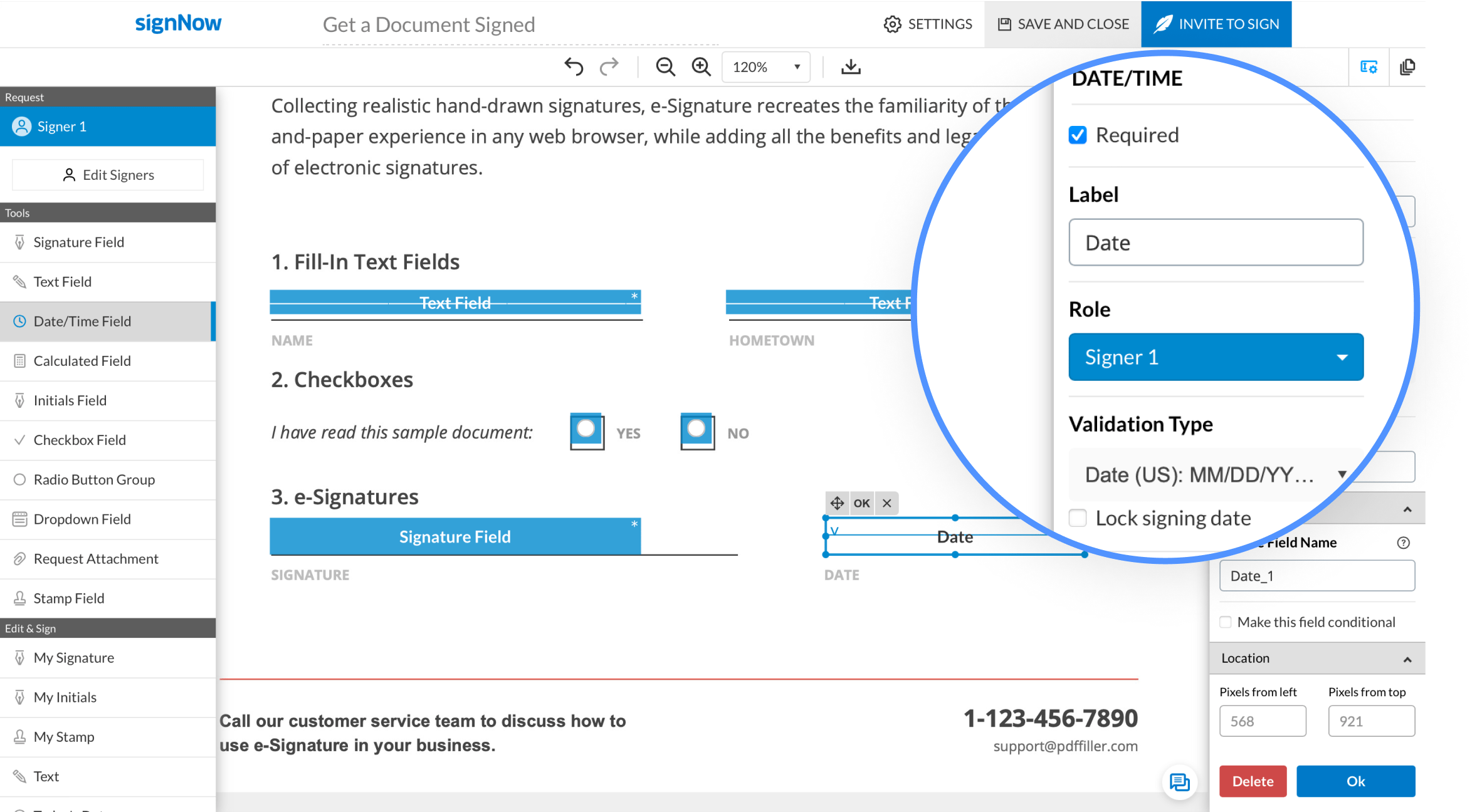
Formato personalizado
Permite definir máscaras de fecha y validaciones multilocales para adaptarse a normas internas o regulatorias específicas.




Un campo de fecha mejora la precisión y la trazabilidad de contratos y formularios al registrar el momento exacto de la firma o aprobación.

Un abogado corporativo utiliza campos de fecha para asegurar que los contratos incluyan una referencia temporal verificable, mantener cadenas de custodia y facilitar auditorías internas y externas en procesos regulatorios.
Un administrador de recursos humanos inserta campos de fecha en acuerdos laborales y autorizaciones para demostrar cumplimiento de plazos, gestionar vencimientos y activar procesos de incorporación o revisión anual.
Organizaciones que requieren evidencia cronológica usan campos de fecha para auditar y sincronizar procesos.
El uso correcto reduce disputas sobre plazos y mejora el cumplimiento normativo en procesos regulados.
Permite definir máscaras de fecha y validaciones multilocales para adaptarse a normas internas o regulatorias específicas.
Crear campos cuya fecha se calcule respecto a otra fecha del documento, útil para plazos y renovaciones automáticas.
Adjunta un sello temporal certificado al momento de la firma para garantizar la integridad temporal del registro.
Permite extraer las fechas y sus metadatos a CSV o sistemas externos para análisis y conciliación.
Aplicar requisitos distintos según el rol del firmante para controlar quién puede editar o ver la fecha.
Automatiza la inserción y lectura de fechas mediante llamadas API para procesos empresariales continuos.
Permite definir formatos de fecha específicos (por ejemplo MM/DD/AAAA) y reglas que previenen entradas inválidas, reduciendo errores manuales y garantizando uniformidad en los registros.
Opción para rellenar automáticamente la fecha de firma del firmante o la fecha del servidor, útil cuando se requiere consistencia en registros y sellos temporales oficiales.
Forzar el llenado del campo antes de completar la firma evita documentos incompletos y asegura que la fecha esté presente en cada ejecución de proceso.
Configurar visibilidad o requisitos del campo según respuestas previas o roles, lo que permite flujos dinámicos adaptados al contexto del documento.

| Criteria | Value |
|---|---|
| Date Field Validation Rules | MM/DD/YYYY |
| Default Date Format | MM/DD/YYYY |
| Reminder Frequency | 48 hours |
| Autofill Source | Server timestamp |
La inserción y captura de campos de fecha está disponible en la mayoría de navegadores modernos y aplicaciones móviles compatibles con firmas electrónicas.
Para garantizar la mejor experiencia, utilice versiones de navegador actualizadas y aplicaciones oficiales; ciertas funciones avanzadas, como sellos de tiempo certificados, pueden requerir permisos adicionales o configuraciones administrativas.
Una agencia inmobiliaria agrega un campo de fecha junto a la firma
Leading to un control claro de vigencia y renovaciones posteriores
Un centro de salud exige fecha en consentimientos
Resulting in cumplimiento documental para auditorías y reclamaciones
| Criteria | Digital | Paper |
|---|---|---|
| Facilidad para insertar campos de fecha | Alta | Baja |
| Integridad de la marca temporal | Alta | Moderada |
| Exportación a sistemas | Automática | Manual |
| Trazabilidad y auditoría | Completa | Limitada |
Conservar por 7 años según política
Firmar dentro de 30 días
Recordatorios 7 días antes
Eliminación irreversible programada
Actualizar formatos cada año
| Criteria | signNow (Featured) | DocuSign | Adobe Sign | Dropbox Sign | HelloSign |
|---|---|---|---|---|---|
| Starting monthly price | Desde $8/usuario/mes | Desde $10/usuario/mes | Desde $14/usuario/mes | Desde $12/usuario/mes | Desde $15/usuario/mes |
| Free trial availability | Sí, periodo de prueba | Sí, periodo de prueba | Sí, periodo de prueba | Sí, periodo de prueba | Sí, periodo de prueba |
| Bulk Send capability | Disponible en planes Business | Disponible | Disponible | Disponible | Disponible |
| HIPAA compliance option | Soporte en plan empresarial | Soporte empresarial | Soporte empresarial | Limitado | Limitado |
| API and integrations | API completa y conectores | API robusta | API completa | Conectores Dropbox | API disponible |
Permite a los destinatarios fechar tus documentos agregando un campo de Fecha/Hora. Personaliza el campo para facilitar el proceso de completado del documento.
Abre tu documento en el editor de airSlate SignNow haciendo doble clic en él. En la barra de herramientas a la izquierda, selecciona el Campo de Fecha/Hora y luego haz clic en cualquier parte del documento para colocar el campo. Ajusta la posición del campo arrastrándolo por la página y redimensionándolo arrastrando los bordes del campo. Cuando termines, haz clic en OK.
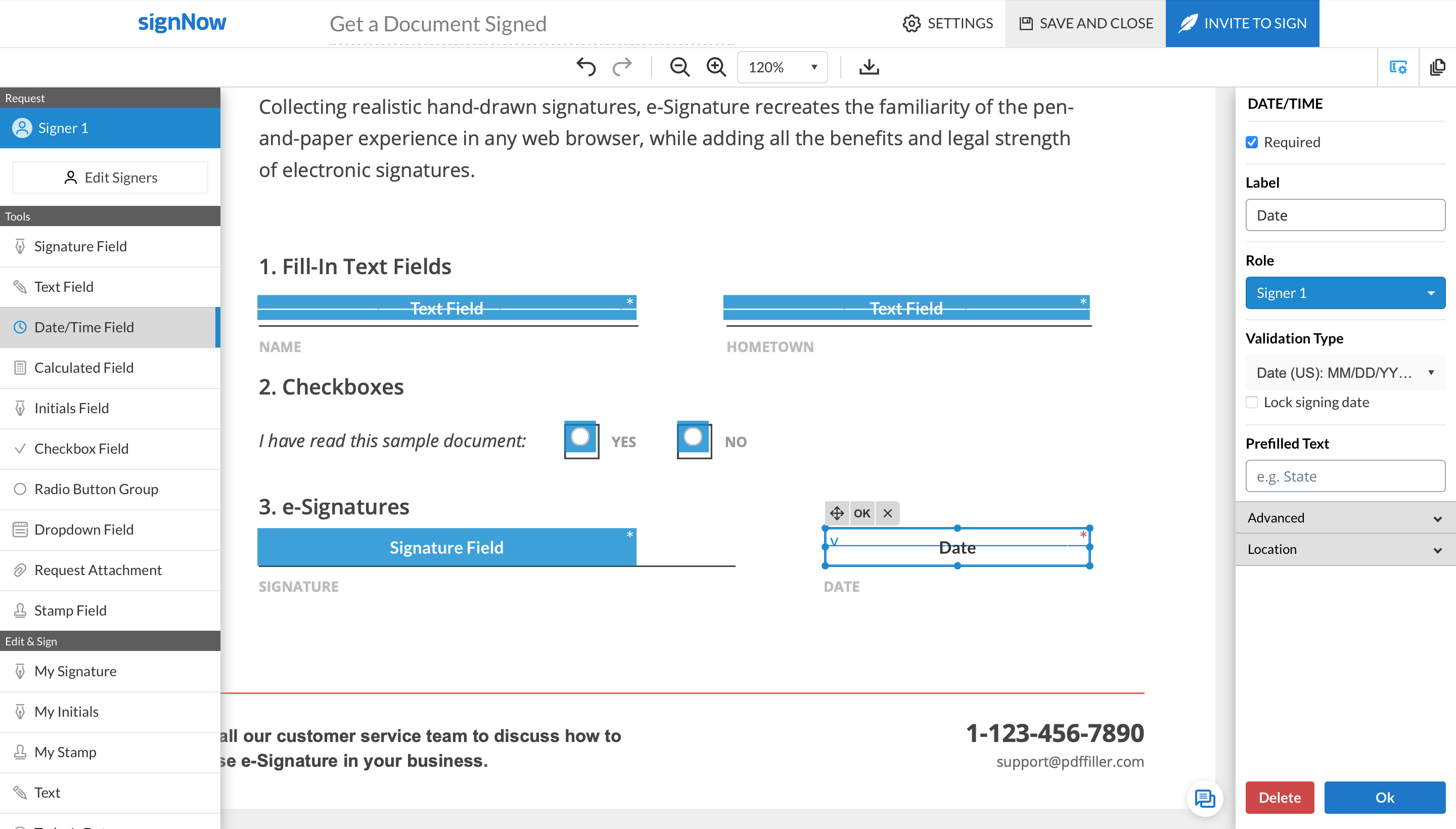
Haz clic en el campo para acceder a sus configuraciones. El panel de configuraciones aparecerá a la derecha.