The Legitimacy of Electronic Signatures for Personal Leave Policy in Mexico





We spread the word about digital transformation
signNow empowers users across every industry to embrace seamless and error-free eSignature workflows for better business outcomes.




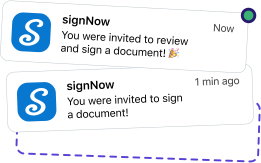


Free 7-day trial. Choose the plan you need and try it risk-free.

Honest pricing for full-featured plans. airSlate SignNow offers subscription plans with no overages or hidden fees at renewal.

Enterprise-grade security. airSlate SignNow helps you comply with global security standards.
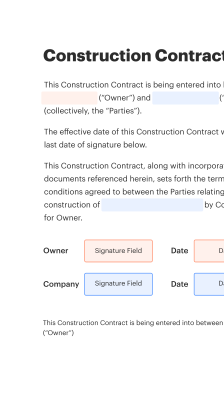

Place electronic signatures and send records in moments instead of hours. Our eSignatures have the identical legal power as wet-ink ones.

Take advantage of the signature tips function and improve your files without any concerns about the safety of your information.

Modify existing forms and save changes, and airSlate SignNow will immediately inform your entire crew that there are updated templates.

Place fillable areas, create or collect electronic signatures, get supplementary documents and payments, and discover different ways to boost your workflows.

Use airSlate SignNow API, the easiest way to create and collect eSignatures. Do so within your CRM systems, on your website, or even in specific apps.

Generate a public link for your template and collect signatures while not having to directly send your document to specific consumer email addresses.
Your complete how-to guide - electronic signature legitimateness for personal leave policy in mexico
Self-sign documents and request signatures anywhere and anytime: get convenience, flexibility, and compliance.
Electronic Signature Legitimateness for Personal Leave Policy in Mexico
When it comes to managing personal leave policies in Mexico, ensuring the electronic signature legitimateness is crucial. One effective way to streamline this process is by using airSlate SignNow, a platform that empowers businesses to send and eSign documents with ease. By following a few simple steps, you can digitize your leave policies and ensure compliance with local regulations.
How to Digitize Personal Leave Policy using airSlate SignNow:
- Launch the airSlate SignNow web page in your browser.
- Sign up for a free trial or log in.
- Upload a document you want to sign or send for signing.
- If you're going to reuse your document later, turn it into a template.
- Open your file and make edits: add fillable fields or insert information.
- Sign your document and add signature fields for the recipients.
- Click Continue to set up and send an eSignature invite.
With airSlate SignNow, businesses can benefit from a great ROI as it offers a rich feature set for the budget spent. The platform is easy to use and scale, making it a tailored solution for SMBs and Mid-Market organizations. Additionally, airSlate SignNow provides transparent pricing without hidden support fees or add-on costs, along with superior 24/7 support for all paid plans.
Take advantage of airSlate SignNow to streamline your personal leave policies and ensure compliance with Mexican regulations. Sign up for a free trial today and experience the convenience of digital signatures.
How it works


Electronic Signature Legality
What is the electronic signature Mexico
The electronic signature in Mexico is a digital representation of a person's intent to sign a document electronically. It serves the same legal purpose as a handwritten signature, allowing individuals and businesses to sign contracts, agreements, and other important documents online. This technology enhances efficiency, reduces paper usage, and streamlines workflows in various sectors.
How to use the electronic signature Mexico
Using an electronic signature in Mexico involves several straightforward steps. First, you need to create an account with a reliable eSignature provider like airSlate SignNow. Once registered, you can upload the document you wish to sign. After uploading, you can add your electronic signature by clicking on the designated area within the document. You can also request signatures from others by entering their email addresses, allowing them to sign the document securely online.
Legal use of the electronic signature Mexico
In Mexico, electronic signatures are legally recognized under the Federal Civil Code and the Federal Law on Electronic Signature. These laws establish that electronic signatures hold the same validity as traditional signatures, provided they meet specific criteria. This includes the ability to verify the identity of the signer and ensure the integrity of the signed document. Businesses and individuals can confidently use electronic signatures for contracts, agreements, and other formal documents.
Steps to complete the electronic signature Mexico
To complete an electronic signature in Mexico, follow these essential steps:
- Create an account on a trusted eSignature platform.
- Upload the document you need to sign.
- Add your electronic signature by selecting the appropriate option.
- Fill in any additional required fields, such as dates or initials.
- Review the document to ensure all information is accurate.
- Send the document for signature if others need to sign it.
- Store or download the completed document securely.
Security & Compliance Guidelines
When using electronic signatures, it is crucial to adhere to security and compliance guidelines to protect sensitive information. Ensure that the eSignature provider employs encryption protocols to safeguard data during transmission. Additionally, look for features such as audit trails, which provide a record of all actions taken on the document. Compliance with local laws, including the Federal Law on Electronic Signature, is essential to ensure the legality of the signed documents.
Documents You Can Sign
Electronic signatures can be used for a wide variety of documents, including:
- Contracts and agreements
- Employment forms
- Tax documents
- Real estate transactions
- Legal documents
- Invoices and billing statements
Sending & Signing Methods (Web / Mobile / App)
airSlate SignNow offers multiple methods for sending and signing documents, ensuring flexibility for users. You can access the platform via the web, mobile devices, or dedicated applications. This allows you to upload documents, sign them, and manage your eSignature workflows from anywhere. The user-friendly interface simplifies the process, making it easy to navigate regardless of the device you choose to use.
 Best ROI. Our customers achieve an average 7x ROI within the first six months.
 Scales with your use cases. From SMBs to mid-market, airSlate SignNow delivers results for businesses of all sizes.
 Intuitive UI and API. Sign and send documents from your apps in minutes.
FAQs
Here is a list of the most common customer questions. If you can't find an answer to your question, please don't hesitate to reach out to us.
What is an electronic signature in Mexico?
An electronic signature in Mexico is a digital representation of a person's intent to sign a document. It is legally recognized and can be used for various transactions, making it a secure and efficient way to handle agreements. With airSlate SignNow, you can easily create and manage electronic signatures in Mexico.
How does airSlate SignNow ensure the security of electronic signatures in Mexico?
airSlate SignNow employs advanced encryption and authentication methods to ensure the security of electronic signatures in Mexico. Our platform complies with local regulations and international standards, providing users with peace of mind when signing documents. This commitment to security helps protect sensitive information throughout the signing process.
What are the benefits of using electronic signatures in Mexico?
Using electronic signatures in Mexico offers numerous benefits, including faster turnaround times, reduced paper usage, and lower operational costs. With airSlate SignNow, businesses can streamline their document workflows and enhance collaboration. This efficiency not only saves time but also improves overall productivity.
Is airSlate SignNow compliant with Mexican electronic signature laws?
Yes, airSlate SignNow is fully compliant with Mexican electronic signature laws, ensuring that your signed documents are legally binding. Our platform adheres to the requirements set forth by the Mexican government, providing users with a reliable solution for electronic signatures in Mexico. This compliance helps businesses operate confidently in the digital space.
What features does airSlate SignNow offer for electronic signatures in Mexico?
airSlate SignNow offers a range of features for electronic signatures in Mexico, including customizable templates, real-time tracking, and automated reminders. These tools help users manage their signing processes efficiently and effectively. Additionally, our user-friendly interface makes it easy for anyone to create and send documents for signature.
How much does airSlate SignNow cost for electronic signatures in Mexico?
airSlate SignNow offers flexible pricing plans tailored to meet the needs of businesses in Mexico. Our cost-effective solutions ensure that you only pay for what you need, making electronic signatures accessible for organizations of all sizes. For detailed pricing information, visit our website or contact our sales team.
Can I integrate airSlate SignNow with other applications in Mexico?
Yes, airSlate SignNow can be easily integrated with various applications commonly used in Mexico, such as CRM systems, document management tools, and cloud storage services. This seamless integration enhances your workflow and allows for a more cohesive document management experience. Our API also enables custom integrations to fit your specific business needs.




airSlate SignNow is committed to protecting your sensitive information by complying with global industry-specific.
Discover powerful features with airSlate SignNow
by L Determann · 2021 · Cited by 7 — Mexico. Mexico does not have a general umbrella law for electronic signatures applicable to transactions between private entities. However ...
Oct 28, 2025 — While the General Data Protection Regulation (GDPR) has governed personal data since 2018, the Data Act now establishes comprehensive rules for ...
The law provides some revisions to key definitions, data controllers' obligations, and data subjects' rights, amongst other things.
