Increase Compliance with eSignatures: how does a disabled person sign legal documents





Get higher value while certifying documents with airSlate SignNow
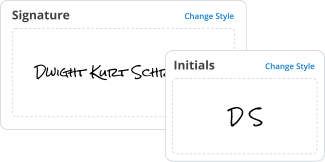
Benefit from simple registration and onboarding
Find an answer to “how does a disabled person sign legal documents” and explore the best way to take full advantage of airSlate SignNow’s capabilities with our tutorials, FAQs, and user guides. Get the signing session ready to go in a few moments.

Discover better ways to deal with paperwork
From sending out simple NDA documents to drafting complex agreements, take control of your paperwork with airSlate SignNow. Electronically certify, send and manage and save your paperwork as templates utilizing one solution.
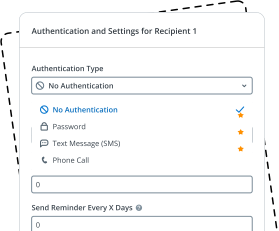
Make the best use of collaboration features
Impress your partners and colleagues with a straightforward option of cooperating. Save time and remain on top of your tasks.
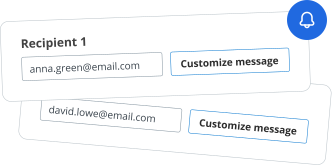
Implement integrations and API for better results
Use airSlate SignNow to seamlessly incorporate with a wide range of productivity and data storage tools. Create a more consistent and secure signing experience by implementing the airSlate SignNow API.
We spread the word about digital transformation
signNow empowers users across every industry to embrace seamless and error-free eSignature workflows for better business outcomes.






Free 7-day trial. Choose the plan you need and try it risk-free.

Honest pricing for full-featured plans. airSlate SignNow offers subscription plans with no overages or hidden fees at renewal.

Enterprise-grade security. airSlate SignNow helps you comply with global security standards.
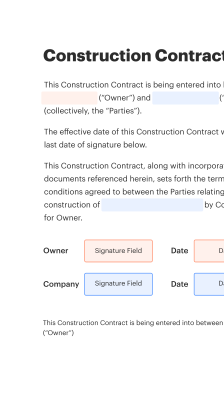

Place electronic signatures and send records in moments instead of hours. Our eSignatures have the identical legal power as wet-ink ones.

Take advantage of the signature tips function and improve your files without any concerns about the safety of your information.

Modify existing forms and save changes, and airSlate SignNow will immediately inform your entire crew that there are updated templates.

Place fillable areas, create or collect electronic signatures, get supplementary documents and payments, and discover different ways to boost your workflows.

Use airSlate SignNow API, the easiest way to create and collect eSignatures. Do so within your CRM systems, on your website, or even in specific apps.

Generate a public link for your template and collect signatures while not having to directly send your document to specific consumer email addresses.
Quick guide: How does a disabled person sign legal documents
airSlate SignNow eSignature is a powerful solution for simplifying data gathering, contract approval, external and internal interaction, and streamlining decision-making procedures. Signing documents electronically is simple for teams, partners and customers, and it helps your organization reduce paper waste and needless spending budget.
Follow the steps below and find out How does a disabled person sign legal documents:
- Launch your web browser and visit signnow.com.
- Subscribe for a free trial or log in utilizing your email or Google/Facebook credentials.
- Click User Avatar -> My Account at the top-right corner of the webpage.
- Modify your User Profile with your personal data and changing configurations.
- Make and manage your Default Signature(s).
- Get back to the dashboard webpage.
- Hover over the Upload and Create button and select the appropriate option.
- Click on the Prepare and Send button next to the document's title.
- Type the email address and name of all signers in the pop-up window that opens.
- Make use of the Start adding fields menu to proceed to modify file and self sign them.
- Click SAVE AND INVITE when accomplished.
- Continue to customize your eSignature workflow using more features.
”How does a disabled person sign legal documents” is a good question and one that airSlate SignNow is the response to. Check the features you and your team are looking for delighting your customers and partners with a better way of running your business. eSign your first contract today!
How it works


Electronic Signature Legality
Understanding how a disabled person can sign legal documents
Signing legal documents is essential for various transactions, and it is crucial to ensure that individuals with disabilities can do so effectively. A disabled person can sign legal documents using electronic signature solutions like airSlate SignNow, which offer an accessible and user-friendly interface. This platform allows users to fill out, sign, and manage documents online, ensuring that everyone, regardless of their physical abilities, can participate in legal processes.
Steps to complete legal documents electronically
To complete legal documents electronically, follow these steps:
- Create an account: Sign up for an airSlate SignNow account to access the platform.
- Upload the document: Use the upload feature to add the legal document you need to sign.
- Fill out the document: Complete any required fields in the document. The platform supports various input methods, including text boxes and checkboxes.
- Request signatures: If additional signatures are needed, you can easily send requests to other parties directly through the platform.
- eSign the document: Use the electronic signature feature to sign the document. This can often be done using a mouse, touchpad, or stylus, depending on the user's preference.
- Save and share: Once signed, the document can be securely saved and shared with relevant parties via email or direct link.
Legal use of electronic signatures
In the United States, electronic signatures are legally recognized under the Electronic Signatures in Global and National Commerce (ESIGN) Act and the Uniform Electronic Transactions Act (UETA). These laws ensure that eSignatures hold the same legal weight as traditional handwritten signatures. This means that a disabled person can use airSlate SignNow to sign legal documents without concern, as long as the document complies with the relevant legal requirements.
Security and compliance guidelines for eSigning
When using airSlate SignNow for signing legal documents, security and compliance are paramount. The platform employs advanced encryption methods to protect user data and ensure that documents remain confidential. Users should also be aware of the following:
- Ensure that the document is stored securely within the platform.
- Review the audit trail feature, which tracks all actions taken on the document.
- Verify the identity of all parties involved in the signing process to prevent fraud.
Sending and signing methods
airSlate SignNow offers multiple methods for sending and signing documents, making it accessible for all users. You can access the platform through a web browser, mobile app, or desktop application. This flexibility allows users with disabilities to choose the method that best suits their needs. For instance, the mobile app may be more convenient for users who prefer to complete tasks on their smartphones or tablets.
Examples of using eSignatures for legal documents
There are numerous legal documents that can be signed electronically, including:
- Contracts and agreements
- Power of attorney documents
- Real estate transactions
- Wills and trusts
These examples illustrate the versatility of electronic signatures in various legal contexts, enabling individuals with disabilities to engage in important legal processes seamlessly.
 Best ROI. Our customers achieve an average 7x ROI within the first six months.
 Scales with your use cases. From SMBs to mid-market, airSlate SignNow delivers results for businesses of all sizes.
 Intuitive UI and API. Sign and send documents from your apps in minutes.
FAQs
Here is a list of the most common customer questions. If you can't find an answer to your question, please don't hesitate to reach out to us.
How does a disabled person sign legal documents using airSlate SignNow?
airSlate SignNow provides an accessible platform that allows disabled individuals to sign legal documents electronically. Users can utilize various features such as voice commands and screen readers, making it easier to navigate the signing process. This ensures that everyone, regardless of their physical abilities, can effectively manage their legal documentation.
What features does airSlate SignNow offer for disabled users?
airSlate SignNow includes features like customizable signing workflows, accessibility options, and mobile compatibility. These features are designed to accommodate users with disabilities, ensuring they can easily sign legal documents. The platform's user-friendly interface further enhances the experience for disabled individuals.
Is airSlate SignNow affordable for disabled individuals needing to sign legal documents?
Yes, airSlate SignNow offers a cost-effective solution for signing legal documents, making it accessible for disabled individuals. The pricing plans are designed to fit various budgets, ensuring that everyone can utilize the service without financial strain. This affordability is crucial for those who may require frequent access to legal documentation.
Can airSlate SignNow integrate with other tools for disabled users?
Absolutely! airSlate SignNow integrates seamlessly with various applications, enhancing the experience for disabled users. This integration allows individuals to manage their legal documents alongside other tools they may already be using, streamlining the process of signing legal documents.
What benefits does airSlate SignNow provide for disabled individuals?
The primary benefit of airSlate SignNow for disabled individuals is the ability to sign legal documents independently and securely. The platform's accessibility features empower users to manage their documentation without needing assistance. This independence is vital for maintaining privacy and control over personal legal matters.
How secure is airSlate SignNow for signing legal documents?
airSlate SignNow prioritizes security, ensuring that all legal documents signed by disabled individuals are protected. The platform employs advanced encryption and authentication measures to safeguard sensitive information. Users can confidently sign legal documents, knowing their data is secure.
What types of legal documents can a disabled person sign with airSlate SignNow?
Disabled individuals can sign a wide range of legal documents using airSlate SignNow, including contracts, agreements, and consent forms. The platform supports various document types, making it versatile for different legal needs. This flexibility is essential for users who require a reliable solution for their documentation.




airSlate SignNow is committed to protecting your sensitive information by complying with global industry-specific.
Find out how how does a disabled person sign legal documents and speed up your forms with the airSlate SignNow eSignature answer
airSlate SignNow empowers consumers to indication, fill out, and deliver papers for trademark utilizing any pc or mobile phone.


How to fill out and sign documents online
How does a disabled person sign legal documents? airSlate SignNow eSignature solution lets you quickly settle this issue and make your document workflows more effective and structured. The best part — you can start signing and sharing documents in minutes — no training needed.
Follow this step-by-step guide to discover how does a disabled person sign legal documents
- Create your airSlate SignNow account and add a document and template, or group of documents.
- Select a document you’d like to fill out and sign and click More>Open. Also you can click the document or template to open it.
- Find the Fill Out Myself section on the left-hand panel and choose My Signature.
- Click anywhere on the document to include your signature.
- Draw, type, or upload the picture of your signature and click Sign.
- Check Set as My Default Signature to sign your future documents in just one click.
airSlate SignNow also allows you to add your initials, date, stamp and text and draw lines. Save time and money by reducing costs on paper and equipment and eliminating the need to deliver, store, and retrieve paper documents.
Discover powerful features with airSlate SignNow
Jul 30, 2017 — Persons with Disabilities should be allowed to be equipped with the necessary skills and support to convince the employer of their suitability ...
Mar 5, 2020 — A valid signature does not have to be in cursive handwriting. A person may use an “X” or similar mark as his or her signature. A signature is ...
A guardian advocate means a person appointed by a written order of the court to represent a person with developmental disabilities under Florida Statute section ...
