Blank Fillable Invoice for Technology Industry

See your billing procedure turn fast and seamless. With just a few clicks, you can execute all the necessary steps on your blank fillable invoice for Technology Industry and other important files from any device with web connection.

Award-winning eSignature solution

What a blank fillable invoice for technology industry is

A blank fillable invoice for technology industry is a reusable digital document designed to capture billing details specific to software, hardware, and IT services. It typically includes fields for client information, SKU or service codes, licensing terms, hourly rates, project milestones, tax treatment, and payment instructions. When combined with eSignature and form validation, it streamlines approvals, reduces manual entry errors, and integrates with accounting or CRM systems. In U.S. operations, these invoices support ESIGN-compliant electronic signatures and standard recordkeeping practices.

Why standardized fillable invoices matter for tech vendors

Standardized blank fillable invoices reduce billing errors, accelerate payment cycles, and ensure consistent tax and licensing disclosures across projects.

Why standardized fillable invoices matter for tech vendors

Common billing challenges addressed by fillable invoices

  • Inconsistent line-item descriptions across teams lead to reconciliation delays and accounting mismatches.
  • Manual entry of complex licensing terms increases the risk of underbilling or incorrect tax treatment.
  • Difficulty tracking milestone-based billing creates disputes over deliverables and invoice timing.
  • Lack of standardized payment instructions causes frequent returns, lost remittances, and slowed cash flow.

User examples and responsibilities

Billing Manager

The Billing Manager maintains invoice templates, enforces field validation for tax and billing codes, and reviews outgoing invoices to ensure compliance with contract terms and internal accounting policies.

Project Accountant

The Project Accountant links invoices to project codes, reconciles milestone payments against deliverables, and coordinates with procurement to resolve client billing disputes and ensure timely recognition of revenue.

Teams and roles that use blank fillable invoices

Finance, project managers, procurement, and legal teams commonly rely on fillable invoices to standardize billing across software and services agreements.

  • Finance teams use templates to reconcile revenue, post entries, and enforce tax handling.
  • Project managers attach invoices to milestone completions to trigger payments and audits.
  • Sales operations generate invoices from CRM records to maintain consistent client billing.

Smaller tech consultancies and large enterprise vendors both benefit from consistent templates to reduce disputes and speed collections.

Core features to include in technology invoices

Effective blank fillable invoices combine billing specificity, automation, compliance fields, and integration hooks for accounting and CRM systems.

Line‑item detail

Support SKU, service codes, hourly entries, and quantity with separate tax jurisdictions and unit pricing for accurate totals and reporting.


Tax handling

Include tax category fields, nexus indicators, and support for calculating or overriding tax amounts based on client location and service type.

Payment terms

Capture net terms, early payment discounts, late fees, and preferred payment methods to ensure consistent collections and legal clarity.

Milestone billing

Configure conditional sections that appear when milestones or acceptance criteria are met to match contract billing schedules.

Audit trail

Record signer identity, timestamps, IP addresses, and change history to meet internal controls and external audit requirements.

Integration hooks

Provide mapped fields and webhooks for syncing invoice data to ERP, accounting, or CRM systems to reduce duplicate entry.

be ready to get more

Choose a better solution

Integrations and templates that save time

Prebuilt templates and easy integrations minimize manual work and reduce errors when creating industry-specific invoices.

CRM integration

Two‑way mapping with popular CRMs lets sales populate billing details and keeps client records synchronized with invoices for auditability.

Accounting sync

Connect to accounting systems to post invoices automatically, reduce reconciliation time, and support accurate revenue recognition processes.

Cloud storage

Link documents to shared cloud repositories for version control, retention policies, and centralized access across finance and legal teams.

Custom templates

Create templates for subscriptions, services, and one‑time hardware sales that include conditional logic and reusable line items.
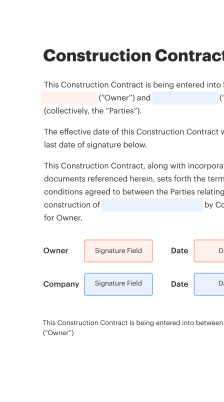
How a fillable invoice flows through a business

A standard invoice template moves from creation through review, signature, and accounting posting with traceable steps and automated handoffs.

  • Create: Populate fields from a project or CRM record.
  • Review: Finance or PM verifies line items and taxes.
  • Sign: Authorized approver applies ESIGN‑compliant signature.
  • Post: Accounting records transaction and triggers payment.
Collect signatures
24x
faster
Reduce costs by
$30
per document
Save up to
40h
per employee / month

Quick setup: create a blank fillable invoice

Follow these core steps to create a reusable blank fillable invoice tailored to technology contracts and service models.

  • 01
    Define fields: List client, service, tax, and payment fields.
  • 02
    Apply validation: Set required fields and formats for accuracy.
  • 03
    Save template: Store centrally for team access and versioning.
  • 04
    Integrate systems: Map fields to CRM and accounting records.
be ready to get more

Why choose airSlate SignNow

  • Free 7-day trial. Choose the plan you need and try it risk-free.
  • Honest pricing for full-featured plans. airSlate SignNow offers subscription plans with no overages or hidden fees at renewal.
  • Enterprise-grade security. airSlate SignNow helps you comply with global security standards.
illustrations signature

Typical workflow settings for invoice automation

Recommended configuration values for automating invoice dispatch, reminders, and posting with common integration points.

Feature Configuration
Reminder Frequency 7 days
Approval Routing Two levels
Signature Authentication Email MFA
Accounting Integration Daily sync
Webhook Notifications Enabled

Supported devices and browser considerations

Blank fillable invoices should be accessible from desktop, tablet, and mobile devices with modern browsers for broad usability.

  • Desktop browsers: Chrome, Edge, Safari
  • Mobile support: iOS and Android apps
  • PDF compatibility: Acrobat and browser viewers

Ensure your chosen platform supports responsive rendering, preserves field validation across devices, and provides secure authentication options for remote signers and internal reviewers.

Security controls for electronic invoices

Data encryption: AES-256 at rest
Transport security: TLS 1.2+ in transit
Access controls: Role-based permissions
Authentication: Multi-factor optional
Audit logging: Tamper-evident records
Data segregation: Per-account isolation

Industry use cases illustrating impact

Real workflows show how standardized invoices reduce disputes and improve collections across different tech business models.

SaaS Subscription Billing

A mid‑stage SaaS vendor converted PDF invoices to fillable templates to capture plan, seat count, and start date accurately.

  • Template enforced proration and licensing fields.
  • Accounting received cleaner inputs and automated revenue recognition.

Resulting in faster month‑end closes and a measurable reduction in customer billing questions.

Professional Services Milestones

An IT consulting firm adopted milestone invoices linked to statements of work to record deliverables and retention terms.

  • Each invoice referenced SOW IDs and acceptance criteria.
  • Clients approved invoices faster with embedded acceptance checkboxes.

Leading to more predictable cash flow and fewer disputes during contract closeouts.

Best practices for accurate, secure invoices

Adopt consistent templates, validate inputs, and align invoices with contract terms to minimize disputes and maintain compliance.

Standardize field definitions across teams
Agree on master definitions for items like 'license term' and 'support hours' so every invoice uses the same language and coding, reducing reconciliation time and downstream accounting confusion.
Use validation and conditional logic
Require essential fields, enforce numeric formats for amounts and tax IDs, and hide irrelevant sections with conditional rules to reduce incorrect submissions.
Keep an audit trail for every change
Log edits, reviewer approvals, and signature events with timestamps and user IDs to support internal controls and regulatory audits without extra manual effort.
Align invoice content with contracts
Reference purchase order numbers, SOW IDs, and acceptance criteria on each invoice to reduce client disputes and speed approvals during the payment cycle.

FAQs About blank fillable invoice for technology industry

Answers to common implementation questions, configuration issues, and compliance considerations for electronic invoices used by technology companies.

Feature availability: signNow and major competitors

A concise feature comparison showing common availability and technical details across leading eSignature platforms used for invoices.

Feature signNow (Recommended) DocuSign Adobe Sign
Fillable PDF support
Bulk Send
API access REST API REST API REST API
HIPAA support BAA available BAA available BAA available
be ready to get more

Get legally-binding signatures now!

Regulatory and operational risks to consider

Recordkeeping gaps: Lost audit proof
Incorrect taxes: Fines or back taxes
Unauthorized access: Data breaches
Noncompliant signatures: Enforceability issues
Retention failures: Legal exposure
Billing disputes: Revenue delays

Pricing and plan highlights across vendors

Plan summaries and typical pricing characteristics for eSignature solutions commonly used with digital invoices in the technology sector.

Vendors signNow (Recommended) DocuSign Adobe Acrobat Sign HelloSign PandaDoc
Entry plan cost Starts at approximately $8 per user per month for basic eSignature capabilities Individual plans start near $10 per month Included in Adobe Acrobat subscriptions from about $14.99 monthly Free tier available, paid plans start around $15 per month Business plans start around $19 per user per month
Free tier Limited free trial available; free plan options historically offered Limited free trial only Free trial included with Creative Cloud trial Free tier available with basic features 14‑day trial available, no perpetual free tier
Advanced workflows Workflow tools and templates available on business plans with role routing and API access Workflow automation on higher tiers Workflow and agreement templates included with enterprise Workflow features on paid plans Document generation and approval workflows available
API access Public REST API with developer resources and webhook support Comprehensive API and SDKs across languages REST APIs with robust integration into Adobe ecosystem API available for paid plans API available with higher tier subscriptions
Support options Email and chat support with priority options on business plans Standard and premium support packages available Phone and enterprise support available Email support and priority plans for paid users Email support and premium support options for enterprise
walmart logo
exonMobil logo
apple logo
comcast logo
facebook logo
FedEx logo
be ready to get more

Get legally-binding signatures now!