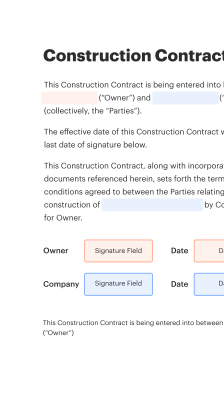
Plantilla De Acuerdo De Membresía Para Firmantes De Copia Carbono
What a carbon copy signatory membership agreement template is
Why use a carbon copy signatory membership agreement template
Templates with carbon copy recipients reduce manual steps, maintain consistent agreement language, and ensure stakeholders receive copies automatically for recordkeeping and compliance purposes.
Common implementation challenges
- Incorrect CC placement can expose sensitive data to unintended recipients if roles are misconfigured or privacy checks are skipped.
- Templates left outdated can carry obsolete clauses or contact information, creating legal or administrative confusion during enforcement.
- Failing to validate recipient identity for primary signers risks enforceability and may complicate compliance with ESIGN or UETA requirements.
- Poorly configured reminder schedules and expiration settings can delay execution or leave agreements in limbo without clear next steps.
Representative user profiles
Association Manager
An Association Manager uses the template to automate member onboarding and renewals, ensuring board members and finance receive CC copies for verification and recordkeeping. The manager customizes fields once and reuses the template to reduce repetitive setup work and ensure consistent compliance with internal policies.
Compliance Officer
A Compliance Officer relies on CC recipients to collect preserved signed records for audits and regulatory requests. They configure retention rules, ensure redaction where needed, and review audit logs to confirm execution integrity in regulated industries.
Typical users and departments
- Membership administrators managing renewals, onboarding, and communications for associations.
- Compliance and legal teams requiring preserved copies for audits and regulatory review.
- Finance or operations staff tracking signed agreements for billing or access provisioning.
The approach reduces manual distribution and improves traceability while supporting audit trails for internal and external review.
Choose a better solution
Core features to look for in templates
Role configuration
The template must allow distinct roles for signers and non-signing CC recipients, with options to set signing order, conditional routing, and role descriptions so each recipient receives the correct view and access during execution and after completion.
Field automation
Support for pre-populated fields, conditional fields, and reusable merge tags reduces manual data entry, enforces consistent contract data, and ensures key membership attributes are captured accurately across every signed agreement.
Retention controls
Template-level retention settings should permit automatic archival or deletion schedules, configurable access windows for CC recipients, and retention metadata to support internal records management and compliance with organizational policies.
Audit and reporting
Comprehensive audit logs, exportable execution records, and reporting tools help track who viewed, signed, and received CC copies, providing the necessary evidence for audits and internal governance reviews.
How the carbon copy flow operates
-
Initiate: Sender selects template and signers.
-
Sign: Primary signers complete required fields.
-
Distribute: System delivers signed copies to CC addresses.
-
Record: Audit trail and storage are updated.
Quick setup: create a carbon copy signatory membership agreement template
-
01Create template: Start from a standard membership agreement.
-
02Define roles: Assign signer and CC roles.
-
03Place fields: Add signature, date, and data fields.
-
04Set distribution: Configure CC recipients and retention.
Why choose airSlate SignNow
-
Free 7-day trial. Choose the plan you need and try it risk-free.
-
Honest pricing for full-featured plans. airSlate SignNow offers subscription plans with no overages or hidden fees at renewal.
-
Enterprise-grade security. airSlate SignNow helps you comply with global security standards.
Recommended workflow configuration for membership templates
| Setting Name | Configuration |
|---|---|
| Signing Order | Sequential |
| Reminder Frequency | 48 hours |
| Access Control | Role-based |
| CC Recipients | Designated emails |
| Document Retention | 7 years |
Supported platforms and minimum requirements
- Desktop browsers: Chrome, Edge, Safari
- Mobile support: iOS 13+; Android 9+
- App versions: Latest signNow app
For consistent results recommend keeping browsers and apps updated, confirming email deliverability settings, and testing templates on representative devices used by your organization and members.
Industry scenarios using CC-enabled membership templates
Community Association Enrollment
A homeowner association used a CC-enabled membership agreement template to capture owner signatures and automatically send copies to the treasurer and property manager
- Template fields included dues amounts, emergency contact, and signature blocks
- This ensured billing accuracy and rapid access provisioning
Resulting in faster onboarding and clearer financial records for quarterly audits.
Professional Society Renewals
A professional society adopted a carbon copy template to process annual renewals while sending copies to membership and credentialing teams
- The template validated member details and captured consent for data processing
- This reduced duplicate requests and centralized member records for compliance checks
Leading to improved renewal rates and simplified credential audits.
Best practices for secure and effective templates
FAQs About carbon copy signatory membership agreement template
- Why didn’t the CC recipient receive the signed copy
Confirm the CC email address in the template and the sender’s outbox first. Check spam and quarantine filters, and verify that delivery rules or domain restrictions are not blocking automated messages. If emails fail consistently, review the sending account’s email deliverability settings and logs to isolate bounce or rejection reasons.
- Can a CC recipient view the agreement before signing completes
By default CC recipients receive the final executed copy only after all required signers complete the agreement. If pre-execution visibility is needed, configure a separate view-only recipient role or parallel notification, ensuring privacy and consent considerations are addressed in the template.
- What makes a template legally enforceable in the U.S.
Ensure clear intent to sign, reliable identification of signers, and an accurate audit trail. Align procedures with ESIGN and UETA requirements, capture consent, and maintain tamper-evident records. Consult legal counsel for specific high-risk contracts or where state-specific rules may affect enforceability.
- How do I update an existing template without breaking live workflows
Create a new template version and retire the old one to preserve in-flight transactions. Use version naming and notes for governance, and notify team members of the change. Test the new version in a staging environment before making it available for production sends.
- Are there special considerations for HIPAA or FERPA data
Enable required safeguards such as encryption, access controls, and business associate agreements where applicable. Limit CC recipients to authorized personnel, apply redaction or limited visibility for sensitive fields, and document retention policies to meet regulatory obligations.
- How can I troubleshoot missing audit trail entries
Verify system logs and export the execution record from the platform. Confirm the correct template and transaction IDs are referenced. If entries are absent, check retention settings and contact platform support with transaction identifiers for deeper investigation while preserving chain-of-custody information.
Feature comparison: signNow versus other major eSignature vendors
| eSignature Feature Comparison Table Header | signNow Recommended | DocuSign | Adobe Sign |
|---|---|---|---|
| Bulk Send | |||
| API Access | REST API | REST API | REST API |
| HIPAA Ready | Available | Add-on | Enterprise only |
| Per-user price | $8/month | $20+/month | $30+/month |
Get legally-binding signatures now!
Regulatory and legal risks
Simplify complex workflows
Create, execute, and manage workflows of any complexity, electronically from virtually anywhere. Scalable eSignature capabilities allow you to share documents with the right people in the correct order and define roles for each recipient. Execute document workflows faster and easier than ever before.
Automate document management
Optimize complex signing processes with airSlate SignNow’s powerful features to enhance your business. Control your automated eSignature workflows to ensure they're running at peak performance with instant notifications and reminders.
Optimize in team collaboration
Bring teams together in a secure, shared environment. Manage documents, use form templates and notifications to create more efficient cross-organization collaboration. Free your employees from having to spend time on repetitive activities so that they can focus on valuable, business-critical tasks.
Integrate into your existing systems
Run your projects with industry-leading integration. Collect Salesforce, Microsoft Teams, and SharePoint all in one business flow. Connect your software to a single system for endless possibilities and more productivity.
Stay compliant with industry-leading data protection
Feel safe understanding that your information remains secure by the most recent in encryption security. airSlate SignNow is GDPR and eIDAS certified and provides you exposure into your signing procedure with court-admissible audit trails. Configure user access permissions and roles to manage who has access to what.