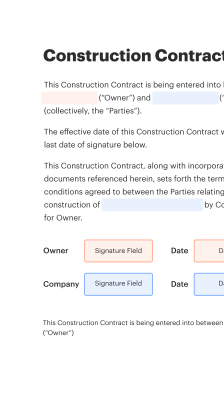
Decline Document Template Initial for Secure Signatures

Get rid of paper and optimize document management for more productivity and countless opportunities. eSign any papers from a comfort of your home, quick and professional. Enjoy a better way of running your business with airSlate SignNow.

Award-winning eSignature solution

What a decline document template initial is and why it matters

A decline document template initial is a preconfigured document used to record and communicate an initial refusal, opt-out, or rejection in a formal workflow. It standardizes language and metadata so declines are consistent, auditable, and linked to the originating transaction. Organizations use these templates to capture the signer identity, timestamp, and reason for declining, and to trigger subsequent steps such as notifications, automatic routing, or archival. Modern eSignature platforms such as signNow support template-driven decline flows that integrate with existing document lifecycles and preserve evidentiary details for compliance and recordkeeping.

Benefits of using a decline document template initial

A template ensures consistent wording, preserves audit data, and reduces manual errors while integrating with downstream workflows for notifications and record retention.

Benefits of using a decline document template initial

Common challenges addressed by decline templates

  • Inconsistent decline language across departments increases legal ambiguity and complicates reporting and audits.
  • Manual handling of declined documents creates delays and increases the risk of lost records or missing notifications.
  • Lack of standardized metadata means declines are difficult to search, segment, or reconcile with CRM records.
  • Poorly configured templates can cause workflow loops, incorrect routing, or unintended acceptance of declined terms.

Representative user profiles for decline document template initial

Contract Administrator

A Contract Administrator sets up and maintains decline templates within the eSignature platform, defines required fields and reason codes, and configures routing rules so declined documents trigger the correct notifications and archival policies.

HR Manager

An HR Manager uses decline templates to record employee opt-outs or declines for acknowledgements, ensuring each record contains signer identity, timestamp, and a selectable decline reason to meet internal audit and retention requirements.

Typical teams and roles that use decline document template initial

Legal, compliance, HR, sales operations, and contract teams commonly rely on decline templates to capture formal refusals and ensure consistent records.

  • Legal teams for standardized decline language and auditability.
  • Sales operations for declined offer tracking and CRM synchronization.
  • HR for declined acknowledgements in onboarding or policy confirmations.

Implementing templates reduces administrative burden for these groups and creates a reliable record for dispute resolution and compliance reporting.

Additional tools that support decline document template initial workflows

Beyond basic template fields, these tools help manage volume, integrate records, and enforce governance across the lifecycle of a declined document.

Bulk Processing

Apply decline templates in bulk for recurring processes or mass notifications, reducing manual workload and ensuring consistent handling for multiple records.

API Hooks

Use APIs to push decline events into CRM or case systems for automated opportunity updates, case creation, or analytics pipelines.

Custom Properties

Attach custom metadata to declines so records can be filtered, reported, and retained according to internal classification schemes.

Reporting

Built-in reports aggregate decline reasons, volumes, and timelines so teams can identify trends and policy issues.

Retention Controls

Apply retention labels and archival schedules to declined documents to meet legal, regulatory, and business recordkeeping policies.

Multi-factor Authentication

Require strong signer verification when declines have regulatory importance or when the record will alter downstream legal obligations.

be ready to get more

Choose a better solution

Core template features that improve decline handling

Templates provide structured fields, conditional logic, required metadata, and routing options to streamline declines and maintain compliance across teams.

Structured Fields

Predefined fields capture signer identity, timestamp, reason codes, and optional notes to ensure every decline is recorded consistently and is machine-readable for downstream processing.

Conditional Logic

Show or hide follow-up fields based on the selected decline reason, ensuring the signer provides only the information relevant to the situation while reducing form fatigue.

Required Metadata

Force capture of mandatory audit elements such as signer authentication method and IP address to preserve evidentiary integrity for compliance and dispute purposes.

Automated Routing

Route declined documents automatically to legal, compliance, or CRM systems, triggering notifications and follow-up tasks without manual intervention.

How decline document template initial workflows operate

A decline template triggers a predictable sequence: capture, validate, notify, and archive, with optional integrations to other systems.

  • Capture: Template collects signer metadata and decline reason.
  • Validate: Authentication confirms identity and intent.
  • Notify: Automated alerts send to configured recipients.
  • Archive: Document and audit trail stored per retention rules.
Collect signatures
24x
faster
Reduce costs by
$30
per document
Save up to
40h
per employee / month

How to complete a decline document template initial — step by step

Follow these basic steps to apply a decline document template initial and record a valid, auditable refusal.

  • 01
    Open template: Select the decline template from your templates library.
  • 02
    Verify identity: Confirm signer identity with configured authentication.
  • 03
    Select reason: Choose a standardized decline reason code from the list.
  • 04
    Submit and route: Complete the decline, notify stakeholders, and archive the record.

Audit trail steps for decline document template initial

Maintain a clear, timestamped trail to verify intent, identity, and the sequence of events for each decline.

01

Initiation:

User opens template
02

Authentication:

Signer identity confirmed
03

Selection:

Decline reason recorded
04

Submission:

System timestamps event
05

Notification:

Recipients alerted automatically
06

Archival:

Document stored securely
be ready to get more

Why choose airSlate SignNow

  • Free 7-day trial. Choose the plan you need and try it risk-free.
  • Honest pricing for full-featured plans. airSlate SignNow offers subscription plans with no overages or hidden fees at renewal.
  • Enterprise-grade security. airSlate SignNow helps you comply with global security standards.
illustrations signature

Typical workflow settings for decline document template initial

Use these common settings to configure templates so declines are processed reliably and integrate with related systems.

Setting Name Configuration
Default Signers Initiator, Witness
Reminder Frequency 48 hours
Notification Recipients Legal, CRM owner
Retention Policy 7 years
Post-decline Action Archive and notify

Device and platform considerations for decline document template initial

Decline templates should be accessible and usable across web, mobile, and integrated applications while preserving security and audit data.

  • Web browser support: Modern browsers supported
  • Mobile compatibility: iOS and Android apps
  • API integration: REST API access

Ensure your chosen eSignature solution maintains consistent rendering and data capture across devices, supports the required authentication methods, and records device metadata so declines remain auditable regardless of platform.

Security controls relevant to decline document template initial

Encryption at rest: AES-256 encryption
Encryption in transit: TLS 1.2+
Access controls: Role-based access
Authentication options: Email, SMS, SSO
Audit logging: Comprehensive event logs
Data isolation: Tenant-level separation

Industry examples showing decline document template initial in practice

Two real-world examples illustrate how a decline document template initial standardizes refusals and triggers follow-up actions across different sectors.

Healthcare refusal recording

A hospital uses a decline template to record patient refusal of a noncritical procedure, capturing identity, timestamp, and reason for refusal in a structured format

  • Template fields include patient name, staff witness, and standardized reason codes
  • That structured data feeds the EHR and legal logs for compliance and continuity of care

Resulting in consistent documentation, reduced ambiguity for clinicians, and clearer records for audits and potential liability reviews.

Sales proposal decline tracking

A software vendor applies a decline template when prospective customers decline an initial proposal, capturing the decision, key objection categories, and optional notes

  • The template maps objections to CRM opportunity records for analytics
  • Sales managers review aggregated decline reasons to refine offers and identify retrainable patterns

Leading to improved pipeline visibility, targeted follow-up strategies, and more efficient sales enablement based on documented decline insights.

Best practices when designing a decline document template initial

Follow these guidelines to ensure decline templates are clear, defensible, and integrated with business processes and compliance needs.

Use standardized reason codes and dropdowns
Limit free-text responses by providing standardized reason codes to enable consistent analytics, faster processing, and clearer audit trails while retaining an optional comments field for context.
Require essential audit fields only
Mark only truly necessary fields as required to balance evidentiary needs with signer experience, ensuring records are defensible without creating excessive friction for users.
Map declines to automated workflows
Connect declines to automated notifications, CRM updates, or legal review queues so the organization responds promptly and consistently based on the recorded reason.
Review retention and access policies regularly
Align retention periods and access controls with legal and regulatory obligations, and periodically audit retention settings to ensure declined documents remain discoverable and secure.

FAQs and troubleshooting for decline document template initial

Answers to frequent questions and common troubleshooting steps for decline templates, authentication, and routing.

Feature availability for decline document template initial across vendors

A concise comparison of common decline-template capabilities across major eSignature providers, noting availability and key technical details.

Criteria signNow (Recommended) DocuSign Adobe Sign
Template conditional logic
Native decline reason codes
Audit trail detail level High High High
API event webhook support
be ready to get more

Get legally-binding signatures now!

Retention and document retention timelines for declined templates

Establish retention periods for declined documents that align with legal, regulatory, and business requirements to ensure discoverability and limit risk.

Minimum retention for audits:

7 years minimum in many industries

HIPAA-related declines:

Retain per HIPAA BAA terms

Education records (FERPA):

Follow FERPA retention rules

Contract disputes window:

Keep until statute of limitations expires

Routine deletion schedule:

Purge per policy after retention period

Risks and potential penalties for mismanaged declines

Regulatory fines: Possible under HIPAA
Contract disputes: Increased litigation risk
Data breaches: Exposure from misstorage
Compliance violations: FERPA or GDPR issues
Operational delays: Workflow bottlenecks
Reputational harm: Customer trust loss

Pricing and plan capabilities relevant to decline document template initial

Overview of entry-level pricing and key plan capabilities for handling template-based declines across vendors; signNow is listed first for quick reference.

Pricing Tier signNow (Featured) DocuSign Adobe Sign Dropbox Sign PandaDoc
Starting Price per User From $8 per user/month From $10 per user/month From $14 per user/month From $8 per user/month From $19 per user/month
Free Trial Length 7 days trial available 30 days trial often available 7 days trial 14 days trial 14 days trial
API Access Included Available on mid plans Paid add-on or higher tiers Included on some tiers Included on business plans Included on business plans
Bulk Send Support Available on business plans Available on business plans Available on enterprise Limited in basic plans Available on advanced plans
HIPAA-compliant plan Offered with BAAs and enterprise terms Available with BAA and enterprise Available with enterprise agreements BAA available via Dropbox Available via enterprise contracts

Simplify complex workflows

Create, execute, and manage workflows of any complexity, electronically from virtually anywhere. Scalable eSignature capabilities allow you to share documents with the right people in the correct order and define roles for each recipient. Execute document workflows faster and easier than ever before.

Automate document management

Optimize complex signing processes with airSlate SignNow’s powerful features to enhance your business. Control your automated eSignature workflows to ensure they're running at peak performance with instant notifications and reminders.

Optimize in team collaboration

Bring teams together in a secure, shared environment. Manage documents, use form templates and notifications to create more efficient cross-organization collaboration. Free your employees from having to spend time on repetitive activities so that they can focus on valuable, business-critical tasks.

Integrate into your existing systems

Run your projects with industry-leading integration. Collect Salesforce, Microsoft Teams, and SharePoint all in one business flow. Connect your software to a single system for endless possibilities and more productiveness.

Stay compliant with market-leading data security

Feel safe knowing that your data remains secure by the most up-to-date in encryption security. airSlate SignNow is GDPR and eIDAS certified and offers you exposure into your signing experience with court-admissible audit trails. Configure user access permissions and roles to manage who has access to what.


walmart logo
exonMobil logo
apple logo
comcast logo
facebook logo
FedEx logo
be ready to get more

Get legally-binding signatures now!