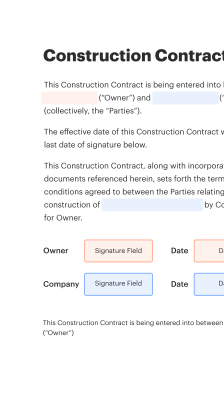
E Signature Catalog for Secure Document Signing

Get rid of paper and optimize document managing for increased performance and endless opportunities. Enjoy the best strategy for running your business with airSlate SignNow.

Award-winning eSignature solution

What an e signature catalog is and how it works

An e signature catalog centralizes reusable, preconfigured templates, signing roles, and workflow settings into a managed library that teams can access for routine agreements. Catalogs allow administrators to lock approved clauses, map required fields, and define signer sequences so users reuse validated assets rather than recreating documents. For U.S. organizations, catalogs simplify compliance by embedding audit data and authentication steps compatible with ESIGN and UETA while integrating with CRMs, cloud storage, and automated distribution channels.

Why an e signature catalog matters for operational consistency

A catalog reduces repetitive setup time, enforces standardized fields and roles, and decreases signing errors. It supports consistent legal language, faster distribution, and auditable processes for teams across sales, HR, and procurement.

Why an e signature catalog matters for operational consistency

Common challenges catalog features address

  • Multiple unmanaged template versions cause inconsistent clauses and signer confusion during high-volume signing periods.
  • Decentralized storage leads to manual re-creation of documents and extra administrative work for compliance reviews.
  • Incorrect field mapping or routing often results in incomplete agreements and delays to operational processes.
  • Integrations without catalog synchronization create duplicate assets and break automated approval or archival workflows.

Representative user profiles

Procurement Manager

A procurement manager uses a catalog to publish approved purchase order templates, define approver routing, and ensure supplier agreements contain consistent terms. This reduces invoice delays and supports faster vendor onboarding while preserving an auditable record for compliance and internal review.

HR Administrator

An HR administrator maintains offer letter and onboarding templates in the catalog, pre-mapping signature fields and document visibility. This minimizes versioning errors, speeds candidate acceptance, and centralizes retention for audits and regulatory requests.

Typical teams and roles that use an e signature catalog

Teams with repeatable agreements adopt catalogs to improve accuracy, speed approvals, and maintain a single source of approved templates.

  • Sales operations and account teams that send recurring quotes and contracts at scale.
  • Human resources departments managing offer letters, onboarding packets, and policy acknowledgements.
  • Procurement and vendor management teams processing purchase orders, supplier contracts, and renewals.

Across small and large organizations, catalogs reduce manual work, shorten cycle times, and centralize compliance evidence for audits.

be ready to get more

Choose a better solution

Key catalog features to look for

Identify catalog capabilities that reduce manual effort, maintain legal consistency, and integrate with existing systems.

Catalog Library

A centralized library stores approved templates and version history, enabling administrators to lock content, enforce naming conventions, and control which teams can access or copy templates for signing.

Bulk Send

Bulk Send allows distribution of the same template to many recipients simultaneously while preserving individualized fields and tracking, reducing repetitive sends for enrollment forms, invoices, or consent documents.

Access Controls

Granular role-based permissions let administrators restrict template editing, designate approvers, and control who can publish or retire catalog items, supporting governance and audit requirements.

Audit Trail

Comprehensive, tamper-evident audit records capture signer events, timestamps, and IP addresses, supporting legal defensibility, internal reviews, and compliance audits in regulated environments.

How an e signature catalog functions in everyday workflows

A catalog simplifies repeated signing by connecting templates to signer roles, authentication, and downstream storage.

  • Select Template: Choose an approved item from the library
  • Assign Roles: Add signers and define order
  • Authenticate: Enforce MFA or ID verification
  • Complete and Archive: Record audit trail and store
Collect signatures
24x
faster
Reduce costs by
$30
per document
Save up to
40h
per employee / month

Step-by-step: Set up an e signature catalog

Follow these core steps to configure a catalog so teams can reuse templates and sign consistently.

  • 01
    Create Catalog: Define library name and access scope
  • 02
    Upload Templates: Add approved documents and versions
  • 03
    Map Fields: Place signature, date, and data fields
  • 04
    Publish Access: Grant team permissions and visibility
be ready to get more

Why choose airSlate SignNow

  • Free 7-day trial. Choose the plan you need and try it risk-free.
  • Honest pricing for full-featured plans. airSlate SignNow offers subscription plans with no overages or hidden fees at renewal.
  • Enterprise-grade security. airSlate SignNow helps you comply with global security standards.
illustrations signature

Typical workflow settings for e signature catalogs

Configure these settings to align catalog behavior with organizational policies and downstream systems.

Feature Value
Reminder Frequency 48 hours
Expiration Period 30 days
Default Signing Order Sequential
Retention Policy 7 years
Document Storage Location Connected cloud

Supported platforms and device requirements

e signature catalogs are typically accessible from web browsers, dedicated desktop clients, and mobile applications to support signing on the go.

  • Desktop: Windows and macOS supported
  • Mobile: iOS and Android apps
  • Browsers: Chrome, Edge, Safari

For optimal performance, use modern browser versions, enable TLS connections, and ensure mobile devices run supported OS releases; offline signing capabilities vary by provider and should be validated before field deployments.

Security and authentication features

Transport Encryption: TLS 1.2+ for data in transit
Data at Rest: AES 256-bit encryption stored
Audit Trail: Full event logging retained
Access Controls: Role-based permissioning enforced
Multi-Factor Authentication: Optional MFA for user logins
HIPAA Support: BAA available upon request

Real-world examples of catalog usage

Concrete examples show how catalogs reduce risk and accelerate routine transactions across regulated and high-volume environments.

Case Study 1

A regional mortgage lender standardized loan disclosure templates in a managed catalog to eliminate custom edits before signing, reducing manual errors across branches.

  • Preconfigured fields and conditional routing ensured correct document assembly.
  • The lender experienced fewer incomplete signatures and smoother underwriting handoffs.

Resulting in shorter closing cycles and clearer audit trails for compliance.

Case Study 2

A public university consolidated admission and financial aid forms into a controlled catalog to ensure consistent language and authorized versions across departments.

  • Role-based visibility and signer sequencing limited access to necessary offices.
  • Students and staff saw fewer errors and faster processing of acceptances and aid packets.

Resulting in improved operational throughput and simplified records retention for regulatory reviews.

Best practices for catalog governance and accuracy

Adopt these practices to reduce errors, ensure compliance, and keep the catalog useful and current for teams.

Standardize document naming and versioning
Use a consistent naming schema that includes version numbers and effective dates so users can easily identify the current approved template and avoid unsigned or outdated documents entering workflows.
Require review and approval workflows before publishing
Implement a controlled publishing process with designated reviewers and approvers to validate legal language, field placement, and authentication settings prior to making templates available to end users.
Map fields and conditional logic centrally
Configure signature, data capture, and conditional fields at the template level to prevent missing information, and test routing logic to ensure handoffs and downstream integrations behave as expected.
Archive deprecated templates and retain audit copies
When templates change, archive prior versions with retention metadata rather than deleting, preserving audit evidence and enabling reproducible records for past transactions and regulatory requests.

FAQs about e signature catalog

Answers to common questions about configuring, using, and troubleshooting catalogs for everyday signing scenarios.

Feature comparison: signNow and other vendors

A side-by-side view of common catalog capabilities across leading eSignature providers to help assess functionality and compliance support.

Feature signNow (Recommended) DocuSign
Embedded Signing
Bulk Send
HIPAA Support
API Access REST API REST API
be ready to get more

Get legally-binding signatures now!

Risks and potential penalties of poor catalog management

Non-compliance fines: Civil penalties possible
Data breach exposure: Regulatory enforcement risk
Invalid agreements: Contracts may be challenged
Reputational damage: Customer trust erosion
Operational delays: Slower approvals and cycles
Legal disputes: Increased litigation risk

Pricing snapshot across catalog-capable eSignature plans

Pricing and plan capabilities change frequently; this snapshot highlights starting prices and key limits for commonly available plans to aid initial comparison.

Plan / Vendor signNow (Recommended) DocuSign Adobe Sign PandaDoc Dropbox Sign
Starting Price (per user/month) $8 $10 $9.99 $19 $15
Free Trial Yes Yes Yes Yes Yes
Documents per month Unlimited Limited envelopes Limited Unlimited Limited
API available Yes Yes Yes Yes Yes
HIPAA BAA option Available Available Available Available Available

Make simpler complex workflows

Prepare, deliver, and maintain workflows of any complexness, digitally from near any place. Scalable electronic signature capabilities let you share documents with the right people in the right sequence and determine roles for every receiver. Perform document workflows faster and easier than ever before.

Automate document managing

Optimize intricate signing tasks with airSlate SignNow�s highly effective capabilities to enhance your operation. Take control of your automated eSignature workflows to guarantee they're operating at top efficiency with instant notices and reminders.

Optimize in team communication

Bring teammates together in a safe, shared environment. Handle documents, use form templates and notifications to create better cross-company collaboration. Relieve your workers from having to spend time on repeated activities so that they can concentrate on valuable, business-vital duties.

Integrate into your existing network

Manage your tasks with industry-leading integration. Assemble Salesforce, Microsoft Teams, and SharePoint in one business flow. Link your applications to a single unit for unlimited possibilities and higher efficiency.

Stay compliant with market-leading data protection

Feel confident with the knowledge that your information remains secure by the most recent in encryption security. airSlate SignNow is GDPR and eIDAS compliant and gives you exposure into your signing experience with court-admissible audit trails. Set up user access permissions and roles to regulate who has access to what.


walmart logo
exonMobil logo
apple logo
comcast logo
facebook logo
FedEx logo
be ready to get more

Get legally-binding signatures now!