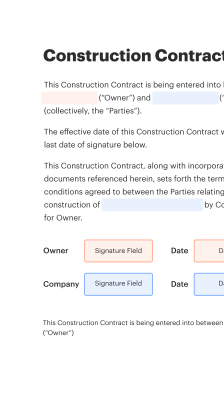
Electronic Signature General Release of Liability Form

Remove paperwork and improve document management for more efficiency and endless opportunities. Discover the perfect manner of running your business with airSlate SignNow.

Award-winning eSignature solution

Defining an electronic signature general release of liability form

An electronic signature general release of liability form is a legal document allowing an individual to waive certain claims or liabilities using an electronic signature rather than a handwritten one. In the United States, eSigned releases rely on ESIGN and UETA frameworks that validate intent and consent when proper authentication and audit records are maintained. These forms are used across events, healthcare, recreation, and services where a provider needs written acknowledgement of assumed risk. Properly executed eSigned releases include clear language, signer identification measures, and an immutable audit trail to support enforceability.

Why organizations adopt an electronic general release of liability form

Using an electronic release reduces paperwork, speeds signings, and centralizes records while preserving legal validity under ESIGN and UETA when authentication and audit trails are present.

Why organizations adopt an electronic general release of liability form

Common challenges when using electronic release forms

  • Ambiguous waiver language that courts may construe against the drafter.
  • Varying state rules on enforceability and specific consumer protections.
  • Insufficient signer authentication increasing risk of contesting signatures.
  • Poor document retention practices that weaken evidentiary value.

Representative user roles for electronic release workflows

Event Organizer

An event organizer uses electronic releases to collect waivers from attendees and participants prior to activities. They manage templates, enable mobile signing at check-in, and retain audit logs to demonstrate that consent and risk assumption were properly recorded.

Clinic Administrator

A clinic administrator deploys general release forms for non-invasive procedures or activity participation. They configure signer authentication, attach a BAA where required, and store signed releases in a secure, access-controlled record for regulatory and legal review.

Typical users of electronic release of liability forms

Organizations across sectors rely on eSigned releases to document consent, allocate risk, and streamline participant intake processes.

  • Event and recreation operators managing participant waivers and liability.
  • Healthcare and therapy providers documenting consent for non-invasive activities.
  • Property managers and contractors securing release language before onsite work.

Many users combine clear form language with identity checks and secure storage to strengthen enforceability and operational efficiency.

Additional capabilities to scale release management

For organizations handling many releases, these capabilities improve throughput, control, and integration with core systems.

Template Library

Centralized templates reduce drafting mistakes and let administrators apply jurisdiction-specific language while keeping version control and approval workflows intact.

Bulk Send

Send the same release to large lists of recipients with individualized tracking and status monitoring to efficiently onboard participants.

Mobile Signing

Enable signers to complete releases via mobile devices using responsive forms and app-based authentication for faster, on-site execution.

Role Management

Define roles and permissions so only authorized staff can edit templates, send forms, or access signed records, supporting separation of duties.

Advanced Authentication

Offer device-based or knowledge-based identity verification for higher assurance when the release has significant legal consequences.

API Access

Use APIs to embed release workflows into registration systems, CRMs, or mobile apps and to automate storage and reporting of signed releases.

be ready to get more

Choose a better solution

Features that improve electronic release handling

Key platform features reduce friction and increase legal confidence when using an electronic signature general release of liability form in routine operations.

Custom Templates

Save standardized release language as reusable templates to ensure consistency across events and locations while reducing drafting errors and administrative time.

Signer Authentication

Offer multiple verification options such as email, SMS, knowledge-based questions, or ID checks so you can match authentication strength to the sensitivity of the release.

Audit Trail

Maintain a tamper-evident log that records timestamps, IP addresses, and authentication steps to support enforceability and evidentiary needs.

HIPAA Controls

Configure business associate agreements, access controls, and secure storage options to meet privacy obligations for healthcare-related releases.

How an electronic release signing flow typically works

The signing flow moves from preparation to signature capture and ends with secure retention and auditability.

  • Prepare document: Create template with required fields.
  • Send to signer: Deliver via email, link, or mobile.
  • Signer authenticates: Confirm identity using chosen methods.
  • Finalize and archive: Apply audit log and store securely.
Collect signatures
24x
faster
Reduce costs by
$30
per document
Save up to
40h
per employee / month

Quick steps to prepare an electronic general release of liability form

Follow these concise steps to draft, distribute, and store an enforceable eSigned release.

  • 01
    Draft release: Use clear, specific waiver language.
  • 02
    Add fields: Place signature and authentication fields.
  • 03
    Authenticate signer: Apply email, SMS, or ID checks.
  • 04
    Store record: Save signed copy with audit trail.

Detailed steps to finalize and store an electronic release

This checklist covers validation, signature capture, and secure storage steps for a defensible eSigned release.

01

Validate parties:

Confirm signer identity before sending.
02

Present terms:

Display full release text without hidden changes.
03

Capture consent:

Obtain explicit signature and date.
04

Record authentication:

Log method and evidence of identity.
05

Generate audit file:

Store tamper-evident metadata with document.
06

Archive securely:

Apply retention policy and backups.
be ready to get more

Why choose airSlate SignNow

  • Free 7-day trial. Choose the plan you need and try it risk-free.
  • Honest pricing for full-featured plans. airSlate SignNow offers subscription plans with no overages or hidden fees at renewal.
  • Enterprise-grade security. airSlate SignNow helps you comply with global security standards.
illustrations signature

Recommended workflow settings for release automation

Configure these settings to automate distribution, reminders, and retention when collecting signed releases electronically.

Setting Name Configuration
Reminder Frequency 48 hours
Authentication Method Email + SMS
Signature Order Simultaneous
Retention Policy 7 years
Notification Settings Admin email on completion

Device and platform requirements for electronic releases

Electronic releases should be accessible across modern browsers and mobile platforms while preserving security and usability.

  • Web browsers: Chrome, Edge, Firefox, Safari
  • Mobile platforms: iOS and Android apps
  • Network requirements: Secure TLS 1.2+ connectivity

Ensure the chosen solution supports responsive signing, offline capture where needed, and regularly updated client components to maintain security and broad signer compatibility.

Core security controls for electronic release forms

Encryption at rest: AES-256 encrypted storage
Encryption in transit: TLS 1.2+ transport
Access controls: Role-based permissions
Audit logging: Tamper-evident trail
Document hashing: SHA-256 integrity checks
Secure hosting: SOC 2 compliant infrastructure

Industry examples: using electronic release forms in practice

Two practical examples illustrate how an electronic signature general release of liability form functions across common contexts.

Recreational Event Release

A weekend adventure park issues a digital general release to all participants that explains risks and required behaviors in plain language.

  • Form includes typed name and mobile verification field.
  • Reduces on-site processing time and ensures each participant signs.

Resulting in faster check-ins and a consolidated, auditable record for incident review.

Medical Activity Participation Release

A outpatient therapy clinic uses an electronic release before group classes to document assumption of risk and consent to participate.

  • The form captures electronic signature and an authentication step.
  • This preserves a clear record of informed acceptance and limits administrative follow-up.

Leading to streamlined intake and defensible documentation for clinical governance.

Best practices for secure and enforceable electronic releases

Adopt a small set of consistent practices to strengthen enforceability and reduce legal risk when collecting electronic releases.

Use plain, unambiguous waiver language tailored to the activity
Draft the release to clearly describe risks, the scope of waiver, and any limitations. Ambiguity can render a waiver unenforceable, so work with counsel to match wording to the jurisdiction and activity.
Select authentication that matches the form’s risk level
For higher-risk activities, require stronger authentication such as government ID validation or multi-factor checks. For low-risk waivers, email plus IP logging may be sufficient when combined with clear consent statements.
Preserve a complete audit trail and tamper-evident records
Ensure the system captures timestamps, signer actions, authentication details, and a document hash. These records are essential if a release is later challenged in court or regulatory review.
Align retention and access policies with legal and operational needs
Define retention periods, access permissions, and backup processes so releases remain available for incidents, audits, or litigation while complying with applicable recordkeeping rules.

FAQs about electronic signature general release of liability form

Common questions and concise answers covering enforceability, security, and operational concerns for eSigned release forms.

Feature comparison for electronic signature platforms

A concise availability and capability comparison focused on features relevant to releasing liability forms.

Criteria signNow (Recommended) DocuSign Adobe Sign
ESIGN/UETA Compliance
Audit Trail Detail Comprehensive Comprehensive Comprehensive
Bulk Send Capability
Advanced Authentication Options Multi-factor available Multi-factor available Multi-factor available
be ready to get more

Get legally-binding signatures now!

Timing and retention guidance for release forms

Set clear deadlines and retention windows to manage compliance and operational needs when working with electronic releases.

Recommended retention period for release forms:

Keep signed releases for at least seven years for adult-related claims.

Signature completion window for distributed forms:

Typical completion windows are 7 to 30 days.

Time to notify signer of changes:

Notify signers immediately if material terms change.

Record retrieval SLA for incident response:

Provide access within 72 hours when requested for investigations.

Retention for minor-related releases:

Retain until an appropriate period after the minor reaches majority.

Risks and penalties from improper use

Unenforceable waiver: Lost protection
Privacy breach: Regulatory exposure
Litigation costs: High defense expenses
Fines and penalties: Regulatory fines
Reputational harm: Customer distrust
Lost evidence: Weakened case

Plan feature comparison across providers

Compare common plan features and availability across leading electronic signature providers; signNow is listed first as Recommended.

Plan signNow (Recommended) DocuSign Adobe Sign HelloSign PandaDoc
Free trial availability Free trial offered Free trial offered Free trial offered Free trial offered Free trial offered
API access included API available on paid plans API available API available API available API available
Mobile apps iOS and Android apps iOS and Android apps iOS and Android apps iOS and Android apps iOS and Android apps
SSO availability SSO on business/enterprise SSO on business/enterprise Enterprise SSO Business and enterprise SSO Enterprise SSO
HIPAA support option BAA available on request BAA available BAA available Contact sales for BAA Contact sales for BAA

Streamline complex workflows

Generate, execute, and maintain workflows of any complexness, electronically from virtually anywhere. Scalable electronic signature capabilities enable you to exchange papers with the right users the correct sequence and set up roles for each receiver. Stream document workflows faster and simpler than ever before.

Automate document managing

Enhance sophisticated signing processes with airSlate SignNow�s highly effective features to improve your business. Take control of your automated signature workflows to guarantee they're running at top efficiency with instant notices and reminders.

Optimize in team communication

Get teams together in a safe, shared environment. Handle documents, use form templates and notices to produce more effective cross-company collaboration. Free your employees from having to spend time on recurring activities so that they can center on beneficial, business-crucial duties.

Integrate into your current framework

Manage your assignments with market-leading integration. Capture Salesforce, Microsoft Teams, and SharePoint all in one business stream. Hook up your applications to a single unit for countless opportunities and higher performance.

Stay compliant with industry-leading data security

Feel safe with the knowledge that your data is protected by the most recent in encryption security. airSlate SignNow is GDPR and eIDAS certified and provides you exposure into your signing process with court-admissible audit trails. Set up user access permissions and roles to control who has access to what.


walmart logo
exonMobil logo
apple logo
comcast logo
facebook logo
FedEx logo
be ready to get more

Get legally-binding signatures now!