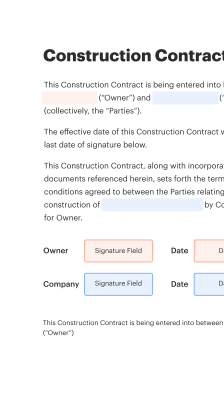
Electronic Signature on Chromebook Made Easy
What electronic signature on Chromebook means in practice
Why you might use electronic signature on Chromebook
Using an electronic signature on Chromebook lets users complete, sign, and store documents entirely in the cloud, reducing device management overhead and accelerating approvals across distributed teams.
Common challenges when using eSignatures on ChromeOS
- Browser compatibility issues can block certain plug-ins or older signing workflows when not optimized for ChromeOS.
- Intermittent offline access makes signing large or certificate-based documents difficult without prior caching.
- Integration gaps with legacy on-prem systems may require middleware or manual exports to complete workflows.
- User authentication expectations vary; some transactions need stronger identity proofing than basic email verification.
Typical user profiles for Chromebook eSigning
Legal Counsel
In-house counsel uses Chromebook-capable eSignature tools to review and sign contracts, track changes, and store signed records in a secure, auditable repository while ensuring compliance with ESIGN and internal retention policies.
Field Representative
A field representative relies on a Chromebook for lightweight, mobile-first signing of delivery receipts, client agreements, and inspection forms while syncing signed documents to the central cloud account for timely processing.
Which teams commonly use electronic signature on Chromebook
Educational administrators, distributed sales teams, HR, and small business owners often choose Chromebooks for affordability and cloud-first workflows.
- K–12 and higher education staff managing enrollment and consent forms from school-managed Chromebooks.
- Sales teams using cloud CRMs and Chromebook laptops for remote contract approvals during customer meetings.
- Small business operators using lightweight devices to sign invoices, NDAs, and agreements quickly.
These use cases emphasize simple deployment, centralized document storage, and quick signature capture without heavy device configuration.
Choose a better solution
Essential features to look for on ChromeOS
Browser-native editor
A responsive in-browser editor enables adding signature fields, form inputs, and annotations without local software, ensuring Chromebooks can prepare and finalize documents entirely within the browser.
Identity verification
Authentication features such as email validation, SMS OTP, and knowledge-based checks help meet transaction assurance levels required by regulated workflows while remaining straightforward for Chromebook users.
Cloud integrations
Direct connectors to Google Drive, Dropbox, and CRMs enable one-click imports and saves, reducing manual file transfers and keeping signed records synchronized with organizational storage policies.
Audit trail
An immutable activity log records signer IP, timestamps, and action steps to support legal admissibility and internal audits for documents signed from Chromebooks.
How electronic signature on Chromebook workflows operate
-
Document host: Store files in cloud or Drive.
-
Signature request: Generate secure signing links.
-
Signer action: Sign via browser or mobile.
-
Finalization: System issues signed PDF and audit log.
Quick setup and signing steps on a Chromebook
-
01Open document: Upload or open the PDF in the browser.
-
02Add recipients: Enter signer emails and assign roles.
-
03Place fields: Drag signature and data fields onto the document.
-
04Send and sign: Send link; signers follow secure prompts.
Completing an electronic signature on Chromebook — detailed steps
Prepare file:
Choose signer roles:
Add fields:
Set reminders:
Verify identity:
Store signed copy:
Why choose airSlate SignNow
-
Free 7-day trial. Choose the plan you need and try it risk-free.
-
Honest pricing for full-featured plans. airSlate SignNow offers subscription plans with no overages or hidden fees at renewal.
-
Enterprise-grade security. airSlate SignNow helps you comply with global security standards.
Recommended workflow settings for Chromebook signing
| Setting Name | Configuration |
|---|---|
| Default signature method | Electronic |
| Reminder Frequency | 48 hours |
| Auto-save destination | Google Drive |
| Authentication level | Email + OTP |
| Retention period | 7 years |
Chromebook requirements and compatibility notes
Chromebooks require an up-to-date Chrome browser and internet access for the most reliable eSignature experience.
- OS and browser: ChromeOS latest
- Internet: Stable connection
- Storage integration: Cloud-first support
Offline signing and certificate-based workflows may need pre-synced files or third-party apps; verify feature support and conduct a pilot before broad deployment to confirm behavior on managed Chromebooks.
Industry use cases for signing from Chromebooks
Education Enrollment
Schools deploy Chromebooks for remote enrollment and parental consent forms using browser-based signing
- Simple link-based signature delivery
- Faster student onboarding and recordkeeping
Resulting in reduced paperwork, centralized storage, and consistent FERPA-aware retention practices for student documents.
Real Estate Transactions
Agents use Chromebooks to review and sign purchase agreements during client meetings
- PDF markup and signature placement tools
- Immediate storage to cloud folders and agent CRM
Leading to shorter closing cycles, verifiable audit trails, and smoother coordination among lenders, title companies, and clients.
Best practices for secure Chromebook signing
FAQs and common troubleshooting for electronic signature on Chromebook
- Why won't the signature field load in my browser?
Ensure Chrome is up to date and disable conflicting extensions. Clear the browser cache and reload the document; if the provider uses a web component, verify the site is allowed to run scripts on managed Chromebooks.
- Can I sign documents while offline on a Chromebook?
Offline signing is limited. Some providers allow pre-download and local signing for certain document types, but certificate-based or cloud-validated signatures typically require connectivity to finalize and record the audit trail.
- What if a signer does not receive the signature request email?
Confirm the recipient's email address and check spam filters. Send a direct signing link if supported, and review domain allowlist settings on organizational email systems to prevent blocking vendor notification messages.
- How do I verify the legal validity of a signed document?
Check the audit trail for signer identity details, timestamps, and IP information. Ensure the chosen authentication method meets transaction requirements and that the provider stores tamper-evident copies to support admissibility under ESIGN and UETA.
- Why is a PDF not displaying annotations after signing?
Confirm that the final signed PDF was fully generated and saved to cloud storage. Use a standard PDF viewer; some lightweight viewers may not render incremental updates. Download the signed file to verify embedded annotations and embedded signature metadata.
- How should I handle sensitive or HIPAA-covered documents on a Chromebook?
Use a vendor that offers HIPAA business associate agreements and configure strong access controls and encryption. Restrict sharing, enable MFA, and ensure signed documents are stored in a secure, auditable repository consistent with organizational policies.
Feature availability comparison for Chromebook eSigning
| Feature | signNow (Recommended) | DocuSign | Adobe Sign |
|---|---|---|---|
| Browser-native editor availability | |||
| Offline signing support | Limited | Limited | |
| HIPAA-ready options | Available | Available | Available |
| Direct Google Drive integration |
Get legally-binding signatures now!
Risks and compliance considerations
Pricing and plan comparison for Chromebook-friendly eSign tools
| Plan | signNow (Recommended) | DocuSign | Adobe Sign | HelloSign | PandaDoc |
|---|---|---|---|---|---|
| Entry-level pricing | Affordable per-user monthly | Mid-range per-user | Higher per-user | Low mid-tier | Mid-tier bundles |
| Free tier availability | Limited free trial | No free plan | Trial only | Free tier available | Free trial only |
| API access | Available with plan | Available paid | Available paid | API paid | Available paid |
| Bulk sending support | Included on select plans | Enterprise only | Enterprise only | Select plans | Select plans |
| Enterprise identity features | SSO and SAML available | SSO available | SSO available | SSO available | SSO available |
Make simpler challenging workflows
Generate, execute, and maintain workflows of any intricacy, electronically from near any place. Scalable electronic signature features enable you to exchange documents with the right people in the right way and define roles for every signee. Perform document workflows faster and easier than ever before.
Automate document managing
Enhance intricate signing processes with airSlate SignNow�s powerful tools to enhance your company. Take control of your automatic signature workflows to guarantee they're running at maximum efficiency with fast notifications and reminders.
Optimize in team communication
Bring teammates together in a secure, shared workplace. Manage documents, use form templates and notifications to create better cross-company communication. Relieve your employees from having to spend time on recurring routines to enable them to give attention to valuable, business-vital activities.
Integrate into your current framework
Run your jobs with market-leading integration. Capture Salesforce, Microsoft Teams, and SharePoint in one business stream. Connect your software to a single unit for unlimited possibilities and higher performance.
Remain compliant with industry-leading data protection
Feel confident with the knowledge that your information remains secure by the most up-to-date in encryption security. airSlate SignNow is GDPR and eIDAS compliant and offers you awareness into your eSigning process with court-admissible audit trails. Configure user access permissions and rights to control who has access to what.