Electronically Sign Document with SignNow

Get rid of paper and automate digital document managing for higher productivity and limitless opportunities. Discover a greater manner of running your business with airSlate SignNow.

Award-winning eSignature solution

What it means to electronically sign document

Electronically sign document refers to using digital methods to apply a signature or other indication of agreement to a document without printing and signing on paper. Electronic signatures can range from a typed name or drawn signature to cryptographic signatures tied to a signer identity. In U.S. practice, ESIGN and UETA establish that properly executed electronic signatures have the same legal effect as handwritten signatures, subject to recordkeeping and intent requirements. Organizations use electronic signing to speed approval cycles, reduce paper handling, and create auditable records for compliance and dispute resolution.

Why electronically sign document matters for modern workflows

Using electronic signatures reduces turn-around time, lowers administrative costs, and creates machine-readable audit trails. For regulated U.S. environments, compliant eSignature solutions preserve admissibility of signed records while supporting secure remote workflows and integration with common business systems.

Why electronically sign document matters for modern workflows

Common challenges when you electronically sign document

  • Ensuring signer identity across remote interactions without adding excessive friction for users and customers.
  • Managing document version control when multiple parties upload or edit the same file during signing.
  • Maintaining legally adequate audit trails and retention schedules to satisfy regulatory reviewers.
  • Integrating signatures into existing CRMs, document storage, or custom workflows without data silos.

Typical users and roles for electronically sign document

HR Manager

An HR Manager uses electronic signatures to streamline employee onboarding, distribute policy acknowledgements, and collect tax and benefits forms. They rely on templates, role-based access, and retention policies to keep records organized and compliant with employment-related privacy rules.

Sales Operations

Sales Operations professionals prepare and send contract packets, track signature status, and integrate executed agreements into CRMs. They prioritize template reuse, bulk send capability, and accurate signing order to reduce cycle time and administrative overhead.

Who commonly uses electronic signatures in organizations

Companies in many sectors adopt electronic signatures to accelerate approvals and reduce paper handling while preserving compliance and security controls.

  • Sales teams for contract execution and renewals with faster signing cycles and tracking.
  • Human resources for onboarding, direct deposit authorizations, and confidentiality agreements.
  • Legal and compliance groups for versioned signoffs and auditable consent records.

Adoption typically focuses on processes where time-to-signature, traceability, and integration with other systems deliver measurable operational benefits.

Advanced features for enterprise electronic signing

Larger organizations often require extended controls and automation to scale electronic signature use across departments and systems.

Role-based access

Granular permissions let administrators control who can create templates, send documents, or access sensitive archives, aligning with internal governance models.


API access

REST APIs enable embedding signing flows into web apps and automating document generation, delivery, and status monitoring from business systems.

Advanced authentication

Options like knowledge-based questions, SMS codes, and certificate-based signatures increase signer assurance for high-risk transactions.

Custom branding

Customizable email and signing screens maintain a consistent customer experience while still using secure backend signing services.

Conditional logic

Conditional fields and workflows adapt signature pages and required inputs based on prior responses to reduce unnecessary steps.

Enterprise reporting

Centralized reporting and exportable logs support legal holds, audits, and multi-team governance reviews.

be ready to get more

Choose a better solution

Core tools to improve electronically sign document reliability

Key capabilities support consistency, security, and integration while keeping signer experience simple for both internal teams and external customers.

Templates

Reusable templates enforce consistent field placement and required data, speeding repetitive processes such as onboarding forms or standard contracts while reducing errors.

Bulk Send

Send a single document to many recipients with individualized fields and tracking, useful for mass acknowledgements or standardized agreements.

Integrations

Connect with Google Docs, Dropbox, and major CRMs to move signed documents and metadata automatically into existing systems, reducing manual upload and reconciliation.

Reporting

Usage and audit reports provide visibility into signing times, outstanding requests, and compliance metrics for internal reviewers and audits.
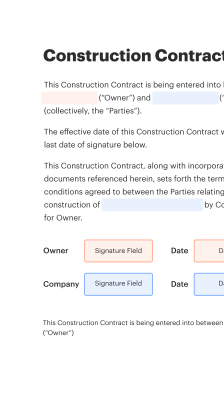
How the electronically sign document process works

A typical electronic signing flow moves a document through defined steps to collect signatures, authenticate signers, and store a verifiable record.

  • Prepare: Upload file and position fields.
  • Authenticate: Apply chosen identity checks.
  • Sign: Signers apply eSignatures online.
  • Finalize: System timestamps and archives file.
Collect signatures
24x
faster
Reduce costs by
$30
per document
Save up to
40h
per employee / month

Quick setup to electronically sign document

Follow these basic steps to prepare and send a document for electronic signing using a compliant eSignature platform.

  • 01
    Upload document: Import PDF or Word file.
  • 02
    Add fields: Place signature and data fields.
  • 03
    Set recipients: Specify signer order and emails.
  • 04
    Send: Dispatch and monitor signing status.

Audit trail and recordkeeping for electronically sign document

Accurate audit trails preserve admissibility and support compliance reviews by capturing signer events, timestamps, and metadata for each signed document.

01

Event logging:

Capture upload, view, sign events.
02

Timestamps:

UTC timestamps for each action.
03

Signer IP:

Record IP address and geodata.
04

Auth method:

Log authentication type used.
05

File hash:

Store document checksum.
06

Exportable logs:

CSV or PDF export options.
be ready to get more

Why choose airSlate SignNow

  • Free 7-day trial. Choose the plan you need and try it risk-free.
  • Honest pricing for full-featured plans. airSlate SignNow offers subscription plans with no overages or hidden fees at renewal.
  • Enterprise-grade security. airSlate SignNow helps you comply with global security standards.
illustrations signature

Recommended workflow settings for electronically sign document

These workflow configuration items reflect common defaults that balance signer convenience and compliance controls for typical business use.

Setting Name Configuration
Reminder Frequency 48 hours
Signing Order Sequential
Default Authentication Email verification
Document Retention 7 years
Audit Trail Detail Full events

Supported platforms for electronically sign document

Electronic signing works across common devices and browsers; confirm platform compatibility before widely deploying a solution.

  • Desktop browsers: Chrome, Edge, Safari
  • Mobile apps: iOS and Android
  • Tablets: Touch signing supported

For enterprise rollouts, validate browser versions, mobile OS minimums, and any corporate firewall requirements so signers experience a reliable and secure signing flow across devices.

Security measures for electronic signing

Encryption: At-rest and in-transit
Access controls: Role-based permissions
Two-factor: Optional SMS or TOTP
Audit logs: Immutable event history
Certificate signing: Digital signature support
Data segmentation: Per-account isolation

Industry examples of electronically sign document in action

These brief cases show how electronic signing fits into real business scenarios across sectors and common processes.

Healthcare consent forms

A community clinic converts patient consent to electronic forms for remote intake

  • Uses identity verification and time-stamped signatures
  • Reduces form processing time and improves storage retrieval

Resulting in faster patient throughput and clearer records for audits.

Real estate closing packets

A small real estate firm bundles purchase agreements and disclosures into a single signing flow

  • Applies role-based signing order and document fields
  • Ensures consistent completion and captures IP and geolocation metadata

Leading to fewer closing delays and a verifiable audit trail for transactions.

Best practices when you electronically sign document

Apply consistent controls and clear policies to maintain legal validity, reduce errors, and protect sensitive data during electronic signature processes.

Document version control and naming standards
Maintain a single source of truth by using versioned filenames, time-stamped archives, and template management to avoid signing incorrect drafts and to enable straightforward audits.
Appropriate signer authentication based on risk
Choose stronger authentication for high-value or regulated contracts while balancing user friction for low-risk documents to ensure both security and usability.
Retention and deletion aligned with policy
Define retention periods for signed records in accordance with legal, tax, or industry-specific obligations and apply automated archival or deletion to reduce liability.
Standardized templates with required fields
Use templates that enforce mandatory fields and conditional logic to reduce incomplete submissions and ensure essential terms are captured consistently across agreements.

FAQs About electronically sign document

Common questions and concise answers about electronic signing, legal status, and practical troubleshooting for everyday signing scenarios.

Quick comparison: signNow and DocuSign capabilities

A concise feature availability comparison between signNow (first column) and DocuSign for common eSignature requirements in U.S. workflows.

Feature / Criteria signNow (Recommended) DocuSign
Legally Enforceable
Audit Trail Detail Detailed Detailed
Bulk Send
Native Google integration
be ready to get more

Get legally-binding signatures now!

Risks and penalties to consider

Regulatory fines: Monetary penalties possible
Contract disputes: Enforceability challenges
Data breaches: Sensitive exposure risk
Noncompliant retention: Recordkeeping violations
Authentication gaps: Invalid signer identity
Operational delays: Workflow interruptions

Pricing and plan highlights across eSignature vendors

Comparison of typical plan features and availability across signNow and other common eSignature providers to help evaluate options by capability and cost structure.

Plan / Vendor signNow (Recommended) DocuSign Adobe Sign HelloSign PandaDoc
Free tier availability Limited free e-signatures No permanent free tier No free e-signatures Limited free trial Free trial available
Per-user monthly Low-cost per user Higher per-user cost Mid-range pricing Mid-range pricing Mid-range pricing
API access Included on plans Paid add-on Included or add-on Paid add-on Included on pro plans
Enterprise features SSO, provisioning available SSO and governance SSO and advanced controls SSO available SSO and workflows
Document limits Generous limits Varies by plan Varies by plan Varies by plan Generous limits

Make simpler complicated workflows

Prepare, perform, and control workflows of any complexness, electronically from almost anywhere. Scalable eSignature features allow you to share papers with the right users the correct order and set up roles for each recipient. Complete document workflows faster and easier than ever before.

Automate document management

Enhance sophisticated signing procedures with airSlate SignNow�s effective tools to enhance your business. Control your automated eSignature workflows to make sure they're running at peak functionality with immediate notifications and reminders.

Optimize in team collaboration

Get teams together in a secure, shared environment. Handle paperwork, use form templates and notifications to create better cross-company communication. Free your staff from having to hang out on repeating activities so that they can focus on valuable, business-essential duties.

Integrate into your current systems

Manage your jobs with market-leading integration. Capture Salesforce, Microsoft Teams, and SharePoint in multi functional business flow. Link your applications to a single system for countless possibilities and higher performance.

Stay compliant with market-leading data protection

Feel confident understanding that your information remains secure by the latest in encryption security. airSlate SignNow is GDPR and eIDAS compliant and gives you exposure into your signing experience with court-admissible audit trails. Set up user access permissions and rights to manage who has access to what.


walmart logo
exonMobil logo
apple logo
comcast logo
facebook logo
FedEx logo
be ready to get more

Get legally-binding signatures now!