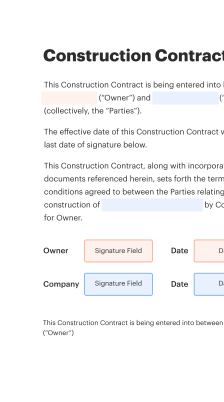
Electronically Signed Letter of Authorization with SignNow
What an electronically signed letter of authorization is and when to use it
Why use an electronically signed letter of authorization
Using an electronically signed letter of authorization reduces processing time, produces a secure audit trail, and helps ensure clear, timestamped consent for delegated actions.
Common challenges when switching to electronic letters of authorization
- Ensuring consistent identity verification across signers in different states can complicate acceptance and enforceability.
- Formatting and capturing precise scope and limitations requires careful template design to avoid ambiguous authority.
- Integrating signed letters into legacy systems can require mapping fields and storing metadata for compliance.
- Managing retention and disposition in regulated industries often needs specific storage and access controls.
Representative user roles for electronically signed letters of authorization
Finance Manager
A Finance Manager issues authorization letters to approve vendors or initiate payments on behalf of departments. They require reliable identity verification, clear expiration dates, and exportable audit logs to satisfy internal controls and external audits.
Healthcare Admin
A Healthcare Admin sends authorization letters to permit access to patient records or billing agents. They need HIPAA-compliant workflows, strict access permissions, and signed consent documentation retained according to policy.
Typical users and teams that rely on electronically signed letters of authorization
Organizations across finance, property management, healthcare, and legal departments commonly issue electronically signed letters of authorization to delegate tasks or access.
- Banks and financial services teams authorizing account access, wire initiation, or third-party payments.
- Healthcare administrators delegating patient record access or billing communications within HIPAA constraints.
- Facilities and property managers granting contractors or agents rights to act during maintenance or leasing processes.
These use cases emphasize the need for clear scope, secure signer authentication, and an auditable signature trail to reduce operational risk.
Choose a better solution
Core features to look for when issuing electronically signed letters of authorization
Template Library
Reusable templates with predefined authorization fields reduce errors and ensure each letter includes scope, duration, and signer contact details while enforcing consistent language across departments.
Authentication Modes
Multiple authentication options — email verification, SMS codes, knowledge-based checks, or government ID checks — let organizations match assurance level to the sensitivity of the authorized action.
Audit Trail
Comprehensive audit records capture signer identity, IP address, timestamps, and activity history to support dispute resolution and compliance with ESIGN and UETA.
Access Controls
Role-based permissions, granular viewing rights, and secure sharing ensure only authorized personnel can view, edit, or revoke letters of authorization.
How the electronically signed authorization workflow typically operates
-
Template Preparation: Create a reusable document with role-specific fields.
-
Recipient Verification: Send with chosen authentication and consent prompts.
-
Execution: Signer applies an electronic signature and timestamps occur.
-
Archival: System stores signed file with audit trail and retention tags.
Quick step-by-step: create an electronically signed letter of authorization
-
01Draft: Define scope, duration, and limitations clearly.
-
02Prepare Template: Use fields for names, dates, and signer verification.
-
03Authenticate: Choose appropriate signer authentication methods.
-
04Store: Save executed copies with audit metadata.
Why choose airSlate SignNow
-
Free 7-day trial. Choose the plan you need and try it risk-free.
-
Honest pricing for full-featured plans. airSlate SignNow offers subscription plans with no overages or hidden fees at renewal.
-
Enterprise-grade security. airSlate SignNow helps you comply with global security standards.
Recommended workflow settings for electronically signed letters of authorization
| Setting Name | Configuration |
|---|---|
| Reminder Frequency | 48 hours |
| Signature Order | Sequential |
| Retention Policy | 7 years |
| Reauthentication Window | 30 days |
| Expiry Notifications | 14 days |
Platform and device considerations for electronically signed letters of authorization
Ensure your eSignature platform supports the devices and authentication methods your signers use most often.
- Desktop Support: Windows/macOS web
- Mobile Support: iOS and Android apps
- Browser Compatibility: Chrome, Edge, Safari
Confirm that mobile and desktop experiences capture the same audit data, maintain consistent field behavior, and support the authentication levels required for legally binding authorizations in your industry.
Industry scenarios where electronically signed letters of authorization add value
Banking Authorization
A regional bank needed a secure way for customers to authorize recurring third-party payments digitally.
- The platform captured signer ID and consent fields.
- The bank reduced in-branch visits and manual signatures.
Leading to faster processing and auditable approvals for financial controls.
Healthcare Release
A medical practice required signed permissions to share records with specialists and insurers.
- The workflow enforced HIPAA-compliant access controls and retention policies.
- Patients completed forms remotely with verified identities.
Ensures timely treatment coordination while maintaining regulatory documentation and auditability.
Best practices for creating secure and enforceable electronically signed letters of authorization
FAQs and troubleshooting for electronically signed letters of authorization
- How do I verify signer identity sufficiently?
Choose authentication levels based on risk: email verification for low-risk delegations, SMS or knowledge-based checks for moderate risk, and multi-factor or ID verification for high-value authorizations to strengthen evidentiary value.
- What makes an authorization legally binding?
A clear expression of intent, an identifiable signer, reliable authentication, and an auditable signature trail satisfy ESIGN and UETA criteria in most U.S. jurisdictions for authorization documents.
- How should I store signed authorizations for compliance?
Retain executed documents in encrypted storage with access controls, maintain associated metadata and audit logs, and apply retention schedules consistent with industry regulations and internal recordkeeping policies.
- Can I revoke an electronically signed authorization?
Yes, you can issue a revocation document and update internal systems; ensure the revocation is communicated to all affected parties and retained with the original authorization for audit purposes.
- What if a signer disputes the authorization?
Provide the full audit trail showing signer identity, timestamps, IP addresses, and consent steps. If gaps exist, consult legal counsel and review authentication and template practices to address the dispute.
- Why is template accuracy important?
Accurate templates prevent ambiguous scope, reduce processing errors, and limit legal exposure by ensuring each authorization clearly states permitted actions, duration, and any constraints.
Feature comparison for electronically signed letter of authorization providers
| Feature / Provider | signNow (Recommended) | DocuSign | Adobe Sign |
|---|---|---|---|
| HIPAA Compliance | |||
| Bulk Send | |||
| API Access | REST API | REST API | REST API |
| Offline Signing | Limited | Limited |
Get legally-binding signatures now!
Risks and compliance penalties to consider
High-level pricing and plan differences for common eSignature vendors
| Plan | signNow (Recommended) | DocuSign | Adobe Sign | Dropbox Sign | OneSpan |
|---|---|---|---|---|---|
| Free Tier | Available limited features | Trial only | Trial only | Limited free | No free tier |
| Entry-Level Pricing | Low monthly per user | Mid-range per user | Mid-range per user | Competitive per user | Higher enterprise focus |
| Business Features | Templates, Bulk Send, API | Advanced workflow builder | Adobe integrations | Simple templates, Dropbox sync | Strong authentication options |
| Enterprise Capabilities | Custom SSO, APIs, SLAs | Extensive integrations, admin tools | Enterprise document services | Team management, storage sync | Security-centric enterprise tools |
| Support & SLAs | Email and phone options | Tiered enterprise support | Enterprise support options | Email support, business hours | Enterprise support with SLAs |
Simplify complicated workflows
Generate, perform, and control workflows of any complexity, digitally from almost anywhere. Scalable eSignature features enable you to exchange documents with the right users the correct way and define roles for every receiver. Execute document workflows faster and easier than ever before.
Automate document flow
Enhance sophisticated signing processes with airSlate SignNow�s effective tools to boost your operation. Control your automated signature workflows to guarantee they're running at peak functionality with quick notifications and reminders.
Optimize in team collaboration
Bring teams together in a protected, shared workspace. Manage paperwork, use form templates and notices to create more efficient cross-company communication. Relieve your workers from having to spend time on repeating activities so that they can focus on beneficial, business-vital projects.
Integrate into your current framework
Run your jobs with best-in-class integration. Capture Salesforce, Microsoft Teams, and SharePoint all in one business thread. Link up your applications to a single environment for countless possibilities and higher productiveness.
Stay compliant with best-in-class data protection
Feel safe with the knowledge that your information remains secure by the most up-to-date in encryption security. airSlate SignNow is GDPR and eIDAS certified and offers you transparence into your signing experience with court-admissible audit trails. Set up user authorization and roles to manage who has access to what.