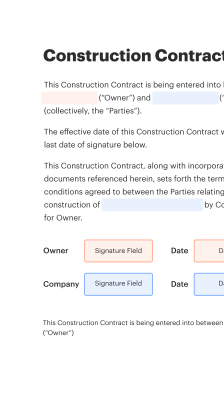
Insure Commercial Insurance Proposal Template Initials

Eliminate paperwork and optimize digital document processing for more productivity and endless possibilities. Sign any papers from a comfort of your home, quick and accomplished. Experience a better way of running your business with airSlate SignNow.

Award-winning eSignature solution

What insure commercial insurance proposal template initials means in practice

Insure commercial insurance proposal template initials refers to preparing a reusable commercial insurance proposal that includes designated initial fields where recipients confirm specific clauses, premiums, or sections. Using an eSignature platform to place initial fields reduces manual handling, enforces field-level completion, and preserves a verifiable audit trail. In U.S. workflows, these templates must align with ESIGN and UETA requirements for intent and consent while supporting authentication and retention policies. Properly configured templates speed approvals, reduce return cycles, and ensure each page or clause that requires initialing is clearly tracked and time-stamped.

Why template initials matter for commercial proposals

Initial fields in commercial insurance proposals define point-in-time agreement to critical clauses, improving clarity and reducing disputes while maintaining a legally defensible record of who initialed what and when.

Why template initials matter for commercial proposals

Common challenges when collecting initials

  • Missing or misplaced initial fields create delays and require manual corrections that extend binding timelines.
  • Inconsistent template versions lead to mismatched clauses and require rework across multiple stakeholders.
  • Weak authentication can raise validity questions for initials on sensitive premium or coverage items.
  • Poorly defined signing order causes partial execution and gaps in the audit trail of initials.

Typical user profiles for initial-enabled templates

Insurance Broker

Brokers assemble commercial proposals, place initials for client acknowledgment, and manage versioned templates across accounts. They need tools to prefill data, require initials on premium changes, and track client responses for compliance and audit purposes.

Risk Manager

Risk managers review contract clauses, initial acceptance of exclusions and endorsements, and maintain records for audits. They rely on authenticated initials and a complete audit trail to demonstrate internal approvals and regulatory compliance.

Teams and roles that rely on proposal initials

Teams across insurance distribution and underwriting use template initials to confirm clause-level acceptance before binding coverage.

  • Insurance brokers and agents who need client initials on coverage options and endorsements.
  • Underwriters validating negotiated endorsements and premium adjustments prior to issuance.
  • Commercial clients and risk managers reviewing terms and initialing clause acknowledgments.

Consistent use of initial fields reduces disputes, shortens negotiation cycles, and clarifies the approved terms for all parties involved.

Key tools that support initials in commercial templates

Robust initial handling requires specific platform capabilities to ensure correctness, compliance, and efficiency across high-volume commercial proposals.

Initial Fields

Field type specifically for initials that can be placed next to clauses, configurable for required or optional states and sized for clarity on mobile devices.

Conditional Logic

Show or hide initial fields based on chosen coverage options, underwriting inputs, or previous signer responses to reduce clutter and prevent erroneous initials.

Bulk Send

Distribute identical proposal templates to multiple recipients or accounts with individualized fields, enabling parallel initial collection and faster rollouts for renewal campaigns.

Audit Trail

Comprehensive event log capturing each initial action, timestamp, IP address, and authentication method to support legal defensibility and regulatory audits.

Access Controls

Role-based permissions to control who can edit templates, place initial fields, or view completed documents within organizational units.

Integrations

Native connectors and APIs that link templates to policy administration systems, CRMs, and document repositories for seamless data flow and recordkeeping.

be ready to get more

Choose a better solution

Integrations and template automation that matter

Connecting templates with common tools reduces duplicate entry, ensures correct data mapping, and embeds initials into broader document workflows.

Google Docs

Two-way integration allows authors to design proposals in Google Docs, convert to a template, and preserve initial field placements while keeping the source document synchronized with the signed copy.

CRM Integration

Connect templates to CRM systems so client data prepopulates proposal fields, initial locations adapt to account conditions, and signed records automatically attach to the customer profile.

Dropbox

Save signed proposals into designated Dropbox folders, maintain organized archives by policy or client, and leverage folder-level access controls for retention compliance.

Policy Systems

Integrate with policy administration platforms to push signed proposal data into bind workflows, populate policy documents, and trigger issuance once initials and signatures are complete.

How template initials function in a typical eSignature workflow

A standard flow shows how a template with initials moves from creation to completed, auditable execution.

  • Design template: Create reusable proposal with initial fields.
  • Assign recipients: Map initial fields to specific roles.
  • Authenticate signer: Use email, SMS, or MFA methods.
  • Complete and archive: Finalize signatures and store the audit record.
Collect signatures
24x
faster
Reduce costs by
$30
per document
Save up to
40h
per employee / month

Quick steps to set up initials in a proposal template

Follow these core steps to create an insure commercial insurance proposal template that includes initial fields and maintains compliance.

  • 01
    Create template: Upload proposal document and select template mode.
  • 02
    Place initial fields: Drag and drop initial tags where required.
  • 03
    Set signer roles: Assign roles and signing order to recipients.
  • 04
    Enable audit logging: Activate timestamping and event capture.

Managing audit trails for initialed commercial proposals

Track and review key events to preserve a comprehensive record of initialing activity for compliance and dispute resolution.

01

Event capture:

Record each initial placement and approval event.
02

Timestamping:

Log precise times for all signer actions.
03

Authentication method:

Record method used: email, SMS, or MFA.
04

IP and device info:

Capture IP address and device metadata during signing.
05

Version snapshots:

Store a copy of the document at completion.
06

Exportable reports:

Generate audit reports for regulators or legal review.
be ready to get more

Why choose airSlate SignNow

  • Free 7-day trial. Choose the plan you need and try it risk-free.
  • Honest pricing for full-featured plans. airSlate SignNow offers subscription plans with no overages or hidden fees at renewal.
  • Enterprise-grade security. airSlate SignNow helps you comply with global security standards.
illustrations signature

Typical workflow configuration for initial-enabled templates

Configure these settings to align template behavior with your underwriting and distribution processes.

Setting Name for Signing Workflow Configuration
Reminder Frequency for Outstanding Signatures 48 hours
Sequential or Parallel Signing Order Sequential
Initials Required Per Clause Setting Enabled
Template Version Locking Policy Auto-lock on publish
Webhook Notifications for Completed Documents Enabled with JSON payloads

Device and platform requirements for collecting initials

Insure commercial insurance proposal template initials work across modern desktop and mobile environments when properly configured.

  • Desktop browsers: Chrome, Edge, Firefox supported
  • Mobile apps: iOS and Android native apps
  • Offline signing: Limited or conditional support

Confirm that signer devices run supported browser versions and that mobile app users have the latest release to ensure initial fields render correctly and authentication flows function reliably across networks.

Security controls relevant to initials on templates

Encryption at rest: AES-256 encrypted storage
TLS in transit: TLS 1.2+ transport security
Access controls: Role-based user permissions
Two-factor authentication: Optional MFA for signers
Document watermarking: Visible audit watermarks
Audit logging: Detailed event logs

Real-world examples of initial-enabled commercial templates

Two practical scenarios show how initials improve commercial insurance proposal workflows across brokers and corporate clients.

Brokered Proposal Execution

A brokerage team prepares a multi-page commercial proposal with predefined initial fields on endorsements and premium adjustments.

  • Template automation places initials adjacent to negotiated clauses to ensure signer focus.
  • This reduces omissions and clarifies acceptance of discrete items during negotiations.

Resulting in faster binding, fewer corrections, and a clear audit trail for regulatory review.

Corporate Risk Approval

A corporate risk manager circulates a proposal to legal and operations with initials required on specific indemnity clauses.

  • Conditional logic reveals initials only when certain coverages are selected.
  • The approach limits who sees which clauses and captures explicit acceptance by each stakeholder.

Leading to a consolidated record of approvals that simplifies audits and internal controls.

Best practices to ensure secure and accurate initials

Adopt consistent practices when creating initial fields to reduce disputes, maintain compliance, and optimize signer experience across devices.

Design templates with clear initial placement and guidance
Place initials adjacent to the exact clause they reference, include brief on-screen instructions where necessary, and avoid scattering initials across unrelated sections to minimize signer confusion and incorrect placement.
Use conditional logic to limit unnecessary initial requirements
Configure conditional rules so only relevant parties see required initials, which reduces accidental initials on non-applicable clauses and streamlines the signer path.
Require signer authentication appropriate to risk level
For high-value commercial proposals or sensitive clauses, require stronger authentication such as SMS OTP or two-factor methods to reinforce the legal defensibility of initials.
Maintain version control and retention policies
Archive template versions with timestamps, lock historical templates against edits, and retain completed documents according to your records retention schedule and regulatory obligations.

FAQs and troubleshooting for initials in templates

Common questions and solutions for issues that arise when preparing, sending, or completing initial-enabled commercial proposals.

Feature comparison for initials across leading eSignature providers

A focused comparison shows how initial field support and related capabilities differ across signNow and other major providers.

Feature or Requirement for Proposal Initials signNow (Recommended) DocuSign Adobe Sign
Support for Initials Field Types
Bulk sending to multiple recipients
Conditional initials based on field values
API access for initials and templates REST API available Full REST API API available
be ready to get more

Get legally-binding signatures now!

Retention, backup, and document retention guidance

Set retention schedules that meet regulatory and business needs while ensuring recoverability of initialed proposals.

Minimum retention for commercial documents:

Retain signed proposals for at least seven years when required by contract or regulation.

Encrypted backups and versioning:

Maintain encrypted backups with version history to restore earlier signed document snapshots if needed.

Automated archival schedules:

Archive completed proposals to long-term storage after workflow completion, per company policy.

Legal hold procedures:

Apply legal holds to prevent deletion when documents are subject to litigation.

Periodic compliance review:

Review retention settings annually to align with law, such as state recordkeeping or industry guidance.

Risks of improper initial handling

Invalid execution: Challengeable signatures
Regulatory noncompliance: Penalties or fines
Lost evidence: Incomplete audit trail
Operational delays: Slower binding times
Reputational impact: Client trust erosion
Data exposure: Unauthorized access risks

Pricing and plan feature comparison for eSignature vendors

Entry features, team plans, API access, and authentication options vary; the table summarizes common plan characteristics across vendors.

Plan Features and Pricing signNow (Recommended) DocuSign Adobe Sign HelloSign PandaDoc
Entry-level plan Individual plan from about $8 per month Personal plans start around $10 per month Included with Acrobat subscriptions or standalone plan Free tier with basic limits Free plan with limited documents
Team or business plan Business plans offer multi-user seats and template libraries Standard and Business Pro tiers with advanced features Teams included in Adobe Acrobat for business subscriptions Business plan with advanced features available Team plans include templates and analytics
API and developer access API available on business tiers and enterprise packages Comprehensive developer APIs and SDKs API access via Adobe Sign enterprise offerings API access via HelloSign API plans API access in business plans and enterprise
Advanced authentication Supports SMS OTP, SAML, and two-factor options Wide authentication suite including ID verification Supports SAML and identity providers in enterprise SMS and OAuth options available Supports SSO and two-factor in higher tiers
Bulk send and high-volume Bulk sending available on select plans and via API Bulk send available with higher-tier plans Bulk send supported in enterprise offerings Bulk send available with business plans Bulk send and templates in team plans
Free trial and onboarding Free trials available and guided onboarding for teams Free trial and extensive training resources Trials via Acrobat subscriptions and enterprise onboarding Free trial and developer sandbox Free trial and templates to accelerate setup

Simplify complex workflows

Create, execute, and manage workflows of any complexity, electronically from virtually anywhere. Scalable eSignature capabilities allow you to share documents with the right people in the correct order and define roles for each recipient. Execute document workflows faster and easier than ever before.

Automate document management

Optimize complex signing processes with airSlate SignNow’s powerful features to enhance your business. Control your automated eSignature workflows to ensure they're running at peak performance with instant notifications and reminders.

Optimize in team collaboration

Bring teams together in a secure, shared environment. Manage documents, use form templates and notifications to create more efficient cross-organization collaboration. Free your employees from having to spend time on repetitive activities so that they can focus on valuable, business-critical tasks.

Integrate into your existing systems

Run your projects with industry-leading integration. Collect Salesforce, Microsoft Teams, and SharePoint all in one business flow. Connect your software to a single system for endless possibilities and more efficiency.

Remain compliant with industry-leading data protection

Feel safe knowing that your data is protected by the latest in encryption security. airSlate SignNow is GDPR and eIDAS certified and gives you exposure into your eSigning procedure with court-admissible audit trails. Configure user access permissions and roles to manage who has access to what.


walmart logo
exonMobil logo
apple logo
comcast logo
facebook logo
FedEx logo
be ready to get more

Get legally-binding signatures now!