Redline Protocol: Secure eSignature Solutions

Eliminate paperwork and automate document managing for higher efficiency and countless opportunities. Explore the best manner of running your business with airSlate SignNow.

Award-winning eSignature solution

What the redline protocol is and why it matters

A redline protocol is a structured approach for tracking, reviewing, and reconciling changes in legal and business documents during negotiation. It standardizes how edits are proposed, annotated, and accepted, preserving prior versions and change history for auditability. Organizations use redline protocols to reduce ambiguity between parties, speed approvals, and maintain a single source of truth for final terms. When combined with secure eSignature platforms and clear version control, a redline protocol supports compliant contract execution and post-signature governance across teams and external counterparties.

When a redline protocol improves document control

A formal redline protocol reduces negotiation cycles, prevents conflicting edits, and clarifies decision points for signatories and legal reviewers.

When a redline protocol improves document control

Common challenges that redline protocols address

  • Unclear edit ownership causing duplicate or contradictory changes during negotiations.
  • Loss of version history when multiple reviewers save separate local copies.
  • Manual reconciliation of comments that increases turnaround time and error risk.
  • Inconsistent formatting and markup that complicates final acceptance and archival.

Representative users and their workflows

Corporate Counsel

A corporate counsel member reviews negotiated contracts, applies approved template language, and resolves redline conflicts with counterparties. They rely on a consistent protocol to ensure each change is logged, justified, and tied to an approval decision before execution.

Procurement Manager

A procurement manager coordinates vendor negotiations, tracks price and SLA changes, and uses the redline protocol to consolidate comments from stakeholders and maintain a clear audit trail for procurement approvals and vendor onboarding.

Teams and roles that rely on redline protocols

Legal, procurement, sales, and contract operations commonly implement redline protocols to coordinate reviews and approvals across stakeholders.

  • In-house counsel coordinating legal edits with external counsel and business teams.
  • Procurement teams managing standardized terms across vendor contracts and SOWs.
  • Sales operations ensuring negotiated changes are captured before signature.

Clear role responsibility and an enforced protocol reduce disputes and accelerate final sign-off across teams.

Key tools and features for effective redline protocols

A well-equipped redline workflow includes markup tools, templates, analytics, security controls, and integrations that support rapid, defensible negotiations.

Tracked Changes

Shows insertions and deletions inline so reviewers see exactly what was modified and who made each change, enabling precise negotiation and reconciliation.


Inline Comments

Attach context to edits with reviewer notes and responses that keep negotiation rationale linked to specific clauses and reduce follow-up queries.

Template Libraries

Store approved clauses and templates for consistent use across agreements, speeding drafting and limiting nonstandard redlines that require legal review.

Version Comparison

Compare two document snapshots side-by-side to identify differences quickly and confirm which edits are accepted or reverted during finalization.

Access Controls

Restrict editing, commenting, and download permissions based on role to protect sensitive terms and limit exposure of in-progress negotiations.

Integration Connectors

Automate document flows to CRM, cloud storage, and contract management systems to keep metadata synchronized and reduce manual uploads.

be ready to get more

Choose a better solution

Integrations and tools that support redline protocols

Effective redline protocols rely on collaboration tools, template controls, and integrations to maintain consistency and traceability across edits.

Collaboration

Real-time commenting and change tracking let multiple parties propose edits while preserving each contributor's identity and timestamp, simplifying reconciliation during negotiations and reducing miscommunication.

Template control

Centralized templates and clause libraries enforce approved language, reduce drafting variation, and make automatic insertion of standard terms possible during contract creation and redline cycles.

Versioning

Automatic version management records each revision as a discrete snapshot so reviewers can compare iterations, restore prior states, and maintain an audit trail for compliance and legal review.

Third-party integrations

Connectors for cloud storage, CRM systems, and document editors synchronize files and metadata so redline activity is recorded across platforms without manual transfers or duplicated files.
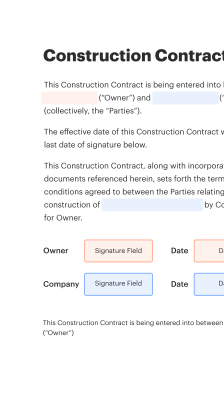
How redline protocol works in practice

The protocol coordinates document edits, reviewer comments, and final acceptance across internal and external parties.

  • Document preparation: Create a master template with locked clauses.
  • Controlled editing: Require tracked changes and inline comments.
  • Reviewer routing: Assign reviewers and approval sequence.
  • Execution and archive: Finalize, apply signatures, and archive.
Collect signatures
24x
faster
Reduce costs by
$30
per document
Save up to
40h
per employee / month

Basic steps to implement a redline protocol

Follow a simple, repeatable sequence to ensure consistent edits, approvals, and archival across document reviews.

  • 01
    Prepare base: Start from a controlled template.
  • 02
    Enable redlines: Use tracked changes or markup features.
  • 03
    Collect approvals: Route edits to designated reviewers.
  • 04
    Finalize: Reconcile edits and lock the final version.

Audit trail steps for redline transactions

Maintain a consistent audit workflow to capture who changed what, when, and why across the negotiation lifecycle.

01

Capture event:

Log every edit action.
02

Record identity:

Associate edits with user IDs.
03

Timestamp action:

Store precise event time.
04

Preserve versions:

Archive prior document states.
05

Store metadata:

Save comments and context.
06

Retain audit logs:

Keep logs per retention policy.
be ready to get more

Why choose airSlate SignNow

  • Free 7-day trial. Choose the plan you need and try it risk-free.
  • Honest pricing for full-featured plans. airSlate SignNow offers subscription plans with no overages or hidden fees at renewal.
  • Enterprise-grade security. airSlate SignNow helps you comply with global security standards.
illustrations signature

Workflow settings to configure for redline protocol automation

Configure workflow defaults that enforce routing, reminders, and retention so the redline protocol runs consistently across documents.

Workflow Setting Name and Type Default and recommended configuration values
Approval Routing Strategy and Sequence Sequential approvals with parallel options
Reminder Scheduling and Frequency 48 hours after inactivity
Signature Authentication Level Settings Email, SMS OTP, or ID verification
Document Retention and Export Policy Export final PDF and logs
Third-party Integration Hooks and Webhooks Enable webhook events for sync

Supported platforms for redline protocol workflows

Ensure devices and browsers meet minimum requirements so reviewers can access markup tools and secure signing without compatibility issues.

  • Desktop browsers: Chrome, Edge, Safari
  • Mobile devices: iOS and Android supported
  • Tablet compatibility: Responsive UI for review

Verify operating system updates, browser versions, and network security policies before enabling collaborative redline features to minimize interruptions during negotiation cycles.

Security and protection measures for redline workflows

Access controls: Role-based permissions
Encryption in transit: TLS for network protection
Encryption at rest: AES-based storage encryption
Authentication options: Password and MFA support
Audit logging: Immutable activity records
Legal compliance: ESIGN and UETA recognition

Industry use cases that illustrate redline protocol value

The redline protocol adapts to legal, procurement, and sales workflows to keep negotiations orderly and auditable.

Enterprise Software Contract

A software vendor and enterprise procurement team negotiate licensing terms using controlled redlines and explicit change requests

  • Uses document-level version control
  • Reduces negotiation time and clarifies approved concessions

Resulting in a signed agreement with a clear amendment history and reduced post-signature disputes.

University Research Agreement

A university office of sponsored projects coordinates edits between investigators and external sponsors with a defined redline approval flow

  • Tracks IP and publication clauses
  • Ensures institutional signoffs occur before acceptance

Leading to enforceable agreements that preserve compliance and institutional records.

Best practices for secure and accurate redline protocol execution

Adopt consistent rules and controls that keep negotiations auditable and legally robust while minimizing avoidable changes.

Establish a single master document policy
Designate one authoritative file for negotiations and require all reviewers to apply tracked changes to that file to prevent fragmentation and loss of edits.
Define reviewer roles and approval thresholds
Specify which stakeholders can propose, approve, or finalize edits and set monetary or legal thresholds that trigger additional sign-off steps.
Keep an immutable audit trail
Ensure the platform records timestamps, user identities, and action types for each change to support compliance, dispute resolution, and internal governance.
Use templates and clause libraries
Maintain vetted templates and reusable clauses to limit custom redlines, reduce negotiation cycles, and ensure regulatory or policy requirements are consistently applied.

FAQs About redline protocol

Common questions address enforceability, version control, tool selection, and how to combine redlines with electronic signatures for a defensible record.

Feature comparison for redline protocol support

Compare common capabilities across eSignature providers to match platform features with redline protocol requirements.

Comparison Criteria and Feature Name signNow (Recommended) DocuSign Adobe Sign
Supports collaborative redline markup tools
Document version and audit trail Detailed logs Detailed logs Detailed logs
Integration with Google Workspace and Drive Native connector Native connector Connector available
Mobile app signing and editing
be ready to get more

Get legally-binding signatures now!

Retention and archival timelines for redlined documents

Define retention periods and archival actions to meet legal, regulatory, and business needs for negotiated documents.

Contract lifecycle retention policy:

Keep signed agreements for the statutory retention period.

Active negotiation archives:

Retain redline drafts until final execution.

Regulatory hold processes:

Suspend deletion for audits or litigation.

Automated archival schedule:

Move finalized contracts to long-term storage.

Periodic review cadence:

Review retained records annually.

Risks and penalties from poor redline practices

Ambiguous terms: Contract disputes
Missing audit trail: Regulatory exposure
Unauthorized edits: Liability concerns
Poor version control: Execution errors
Noncompliant signatures: Enforceability issues
Inadequate retention: Penalties or fines

Vendor feature comparison for redline protocol considerations

Feature availability and edition requirements vary by vendor; compare capabilities to determine which plan aligns with your redline and compliance needs.

Plan and Vendor Columns signNow (Recommended) DocuSign Adobe Sign PandaDoc HelloSign
Free eSignature plan availability Limited free trial Trial only No free plan Free eSign plan Free limited plan
API access availability Yes Yes Yes Yes Yes
HIPAA compliance option Add-on/Enterprise Add-on/Enterprise Add-on/Enterprise Add-on/Enterprise Limited
Bulk Send functionality support Yes Yes Yes Yes Yes
SAML SSO availability Yes Yes Yes Yes Yes

Simplify challenging workflows

Generate, deliver, and manage workflows of any complexness, digitally from near any place. Scalable electronic signature functionality enable you to share documents with the right users the right way and set up roles for every recipient. Complete document workflows faster and simpler than ever before.

Automate document flow

Improve sophisticated signing tasks with airSlate SignNow�s powerful features to boost your company. Control your automatic signature workflows to ensure they're running at peak performance with fast notifications and alerts.

Enhance in team communication

Bring teams together in a secure, shared workplace. Handle paperwork, use form templates and notifications to deliver more efficient cross-organization communication. Relieve your workers from having to hang out on repeated routines to enable them to give attention to valuable, business-essential duties.

Integrate into your existing framework

Work your projects with market-leading integration. Collect Salesforce, Microsoft Teams, and SharePoint all in one business thread. Link your applications to a single environment for endless possibilities and higher performance.

Remain compliant with market-leading data protection

Feel confident knowing that your data remains secure by the most up-to-date in encryption security. airSlate SignNow is GDPR and eIDAS compliant and gives you awareness into your signing experience with court-admissible audit trails. Configure user authorization and roles to control who has access to what.


walmart logo
exonMobil logo
apple logo
comcast logo
facebook logo
FedEx logo
be ready to get more

Get legally-binding signatures now!