Validation
Field validation rules can ensure a checkbox is checked only when prerequisite fields are completed, preventing contradictory or incomplete responses within a document.



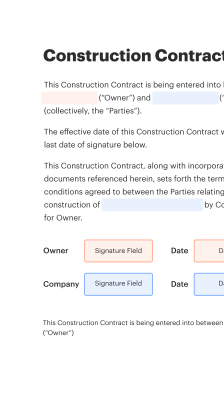
Making a checkbox required builds a clear, auditable record of a signer’s affirmative action, reduces missing information, and supports regulatory needs where explicit consent or acknowledgement is required under U.S. law such as ESIGN and UETA.

An HR Manager configures required checkboxes on onboarding forms to confirm policy receipt, tax elections, and benefit selections. They use templates and conditional fields to ensure new hires cannot submit incomplete records and to keep a time-stamped audit trail tied to each signer.
A Compliance Officer applies required checkbox fields across regulatory forms to capture legally meaningful consent. They rely on field-level settings, retention policies, and chained workflows to ensure each checkbox action is securely logged and retrievable for audits.
Organizations across departments use required checkboxes to capture consent, confirmations, and regulatory acknowledgements within signed documents.
Proper use of required checkboxes reduces downstream administrative review and strengthens evidence of consent when records are audited.
Field validation rules can ensure a checkbox is checked only when prerequisite fields are completed, preventing contradictory or incomplete responses within a document.
Combine required checkboxes with text fields, radio buttons, and dropdowns to capture structured information and conditional consent across complex forms.
Use conditional logic to trigger follow-up fields or notifications when a required checkbox is selected, enabling dynamic document flows.
Pre-populate related fields from CRM or directory data while keeping the checkbox required for explicit signer acknowledgement of prefilled information.
Save required checkbox configurations in reusable templates to standardize consent capture across repeated transactions or departmental processes.
Programmatically set and enforce required checkbox fields via API calls to integrate consent capture into custom applications and automated systems.
Field-level enforcement ensures signers cannot submit a document until the designated checkbox is checked, enabling consistent capture of affirmative consent and preventing incomplete submissions across desktop and mobile interfaces.
Show or hide required checkboxes based on other inputs so that consent requests appear only when relevant, reducing cognitive load for signers and preserving document clarity while maintaining enforceability.
Responsive checkbox controls and touch-friendly targets allow signers to complete required fields on phones or tablets with the same validation behavior and audit recording as desktop sessions.
Every checkbox interaction is time-stamped and tied to the signer’s identity and session, creating an evidentiary record suitable for compliance review and dispute resolution.
| Feature | Configuration |
|---|---|
| Require Checkbox Field | Must be checked before submit |
| Conditional Logic Trigger | Show fields when checked |
| Field Validation Rules | Prevent contradictory entries |
| Reminder Frequency | 48 hours |
| Audit Trail Level | Full event logging |
Required checkboxes are supported across modern web browsers and native mobile apps, but testing ensures consistent behavior across platforms.
Ensure end users have updated browsers or recent app versions; check accessibility compliance and screen-reader behavior so required checkbox interactions remain clear for all users and the audit trail records each action regardless of device.
A sales team includes a required checkbox for acceptance of pricing and delivery terms to ensure explicit buyer agreement before processing orders
Resulting in a clear, time-stamped acceptance trail that supports dispute resolution and order validation.
A clinic adds a required checkbox for treatment consent to capture affirmative patient authorization prior to procedures
Leading to documented consent aligned with medical records and easier compliance verification during audits.
| Feature Criteria | signNow | Adobe Sign | DocuSign |
|---|---|---|---|
| Required Checkbox Enforcement | |||
| Conditional Logic Support | |||
| API Field Control | REST API | REST API | REST API |
| Audit Trail Detail | Full | Full | Full |
90 days post-signature
3 years standard
Annual review
As required
Based on policy
| Plan/Provider | signNow | Adobe Sign | DocuSign | Dropbox Sign | PandaDoc |
|---|---|---|---|---|---|
| Free eSignature Option | Trial | No | Trial | Free limited | Free limited |
| API Access | Yes (REST) | Yes (REST) | Yes (REST) | Yes (REST) | Yes (REST) |
| Templates | Yes | Yes | Yes | Yes | Yes |
| Bulk Send | Yes | Yes | Yes | Yes | Yes |
| SSO Availability | Yes | Yes | Yes | Yes | Yes |
Create, execute, and maintain workflows of any complexity, electronically from near any place. Scalable electronic signature functionality ensure you can exchange contracts with the right users the right order and assign roles for every signee. Perform document workflows faster and simpler than ever before.
Enhance sophisticated signing tasks with airSlate SignNow�s effective tools to improve your company. Control your automated eSignature workflows to ensure they're operating at top efficiency with quick notices and reminders.
Bring teammates together in a protected, shared environment. Manage paperwork, use form templates and notices to deliver more efficient cross-organization communication. Free your workers from having to hang out on repetitive activities to enable them to center on valuable, business-essential projects.
Manage your tasks with industry-leading integration. Assemble Salesforce, Microsoft Teams, and SharePoint in multi functional business flow. Connect your software to a single system for limitless possibilities and higher productiveness.
Feel confident with the knowledge that your data is protected by the latest in encryption security. airSlate SignNow is GDPR and eIDAS certified and provides you visibility into your signing procedure with court-admissible audit trails. Set up user access permissions and rights to control who has access to what.