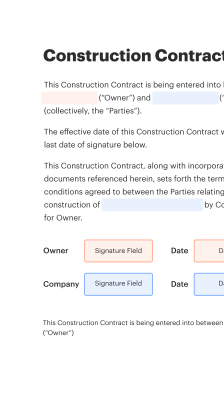
Signed on Desktop: Secure eSignatures with SignNow
What signed on desktop means for document workflows
Why use signed on desktop for routine approvals
signed on desktop supports complex document preparation, clear on-screen review, and reliable metadata capture, improving accuracy and recordkeeping for office-based signing workflows.
Common implementation and user challenges
- Ensuring signer identity without intrusive verification can leave gaps in trust and dispute readiness.
- Poorly formatted documents may require rework or create ambiguous signature placement for desktop signers.
- Browser compatibility issues and outdated plugins can interfere with file upload or signature rendering.
- Integrating desktop signing into legacy workflows often requires mapping fields and adapting approval routing.
Representative user profiles for signed on desktop
Procurement Manager
A procurement manager prepares vendor contracts and purchase orders, often combining multiple attachments and approval steps. They need precise field placement, version control, and integration with procurement systems to ensure accurate contract terms and timely supplier onboarding.
HR Director
An HR director oversees employment and benefits documentation requiring sequential signatures and secure storage. They rely on role-based access, templating for repeat hires, and clear audit trails to meet internal policies and regulatory obligations.
Typical teams and roles that rely on signed on desktop
Office-based roles that prepare, review, or archive legal and administrative documents benefit most from desktop signing workflows.
- Legal and compliance teams managing contracts and regulatory records with detailed review needs.
- Human resources teams processing hiring, onboarding, and benefits forms that require multiple signatures.
- Procurement and finance teams executing purchase orders, vendor contracts, and approval chains.
Desktop signing suits scenarios where document layout, integrations, and audit detail are priorities for organizational controls.
Choose a better solution
Integrations and features that enhance signed on desktop
Google Docs
Seamless integration allows users to send documents for signature directly from Google Docs, preserving document formatting and reducing export steps while enabling automatic return of signed PDFs to the connected Drive folder.
CRM connectors
Native connectors to popular CRMs let organizations populate templates with contact and opportunity data, trigger signature requests from CRM actions, and store signed documents on the related account or deal record for streamlined recordkeeping.
Dropbox integration
Direct sync with Dropbox enables sending files stored in cloud folders and automatically saving completed agreements back to specified directories to maintain a central archive and simplify collaboration across teams.
REST API
A robust API supports programmatic envelope creation, embedded signing flows, and webhook callbacks so developers can incorporate desktop signing into custom portals and backend systems with consistent auditability.
How signed on desktop flows through a typical process
-
Prepare: Upload and configure signature fields and workflow.
-
Authenticate: Choose email, SMS, or knowledge-based checks.
-
Sign: Signer reviews and applies an electronic signature.
-
Store: Finalized document is locked and archived.
Quick steps to complete a signed on desktop transaction
-
01Upload document: Add the file from local or cloud storage.
-
02Place fields: Drag signature, date, and text fields where needed.
-
03Set recipients: Assign signer order and authentication methods.
-
04Send and monitor: Send envelope and track status in dashboard.
Why choose airSlate SignNow
-
Free 7-day trial. Choose the plan you need and try it risk-free.
-
Honest pricing for full-featured plans. airSlate SignNow offers subscription plans with no overages or hidden fees at renewal.
-
Enterprise-grade security. airSlate SignNow helps you comply with global security standards.
Typical workflow settings for signed on desktop
| Setting Name | Configuration |
|---|---|
| Reminder Frequency | 48 hours |
| Default Authentication | Email verification |
| Routing Order | Sequential |
| Document Retention Period | 7 years |
| Signature Certificate Type | Standard audit |
Supported platforms and basic requirements for signed on desktop
Desktop signing typically requires a modern browser and a stable internet connection; no specialized hardware is needed for most standard workflows.
- Operating systems: Windows, macOS supported
- Browsers: Chrome, Edge, Safari, Firefox
- Network: HTTPS with stable bandwidth
For advanced features such as embedded signing or single sign-on, administrators may need to configure API keys, CORS settings, or enterprise identity federation; verify compatibility and security settings before broad rollout.
Real-world examples of signed on desktop use
Enterprise Contracting
A procurement team consolidates multi-page vendor contracts into a single review package with predefined signature fields and conditional routing
- Bulk Send of standardized contracts
- Reduced cycle time for approvals
Leading to faster supplier onboarding and clearer compliance records that withstand internal and external audits.
University Records
An administrative office digitizes release forms and authorization documents with enforced signer authentication and archive policies
- Integration with cloud storage for records management
- Improved access control and retention consistency
Resulting in easier FERPA-compliant record retrieval and fewer manual filing errors across departments.
Best practices to get accurate signed on desktop records
FAQs and troubleshooting for signed on desktop
- How do I complete a desktop signature?
Open the document in your browser or desktop app, review required fields, apply your electronic signature where indicated, and finalize. The platform will lock the document and generate an audit trail that includes timestamps and signer metadata for recordkeeping and potential dispute resolution.
- Are desktop electronic signatures legally binding?
Yes, electronic signatures captured on desktop can be legally binding under ESIGN and UETA when they demonstrate signer intent, are associated with the record, and the transaction is retained. Maintain clear audit logs and, where appropriate, use signer authentication that matches the transaction risk.
- What authentication methods should I use?
Select authentication based on transaction sensitivity: email verification for routine approvals, SMS or two-factor for moderate risk, and knowledge-based or ID verification for high-value or regulated agreements to strengthen evidentiary value.
- How can I verify a completed document's authenticity?
Review the embedded audit trail, check cryptographic seals or tamper-evident markers, and confirm signer metadata such as email, timestamp, and IP address. If necessary, validate the signature certificate provided by the eSignature service for cryptographic verification.
- What if a document fails to upload or render?
Confirm browser compatibility, clear cache, and ensure the file format is supported (PDF, DOCX). If the problem persists, try a different browser or reduce file size by compressing images; consult platform logs for error codes to guide troubleshooting.
- How long should I retain signed desktop documents?
Retention depends on legal and business requirements—commonly seven years for contracts—but may vary by sector. Implement a documented retention policy that aligns with compliance obligations such as HIPAA or state recordkeeping laws and ensure secure archived access controls.
Feature availability: signed on desktop across vendors
| Vendor | signNow (Recommended) | DocuSign | Adobe Sign |
|---|---|---|---|
| ESIGN and UETA support | |||
| HIPAA-ready (BAA) | |||
| Bulk Send | |||
| Google Drive integration |
Get legally-binding signatures now!
Business risks and potential penalties to consider
Pricing and feature matrix for common desktop signing needs
| Vendor | signNow (Featured) | DocuSign | Adobe Sign | HelloSign | PandaDoc |
|---|---|---|---|---|---|
| Free tier availability | Free trial | Free trial | Free trial | Free tier | Free trial |
| API access | Available on paid plans | Available | Available | Available | Available |
| Bulk Send capability | Included on select plans | Available | Available | Available | Available |
| Native Google Workspace | Yes | Yes | Yes | Yes | Yes |
| HIPAA support option | BAA available | BAA available | BAA available | BAA available | BAA available |
Streamline challenging workflows
Generate, execute, and manage workflows of any difficulty, digitally from almost anywhere. Scalable eSignature capabilities enable you to exchange contracts with the right users the right sequence and define roles for every signee. Perform document workflows faster and simpler than ever before.
Automate document flow
Optimize intricate signing processes with airSlate SignNow�s effective functions to enhance your operation. Take control of your automated signature workflows to ensure they're operating at peak efficiency with quick notifications and reminders.
Enhance in team collaboration
Get teammates together in a protected, shared workplace. Manage documents, use form templates and notices to produce more effective cross-organization communication. Relieve your workers from having to spend time on recurring routines so that they can focus on valuable, business-crucial duties.
Integrate into your current systems
Work your jobs with market-leading integration. Capture Salesforce, Microsoft Teams, and SharePoint all in one business thread. Hook up your applications to a single unit for countless possibilities and higher performance.
Remain compliant with market-leading data safety
Feel safe understanding that your information remains secure by the most recent in encryption security. airSlate SignNow is GDPR and eIDAS compliant and provides you awareness into your eSigning experience with court-admissible audit trails. Configure user authorization and rights to manage who has access to what.