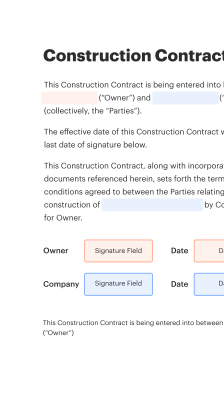
Size Teller Image for Secure eSignatures

Get rid of paper and automate digital document processing for higher performance and limitless opportunities. eSign anything from a comfort of your home, fast and accomplished. Experience the perfect manner of running your business with airSlate SignNow.

Award-winning eSignature solution

What size teller image means for document workflows

size teller image refers to a controlled embedded image element used in electronic documents to represent teller identification, measured areas, or standardized photographic inserts. In eSignature workflows this feature ensures consistent display across devices by applying fixed dimensions, aspect-ratio rules, and display metadata so images print and render predictably. Organizations use size teller image to embed ID photos, teller station graphics, or measurement visuals directly inside contracts or verification forms while preserving scale, improving visual clarity, and avoiding layout shifts during signing, storage, or PDF conversion across platforms and viewers.

Why controlled image sizing matters in signatures

Using size teller image prevents layout changes, supports consistent identity capture, and reduces signer confusion by keeping images legible and proportionate across devices and formats.

Why controlled image sizing matters in signatures

Common challenges addressed by size teller image

  • Images uploaded at varying resolutions cause inconsistent print and screen sizing that affects legal documents.
  • Mobile uploads can introduce orientation and aspect-ratio errors that distort identification photos.
  • Embedding images without size controls can shift surrounding fields and break form layout.
  • Lack of standardized image metadata complicates automated processing and archival of signed records.

Roles that manage and use size teller image

Team Admin

Team Admins configure image field templates, set validation rules, and manage retention settings. They handle permission assignments, conduct periodic testing across platforms, and ensure policy alignment with compliance standards for image handling and archival processes.

Compliance Officer

Compliance Officers review image metadata, verify retention schedules, and validate that upload and audit logs meet regulatory requirements such as ESIGN and HIPAA when applicable. They coordinate reporting and respond to audit requests involving image evidence.

Core capabilities that support size teller image

Implementations should include specific tools to control, validate, and preserve image display from upload through archival.

Fixed-dimension fields

Define exact width and height for an image field so that uploaded pictures are automatically constrained and displayed uniformly across devices and in PDF output, preventing layout shifts and ensuring predictable print dimensions every time.

Aspect-ratio lock

Preserve original proportions by enforcing an aspect-ratio lock that avoids stretching or squashing images while allowing scalable display for different screen densities and export formats.

Resolution validation

Accept or reject uploads based on minimum DPI and pixel dimensions to ensure legible identification images and to prevent low-quality files from entering records.

Automatic compression

Apply controlled image compression to balance visual clarity with file size limits for faster uploads and smaller archived documents without compromising legibility of ID photos.

Orientation correction

Detect and correct EXIF orientation automatically so images appear right-side-up regardless of the device used to capture them, removing a common point of signer confusion.

Embedded metadata

Store upload metadata such as timestamp, uploader identity, and original dimensions to support traceability and forensic review of image evidence in signed records.

be ready to get more

Choose a better solution

Integrations and template features for image use

Integration points help automate image capture and apply size teller image standards inside templates and data workflows.

Google Docs

Templates can include size teller image placeholders that accept images inserted via the Google Docs add-on, preserving set dimensions and exporting cleanly to PDFs for signing and storage.

CRM systems

Link image fields to CRM contact records so teller photos or customer ID images populate dynamically into documents, maintaining dimension and metadata rules for consistent customer records.

Cloud storage

Save original uploads and processed images to cloud folders in Dropbox or Google Drive with structured filenames and metadata to support retention and retrieval policies.

API access

Programmatic upload and validation allow back-end systems to submit images that meet sizing constraints, enabling automated onboarding and verification pipelines.

How to create, format, and send with size teller image

This overview explains the lifecycle from creation to signing, with focus on image sizing rules and delivery paths.

  • Create template: Add a predefined image placeholder with sizing and metadata rules.
  • Upload image: Signers or admins upload images that must meet resolution and format rules.
  • Apply constraints: Automatic resizing or rejection occurs based on configured constraints.
  • Finalize and send: Document is locked and routed for signature with image embedded.
Collect signatures
24x
faster
Reduce costs by
$30
per document
Save up to
40h
per employee / month

Quick setup: Add a size teller image to a document

Follow these concise steps to place and configure a size teller image field so it displays predictably across viewers and export formats.

  • 01
    Insert field: Place an image placeholder where the teller photo or graphic should appear.
  • 02
    Set dimensions: Define fixed width and height or aspect-ratio constraints.
  • 03
    Configure validation: Add allowed file types and minimum resolution requirements.
  • 04
    Test render: Preview on desktop and mobile, then export to PDF to confirm layout.

Audit trail steps for image uploads and use

Maintain a clear audit record that captures each action related to size teller image uploads and processing.

01

Capture event:

Log initial upload time and user
02

Validation event:

Record resolution and format checks
03

Transformation event:

Note any automatic resizing or compression
04

Embedding event:

Timestamp when image is locked into a document
05

Export event:

Log PDF export and file hash
06

Access event:

Track downloads and viewer access
be ready to get more

Why choose airSlate SignNow

  • Free 7-day trial. Choose the plan you need and try it risk-free.
  • Honest pricing for full-featured plans. airSlate SignNow offers subscription plans with no overages or hidden fees at renewal.
  • Enterprise-grade security. airSlate SignNow helps you comply with global security standards.
illustrations signature

Workflow settings for automated image handling

Configure these settings to automate validation, resizing, and retention for all size teller image activity.

Setting Name Configuration
Image validation rules Minimum 300 DPI
Auto-resize policy Constrain to 600x800 px
Compression level Moderate JPEG compression
Retention export schedule Annual archival
Access logging enabled Enabled with 90-day audit

Device support and platform considerations

Size teller image display relies on modern browser and app capabilities, so verify platform rendering rules before rolling out to signers.

  • Desktop browsers: Chrome, Edge, Safari support standard CSS scaling
  • Mobile apps: Native apps handle orientation and high-DPI images
  • PDF viewers: Ensure embedded images persist in exported PDFs

Test across common desktop browsers, iOS and Android devices, and PDF viewers to confirm the size teller image behaves consistently for all signer types and archival exports.

Security controls relevant to size teller image

Encryption in transit: TLS 1.2 or higher
Encryption at rest: AES-256 storage encryption
Access controls: Role-based permissions
Audit logging: Immutable event logs
File integrity: Hash-based verification
Data residency options: Regional storage choices

Industry examples using size teller image

Representative use cases illustrate how controlled image sizing solves specific operational needs across sectors.

Bank Teller ID capture

Banks embed a fixed-dimension teller photo field to capture representative ID images at branch counters

  • Reduces misalignment during PDF generation
  • Speeds verification and reduces manual resizing steps

Ensures faster teller identity checks, resulting in fewer follow-up requests and clearer audit records

Healthcare intake photos

Clinics use a standardized patient-photo placeholder to maintain consistent headshot sizing for records

  • Supports secure upload from mobile devices
  • Improves cross-system matching and intake accuracy

Leading to smoother patient record linking and fewer administrative corrections

Operational best practices for reliable image handling

Follow these practical measures to reduce errors and ensure consistent image quality across signing and archival processes.

Define standard dimensions and aspect ratios in policy
Publish exact pixel or inch dimensions and permitted aspect ratios in operational documentation so all templates and intake points enforce consistent image sizing and reduce downstream formatting issues during export or printing.
Require minimum resolution and acceptable file types
Mandate minimum DPI and accept only common formats such as JPEG and PNG to avoid corrupted files and to preserve legibility for identity verification and archival purposes.
Test on representative devices and viewers regularly
Include desktop browsers, iOS and Android devices, and popular PDF viewers in a periodic test matrix to confirm images render and print correctly under current platform versions and update templates when issues arise.
Log metadata and retain originals when possible
Keep both the processed, constrained image and the original upload plus metadata for traceability, compliance checks, and to support any legal review that requires provenance of visual evidence.

FAQs and troubleshooting for size teller image

Common questions and solutions for issues encountered during image upload, rendering, and archival within eSignature workflows.

Digital versus paper handling of images and signatures

A concise technical comparison highlights availability and capability differences between common eSignature platforms on image handling.

Signature Capability and Compliance Criteria signNow (Recommended) DocuSign
Legal validity under US standards
Audit trail granularity and retention Detailed Detailed
Mobile and mobile-device signing support
Bulk Send and template automation
be ready to get more

Get legally-binding signatures now!

Storage, backup, and retention considerations for images

Establish timelines and storage practices to meet operational needs and regulatory retention requirements.

Retention policy definition:

Specify retention periods aligned with legal and business requirements

Backup frequency schedule:

Daily backups for production image repositories

Archival export timing:

Export to immutable storage annually or per policy

Deletion and purging rules:

Automate deletion after required retention expires

Access audit intervals:

Review access logs quarterly for compliance

Cost comparison and typical plan features

Estimated entry-level pricing and common included features for five widely used eSignature providers; values are indicative and should be confirmed with vendors for current offers.

Pricing by Vendor and Plan signNow (Recommended) DocuSign Adobe Sign HelloSign PandaDoc
Starter plan monthly price signNow (Recommended) $8 DocuSign $10 Adobe Sign $14 HelloSign $15 PandaDoc $19
Annual equivalent price per user signNow $80 DocuSign $100 Adobe Sign $140 HelloSign $150 PandaDoc $190
Included eSignature allowances Unlimited Limited Unlimited Limited Unlimited
Advanced feature availability Templates, Bulk Send, API Templates, Advanced workflows Enterprise workflows Basic templates, API Templates, CRM
Compliance and security certifications SOC 2, HIPAA-ready SOC 2, HIPAA-ready SOC 2, ISO SOC 2 SOC 2, ISO

Simplify complex workflows

Create, execute, and manage workflows of any complexity, electronically from virtually anywhere. Scalable eSignature capabilities allow you to share documents with the right people in the correct order and define roles for each recipient. Execute document workflows faster and easier than ever before.

Automate document management

Optimize complex signing processes with airSlate SignNow’s powerful features to enhance your business. Control your automated eSignature workflows to ensure they're running at peak performance with instant notifications and reminders.

Optimize in team collaboration

Bring teams together in a secure, shared environment. Manage documents, use form templates and notifications to create more efficient cross-organization collaboration. Free your employees from having to spend time on repetitive activities so that they can focus on valuable, business-critical tasks.

Integrate into your existing systems

Run your projects with industry-leading integration. Collect Salesforce, Microsoft Teams, and SharePoint all in one business flow. Connect your software to a single system for endless possibilities and more productiveness.

Stay compliant with best-in-class data protection

Feel confident knowing that your information is protected by the most recent in encryption security. airSlate SignNow is GDPR and eIDAS compliant and provides you visibility into your eSigning procedure with court-admissible audit trails. Set up user authorization and rights to control who has access to what.


walmart logo
exonMobil logo
apple logo
comcast logo
facebook logo
FedEx logo
be ready to get more

Get legally-binding signatures now!