Validate Digital Signature with SignNow

Get rid of paper and automate digital document management for increased efficiency and countless possibilities. Sign anything from a comfort of your home, fast and accomplished. Discover a better strategy for running your business with airSlate SignNow.

Award-winning eSignature solution

What validating a digital signature means for your documents

Validating a digital signature verifies that a signed document was not altered after signing and that the signature was applied by a verified identity. In practice this combines cryptographic checks, certificate validation, authentication logs, and an auditable event trail. For organizations in the United States, validation supports ESIGN and UETA compliance when combined with proper intent and recordkeeping. Validation can be performed automatically by eSignature platforms, by checking embedded certificates or by manual review of audit records when necessary, giving legal and operational assurance for contracts and regulated records.

Why validate digital signature signature before relying on a signed record

Validation reduces legal and operational risk by confirming signer identity, document integrity, and tamper evidence, which supports enforceability and regulatory compliance.

Why validate digital signature signature before relying on a signed record

Common challenges when validating digital signatures

  • Expired or revoked certificates can obscure validity and require certificate chain investigation.
  • Incomplete audit logs or missing authentication events limit the ability to prove signer intent.
  • Mismatched document hashes indicate tampering but may result from format changes during processing.
  • Jurisdictional differences in signature standards can complicate cross-border validation processes.

Typical user profiles for signature validation

Legal Counsel

In-house or external attorneys who review executed contracts, confirm signature integrity, and prepare documentation for litigation or regulatory review. They rely on audit trails, certificate details, and authentication logs to support enforceability and to explain signature provenance to stakeholders.

Compliance Officer

Compliance professionals who set retention policies, validate records against ESIGN and UETA requirements, and monitor authentication methods. They use validation reports to demonstrate adherence to industry rules and to prepare for internal or external audits.

Which teams benefit from routine signature validation

Legal, compliance, procurement, and HR teams routinely validate digital signatures to reduce contract risk and support audit readiness.

  • Legal teams ensuring enforceability and chain of custody for executed agreements.
  • Compliance officers verifying records for ESIGN, UETA, HIPAA, and education privacy audits.
  • Procurement and finance teams confirming authenticity before releasing funds or onboarding vendors.

Regular validation workflows help operations maintain consistent records and produce defensible evidence during disputes or audits.

Advanced features that support enterprise validation workflows

Larger organizations often need advanced capabilities to scale validation and integrate with existing systems while meeting regulatory demands.

Bulk Send

Send identical documents to many recipients while preserving individual audit trails and signature records, enabling scalable validation for mass communications and enrollments.


API Access

Programmatic access to validation functions lets IT integrate signature checks into core applications, automating verification during onboarding or transaction processing.

Role-based controls

Granular permissions ensure only authorized staff can view or run validations, reducing exposure of sensitive documents during verification.

Custom retention

Policy-based retention rules let organizations retain signed records and validation reports according to legal and business requirements.

Certificate-based signatures

Support for X.509 and certificate-based signing increases cryptographic assurance and aids higher-trust workflows.

Third-party integrations

Connect validation and storage to enterprise systems like CRM, DMS, and SIEM for consolidated records and monitoring.

be ready to get more

Choose a better solution

Core tools that help validate digital signature signature reliably

Use these four platform features to streamline signature validation and maintain defensible records across typical business processes.

Audit Trail

Detailed, tamper-evident logs record signer authentication steps, IP addresses, timestamps, and document events to support legal and compliance needs when validating signature provenance.

Certificate Validation

Automatic certificate chain checks identify expired or revoked certificates and validate cryptographic signatures against trusted authorities, improving the reliability of signature validation.

Authentication Options

Configurable authentication such as email, SMS, knowledge-based checks, and multi-factor options lets organizations match signer verification level to legal or regulatory risk.

Tamper Detection

Hash comparison and tamper seals flag any changes made after signing, ensuring documents remain identical to the signed copy used during validation.
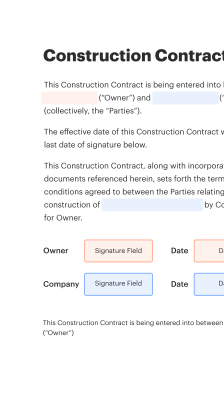
How online validation works with an eSignature platform

Online validation combines authentication, cryptographic checks, and a tamper-evident audit trail to produce a validation result suitable for compliance and legal review.

  • Authenticate signer: Platform verifies identity via email, SMS, or MFA.
  • Apply cryptographic signature: A digital signature or certificate is embedded in the file.
  • Record events: All actions are timestamped in the audit trail.
  • Run validation: Platform checks hashes, certificates, and timestamps.
Collect signatures
24x
faster
Reduce costs by
$30
per document
Save up to
40h
per employee / month

Step-by-step: validate digital signature signature for a single document

Follow these steps to confirm a signature’s authenticity and document integrity using an eSignature platform or manual checks.

  • 01
    Retrieve audit log: Open the document’s audit trail records.
  • 02
    Check signer identity: Confirm authentication method and user identity.
  • 03
    Verify certificate: Validate certificate chain and expiration status.
  • 04
    Confirm hash: Compare document hash to signed value.

Grid: quick checks to validate a digital signature

Use these short validation checks to rapidly assess signature status across documents.

01

Check timestamp:

Confirm trusted timestamp presence.
02

Validate certificate:

Ensure certificate chain is valid.
03

Inspect audit log:

Review signer events for anomalies.
04

Compare hashes:

Verify document hash matches signed value.
05

Authentication method:

Confirm auth strength used at signing.
06

Tamper indicator:

Look for any tamper-evident alerts.
be ready to get more

Why choose airSlate SignNow

  • Free 7-day trial. Choose the plan you need and try it risk-free.
  • Honest pricing for full-featured plans. airSlate SignNow offers subscription plans with no overages or hidden fees at renewal.
  • Enterprise-grade security. airSlate SignNow helps you comply with global security standards.
illustrations signature

Configuring automated validation in your signing workflow

Configure automated checks to run at key workflow stages so validation is consistent and repeatable across documents and teams.

Setting Identifier Default Configuration Value
Reminder Frequency (email and SMS) 48 hours
Authentication Method (default) Email + SMS
Certificate Validation (automatic) Enabled
Tamper Detection Policy Auto-verify on open
Validation Report Retention Policy 7 years

Device and platform considerations for validation

Validation workflows run on desktop, tablet, and mobile, but administrative and archival tasks are best performed on secure desktop environments.

  • Desktop support: Full validation features
  • Mobile support: View and basic validate
  • Browser requirements: Modern secure browsers

For high-assurance checks and detailed audit review, use a controlled desktop environment with up-to-date browsers and secure network access, while mobile access is appropriate for routine verification and signer interactions.

Security controls used in signature validation

Certificate checks: Validates certificate chain
Hash integrity: Verifies document hash
Authentication logs: Records signer authentication
Timestamping: Applies trusted timestamps
Tamper seals: Detects post-signing changes
Encryption at rest: Protects stored files

Practical scenarios showing validation in action

Two brief case studies illustrate how validation prevents risk and supports compliance in common workflows.

Healthcare provider record signing

A hospital used platform validation to confirm clinician signatures on consent forms and verify authentication methods

  • Document-level certificate checks confirmed signer identity quickly
  • This reduced audit preparation time and supported HIPAA record integrity

Resulting in faster compliance reporting and clearer audit trails for regulators

Vendor contract onboarding

A corporate procurement team validated supplier signatures before executing master agreements

  • Automated hash and timestamp verification detected a file mismatch
  • The team required re-signing with multi-factor authentication to confirm intent

Leading to reduced contract exposure and cleaner vendor onboarding records

Best practices for secure and accurate validation

Follow established practices to ensure validation results are defensible and integrated with your compliance program.

Maintain complete, immutable audit logs
Ensure every authentication and signing event is recorded with timestamps and metadata stored in a tamper-evident format so validation can rely on a continuous, unaltered record of activity.
Use appropriate signer authentication
Match authentication strength to transaction risk—use multi-factor authentication or verified identity documents for high-value or regulated agreements to strengthen validation.
Retain certificates and validation reports
Store certificate chains, timestamping metadata, and validation reports alongside signed documents to preserve the evidence needed for later legal or compliance reviews.
Document validation procedures
Maintain written policies describing when and how signatures are validated, who performs validations, and how exceptions are handled to ensure consistent, auditable practices.

FAQs About validate digital signature signature

This FAQ answers common questions about validating digital signatures, addressing errors, and resolving typical issues encountered during verification.

Feature comparison: signNow Recommended versus other eSignature providers

A concise feature checklist comparing signature validation and related capabilities across leading eSignature platforms commonly used in the U.S.

eSignature Vendor Feature Comparison Table signNow (Recommended) DocuSign Adobe Sign
US legal compliance (ESIGN/UETA)
Certificate-based signing
Bulk Send capability Limited
API access for validation
HIPAA support Available Available Available
be ready to get more

Get legally-binding signatures now!

Retention and timeline considerations for validated signatures

Manage retention and review schedules to comply with legal, regulatory, and business requirements for validated signature records.

Standard retention period:

Follow record retention policy, commonly 3–7 years.

HIPAA-related retention:

Maintain records for the period required by HIPAA rules.

Education records retention:

Preserve FERPA-related documents per institutional policy.

Certificate renewal checks:

Schedule periodic checks for certificate status.

Audit review cadence:

Conduct validation audits annually or per risk profile.

Risks if signatures are not validated

Contract disputes: Reduced enforceability
Regulatory fines: Compliance penalties
Data breaches: Unauthorized disclosure
Operational delays: Slower approvals
Financial loss: Payment or liability exposure
Reputational harm: Eroded trust

Pricing and plan characteristics across top eSignature platforms

Pricing descriptions and plan features vary; this table summarizes common plan attributes and support for validation-related features across major providers.

Provider signNow DocuSign Adobe Sign HelloSign PandaDoc
Entry-level plan positioning Low-cost entry plan with essential validation features Basic personal and small business tiers Included with Adobe Creative Cloud or standalone Simple plans for small teams Sales-oriented plans with document analytics
API availability on plans Available on business/API plans Available on developer and business plans Available for enterprise and business API available on higher tiers API included in business plans
Bulk sending and templates Bulk Send and reusable templates available Bulk send and templates available Templates and bulk options Templates available; bulk limited Strong template and workflow features
Enterprise security and compliance Enterprise controls, SOC reports, HIPAA options Enterprise-grade compliance and certifications Enterprise compliance and integrations Business and enterprise compliance options Enterprise features for sales operations
Free trial and demo availability Free trial available and online demos Free trial and sandbox environments Free trial for business plans Trial available for basic plans Free trial and demo options

Simplify complex workflows

Create, execute, and manage workflows of any complexity, electronically from virtually anywhere. Scalable eSignature capabilities allow you to share documents with the right people in the correct order and define roles for each recipient. Execute document workflows faster and easier than ever before.

Automate document management

Optimize complex signing processes with airSlate SignNow’s powerful features to enhance your business. Control your automated eSignature workflows to ensure they're running at peak performance with instant notifications and reminders.

Optimize in team collaboration

Bring teams together in a secure, shared environment. Manage documents, use form templates and notifications to create more efficient cross-organization collaboration. Free your employees from having to spend time on repetitive activities so that they can focus on valuable, business-critical tasks.

Integrate into your existing systems

Run your projects with industry-leading integration. Collect Salesforce, Microsoft Teams, and SharePoint all in one business flow. Connect your software to a single system for endless possibilities and more productiveness.

Stay compliant with best-in-class data security

Feel confident with the knowledge that your data is protected by the latest in encryption security. airSlate SignNow is GDPR and eIDAS compliant and provides you transparence into your signing procedure with court-admissible audit trails. Configure user access permissions and rights to regulate who has access to what.


walmart logo
exonMobil logo
apple logo
comcast logo
facebook logo
FedEx logo
be ready to get more

Get legally-binding signatures now!